Preserve Evidence After an Airbag Injury: Start a Free Claim Review
Protect your airbag injury claim: get medical care, preserve VIN/EDR and recall evidence, learn possible damages, start a free CaseClosedFL check.
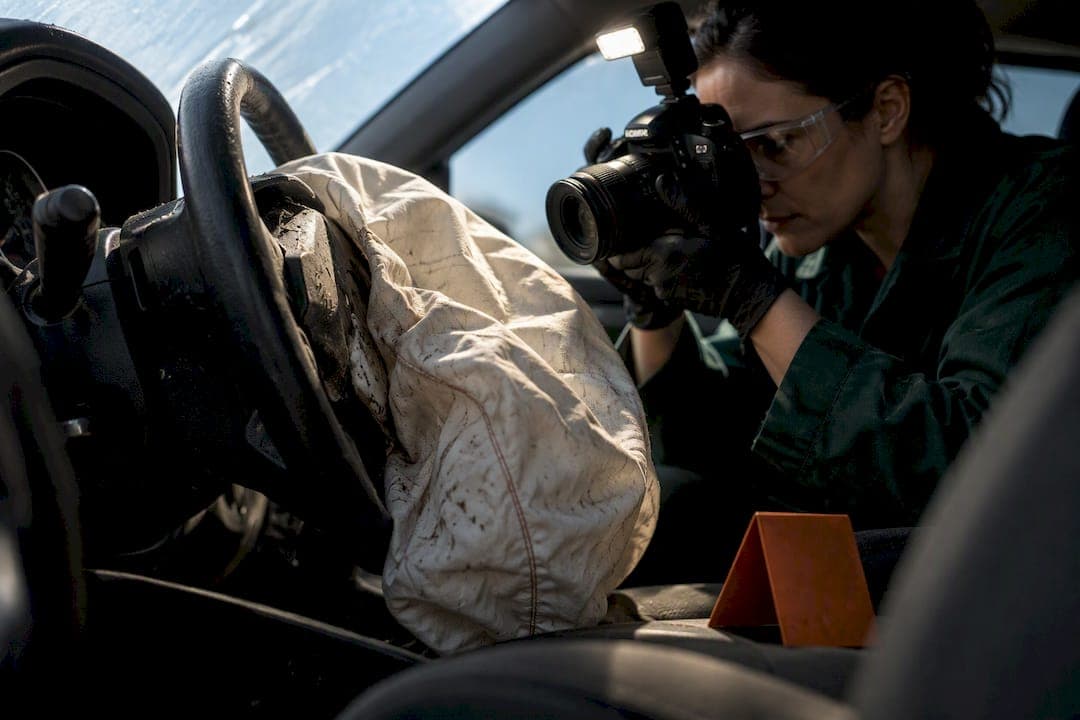

Yes, you may have legal options after an airbag injury. Depending on what caused the harm, you could have a product liability claim, a negligence claim, or both. The first priority is medical care, followed by preserving the vehicle, the airbag components, and any recall or Event Data Recorder information before it disappears. A prompt consultation with a personal injury lawyer protects your ability to file before deadlines pass.
TL;DR:
- Faulty inflators or wiring issues increase the risk of dangerous malfunctions, including rupture and non-deployment, which significantly raise injury potential.
- Many injuries from airbag deployment are immediate, such as burns, abrasions, and facial fractures, but internal injuries may develop hours later, requiring prompt medical documentation.
- Preserving the vehicle, airbag components, and crash evidence within days after an accident is crucial, as corruption or damage can erase vital proof needed for a valid claim.
- Filing deadlines vary by state and can be as short as a few years, so early legal consultation is essential to prevent losing the right to pursue damages.
- A successful claim often hinges on documented injuries, unrepaired recalls, or defective parts, with expert testimony needed to prove how a defect worsened the harm.
Table of Contents
- How airbags work and what makes them fail
- Common injuries from airbag deployment and warning signs
- Step-by-step checklist to protect your health and your claim
- Who can be held liable and what claims apply
- What compensation you can seek and what drives settlement value
- Major recalls and how they affect an airbag claim
- Filing deadlines and why timing matters
- What to preserve and how forensic inspection supports your case
- When to consult an attorney and what they will do
- What injured people tend to get wrong first
- How CaseClosedFL’s free eligibility check can help
- Sources
- FAQ
How airbags work and what makes them fail
An airbag deploys when a crash sensor triggers an igniter inside the inflator, setting off a chemical reaction that fills the bag with gas in a fraction of a second. That speed is what makes airbags effective, and it is also what makes a malfunction dangerous. When something goes wrong in the inflator, sensor, or wiring, the same force meant to protect you can cause serious harm.
Several failure patterns show up in airbag injury cases:
- Non-deployment or late deployment during a crash that should have triggered the airbag.
- Deployment with excessive force, sending debris or the bag itself into the occupant with more energy than intended.
- Inflator rupture, where the metal canister breaks apart and sends fragments into the vehicle cabin.
- Sensor or wiring faults that misread crash severity.
- Improper or counterfeit replacement parts installed during repairs.
NHTSA warns that substandard aftermarket inflator replacements have caused deaths, and that older inflators are more prone to degrading over time.
Common injuries from airbag deployment and warning signs
Airbag deployment causes a recognizable set of injuries, and medical literature on the topic documents a range of traumatic lesions from the sudden contact and chemical exposure. Some injuries are obvious right away. Others take hours or days to surface.
- Abrasions and thermal or chemical burns to the face, chest, and hands.
- Eye injuries, including corneal abrasions and chemical irritation from inflator residue.
- Hearing damage from the deployment’s noise.
- Facial fractures and dental injuries from direct impact.
- Neck, spinal, and concussion or traumatic brain injury risks from the force of contact.
Some airbag injuries develop later. Respiratory irritation from inhaled particulate and internal injuries may not be apparent at the scene, which is one reason medical documentation matters even for injuries that seem minor at first. Penetrating wounds, embedded metal fragments, or unusually shaped lacerations are red flags for inflator rupture and should prompt immediate specialist evaluation.
Step-by-step checklist to protect your health and your claim
What you do in the first days after the crash shapes both your recovery and your legal options.
- Get medical care immediately and tell the provider you suspect the airbag caused or worsened your injuries, so it appears in the record.
- Photograph your injuries, the vehicle interior, the deployed airbag module, and the VIN plate.
- Keep damaged clothing and any objects that show burn or impact marks; do not wash or discard them.
- Do not repair, sell, or send the car to salvage. Arrange for the Event Data Recorder to be downloaded before the battery is disconnected or any repair work begins.
- Look up the VIN at NHTSA’s recall database to check for open airbag recalls tied to your vehicle.
- If an insurer or salvage yard pushes to dispose of the vehicle, send a written preservation request or have a lawyer send one.
Pro Tip: Ask the tow yard or body shop in writing to hold the vehicle and airbag components until your attorney or an independent expert has inspected them.
Who can be held liable and what claims apply
Airbag injury cases often involve more than one legal theory, and identifying the right defendant depends on what actually went wrong.
- Product liability covers manufacturing defects, design defects, and failure to warn, and can target the automaker, the airbag or inflator supplier, a parts contractor, or a repair shop that installed a faulty replacement part.
- Negligence applies when another driver’s conduct caused the crash that triggered the airbag, even if the airbag itself functioned as designed.
- Crashworthiness, sometimes called the enhanced-injury doctrine, lets you pursue a claim when a defective safety system worsened your injuries beyond what the crash alone would have caused, even if you share some fault for the collision. Justia’s overview of airbag injury claims notes that product liability cases often turn on whether the safety system provided reasonable protection in a foreseeable accident.
Many plaintiffs bring a negligence claim against the other driver alongside a product liability claim against a manufacturer, since the two target different sources of harm. Proving a defect claim typically requires expert testimony from engineers or biomechanical specialists who can trace how the airbag failed and how that failure changed the injury outcome.
What compensation you can seek and what drives settlement value
Damages in an airbag injury claim usually fall into two categories, with a third possible in specific circumstances.
- Economic damages cover past and future medical bills, lost income, rehabilitation, and any assistive devices you now need.
- Noneconomic damages cover pain and suffering, emotional distress, and loss of enjoyment of life, valued through methods attorneys and insurers use to weigh severity and duration of harm.
- Punitive damages may apply in cases involving reckless conduct or a manufacturer’s failure to address a known, unrepaired recall.
Documented, objective injuries strengthen a claim’s value. Legal guidance on airbag defect and non-deployment cases points out that an unrepaired safety recall tied to your VIN can be strong evidence that a defect was known and left unaddressed, which tends to increase settlement leverage. Preserved evidence, from the police report to EDR data, gives your attorney concrete facts to negotiate with rather than a dispute over what happened.
Major recalls and how they affect an airbag claim
The Takata inflator recall is the clearest example of how a defective part can cause widespread harm. Ruptured Takata inflators sent metal fragments into occupants, and NHTSA’s consumer alerts describe the scale of the recall response that followed.
- An open or unrepaired recall tied to your VIN can serve as direct evidence that the manufacturer knew about a defect and did not fix it.
- Recall status does not resolve a claim by itself, but it removes a major point of dispute over whether a defect existed.
- Aftermarket or substandard replacement inflators carry similar risks to the original Takata units, since NHTSA has flagged counterfeit parts as a source of deadly ruptures.
Checking your VIN against the federal recall database is one of the fastest ways to learn whether your case has this kind of supporting evidence.
Filing deadlines and why timing matters
Every state sets its own statute of limitations for personal injury and product liability claims, and the deadline in your state controls how long you have to file. Nolo’s guidance on airbag injury claims notes that these deadlines vary by state and that missing one generally bars the claim entirely, regardless of how strong the evidence is.
- Confirm your state’s specific filing deadline early, since ranges differ significantly across the country.
- Some states apply a discovery rule, where the clock starts when you discovered or reasonably should have discovered the defect, not necessarily the date of the crash.
- Expert inspection of the vehicle and airbag components works best soon after the crash, before parts degrade, get repaired, or get scrapped.
Because these windows can be short and evidence can vanish quickly, a legal consultation early in the process protects options you might otherwise lose.
What to preserve and how forensic inspection supports your case
Evidence preservation is often the difference between a strong claim and a disputed one.
- Keep the deployed airbag module and inflator canister exactly as they are; do not clean or discard them.
- Photograph the steering wheel, dashboard, and any visible damage from multiple angles.
- Request the VIN-linked Event Data Recorder download before the vehicle is repaired or the battery disconnected, since that action can erase stored crash data.
- Obtain the police report, your medical records, and contact information for any witnesses.
- Arrange an independent inspection if you suspect a defect, so an engineer can examine deployment timing and inflator condition before parts are altered.
Case reports on penetrating injuries from airbag inflator fragments show that early forensic inspection of the inflator can preserve fragments and metallurgical evidence engineers use to trace fragmentation patterns back to specific inflator designs or production batches.
Pro Tip: Ask your body shop or insurer, in writing, to hold off on any repair until the EDR has been downloaded by a qualified technician.

When to consult an attorney and what they will do
Certain situations call for legal help without delay.
- Your injuries are serious, involve surgery, or require ongoing treatment.
- You notice signs of inflator rupture, such as shrapnel wounds or unusual lacerations.
- Your vehicle has an open, unrepaired airbag recall.
- The vehicle is at risk of repair, sale, or salvage before evidence can be preserved.
Once retained, an attorney typically handles evidence preservation, arranges the EDR retrieval, hires engineering or medical experts, files the claim within your state’s deadline, and negotiates with insurers or defendants. Most personal injury attorneys work on contingency, meaning no upfront fee, and take a percentage only if you recover compensation. Bring your medical records, photographs, the police report, and any recall notices to your first consultation.
What injured people tend to get wrong first
The biggest mistake I see is treating the car as a formality, something to get fixed or replaced quickly so life can return to normal. That instinct is understandable, and it can quietly destroy a claim. The vehicle and its airbag components are often the strongest evidence you have, and once they are repaired, scrapped, or sold, that evidence is gone. Handle insurers and salvage yards in writing, keep copies of everything, and check the federal recall database yourself rather than relying solely on someone else’s word. When you are unsure whether your situation qualifies for legal action, a free eligibility check can clarify that without any commitment.
— Luis
How CaseClosedFL’s free eligibility check can help
Sorting out whether you have a viable airbag injury claim does not require hiring anyone on the spot. The free eligibility check gathers the basics of your accident, your injuries, and whether you already have legal representation, then routes qualified cases for review before any attorney contact happens.
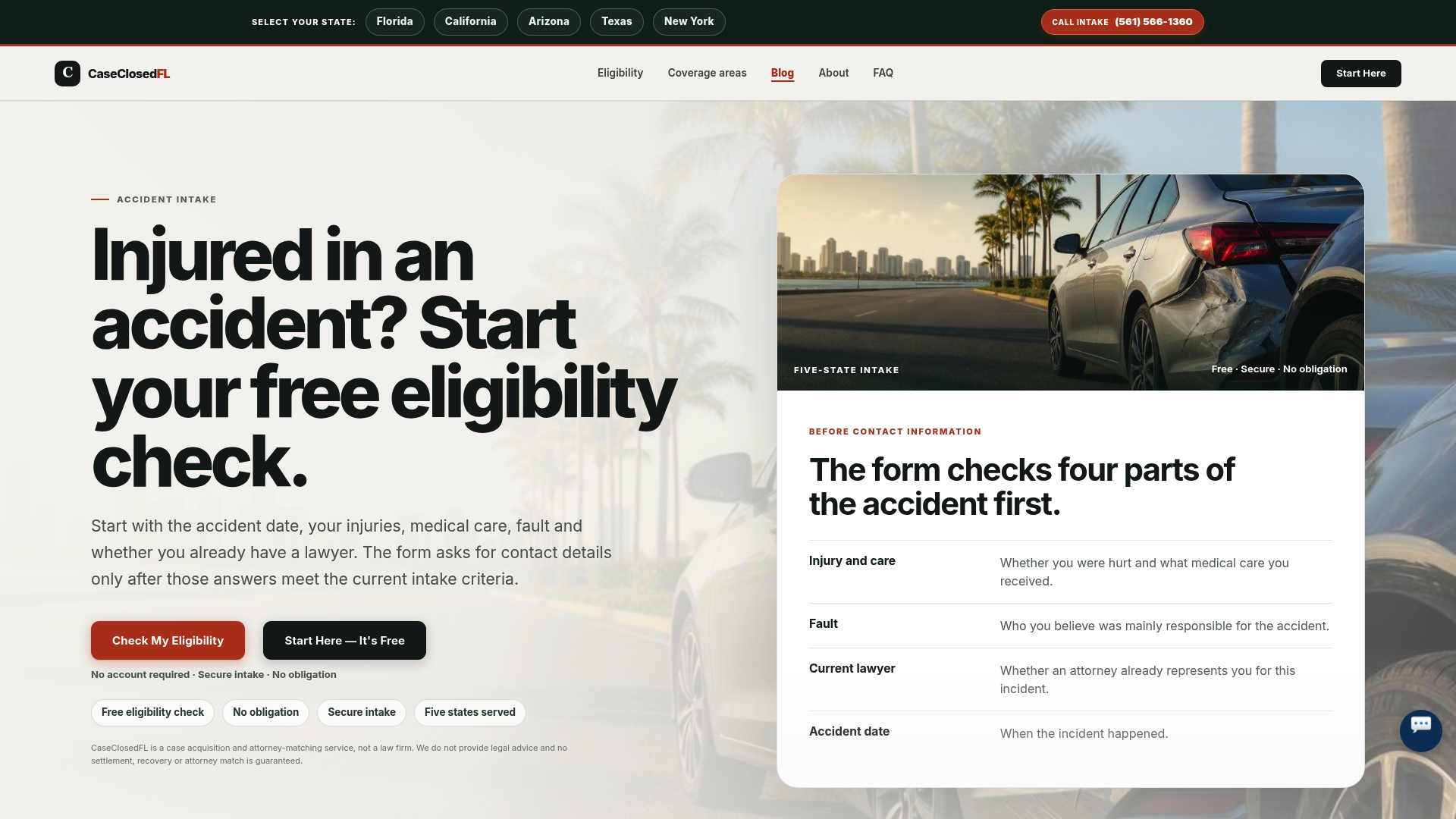
- The intake asks about the accident, your injuries, fault, and current representation status.
- Each submission is reviewed before it is referred to an attorney.
- Personal contact information is requested only if the case meets intake criteria, which limits unwanted solicitation.
If you want a case-specific starting point, the Miami accident case review page walks through how case value factors get assessed. Otherwise, you can start the free eligibility check directly and find out where you stand.
Sources
For anyone verifying details independently, a few sources are worth bookmarking.
- Airbag injuries in car accidents & legal options | Justia
- Vehicle air bags and injury prevention | NHTSA
- Trauma Case Reports: penetrating injuries from airbag fragments (2023)
- Airbag-related injuries review | PubMed
- Airbag defect and non-deployment claims | Observed
This article is general information, not a substitute for advice from a qualified lawyer. Consult a qualified legal professional about your own circumstances before acting on anything here.
FAQ
Can you sue for airbag injuries?
Yes, you can sue if a defective airbag, a negligent driver, or a poorly performing safety system caused or worsened your injuries. The right claim depends on whether the problem was the airbag’s design or manufacturing, a repair shop’s faulty parts, or another driver’s conduct, and a product liability or negligence claim can apply depending on the facts.
What is the most common injury caused by airbags?
Abrasions, burns, and eye or facial injuries are among the most frequently reported airbag injuries, along with hearing damage and neck or spinal strain from the force of deployment. Medical literature on airbag-related trauma describes these as recurring patterns, with more severe injuries like penetrating wounds tied specifically to inflator rupture.
What is the average settlement for airbags not deploying?
There is no fixed average settlement for non-deployment cases, since value depends on injury severity, evidence quality, and whether a defect can be proven. Settlement leverage tends to rise when the vehicle, Event Data Recorder, and any recall history are preserved and documented, according to legal guidance on airbag defect claims.
How likely is a car to be totaled if the airbags deploy?
Airbag deployment often signals a crash severe enough that repair costs, including airbag system replacement, approach or exceed the vehicle’s value, which frequently leads an insurer to total it. Whether a specific car gets totaled depends on the insurer’s cost threshold and the vehicle’s pre-crash value, not on deployment alone.
Recommended
Frequently asked questions
Table of Contents How airbags work and what makes them fail Common injuries from airbag deployment and warning signs Step-by-step checklist to protect your health and your claim Who can be held liable and what claims apply What compensation you can seek and what drives settlement value Major recalls and how they affect an airbag claim Filing deadlines and why timing matters What to preserve and how forensic inspection supports your case When to consult an attorney and what they will do What injured people tend to get wrong first How CaseClosedFL’s free eligibility check can help Sources FAQ How airbags work and what makes them fail An airbag deploys when a crash sensor triggers an igniter inside the inflator, setting off a chemical reaction that fills the bag with gas in a fraction of a second. That speed is what makes airbags effective, and it is also what makes a malfunction dangerous. When something goes wrong in the inflator, sensor, or wiring, the same force meant to protect you can cause serious harm. Several failure patterns show up in airbag injury cases: Non-deployment or late deployment during a crash that should have triggered the airbag. Deployment with excessive force, sending debris or the bag itself into the occupant with more energy than intended. Inflator rupture, where the metal canister breaks apart and sends fragments into the vehicle cabin. Sensor or wiring faults that misread crash severity. Improper or counterfeit replacement parts installed during repairs. NHTSA warns that substandard aftermarket inflator replacements have caused deaths, and that older inflators are more prone to degrading over time. Common injuries from airbag deployment and warning signs Airbag deployment causes a recognizable set of injuries, and medical literature on the topic documents a range of traumatic lesions from the sudden contact and chemical exposure. Some injuries are obvious right away. Others take hours or days to surface. Abrasions and thermal or chemical burns to the face, chest, and hands. Eye injuries, including corneal abrasions and chemical irritation from inflator residue. Hearing damage from the deployment’s noise. Facial fractures and dental injuries from direct impact. Neck, spinal, and concussion or traumatic brain injury risks from the force of contact. Some airbag injuries develop later. Respiratory irritation from inhaled particulate and internal injuries may not be apparent at the scene, which is one reason medical documentation matters even for injuries that seem minor at first. Penetrating wounds, embedded metal fragments, or unusually shaped lacerations are red flags for inflator rupture and should prompt immediate specialist evaluation. Step-by-step checklist to protect your health and your claim What you do in the first days after the crash shapes both your recovery and your legal options. Get medical care immediately and tell the provider you suspect the airbag caused or worsened your injuries, so it appears in the record. Photograph your injuries, the vehicle interior, the deployed airbag module, and the VIN plate. Keep damaged clothing and any objects that show burn or impact marks; do not wash or discard them. Do not repair, sell, or send the car to salvage. Arrange for the Event Data Recorder to be downloaded before the battery is disconnected or any repair work begins. Look up the VIN at NHTSA’s recall database to check for open airbag recalls tied to your vehicle. If an insurer or salvage yard pushes to dispose of the vehicle, send a written preservation request or have a lawyer send one. Pro Tip: Ask the tow yard or body shop in writing to hold the vehicle and airbag components until your attorney or an independent expert has inspected them. Who can be held liable and what claims apply Airbag injury cases often involve more than one legal theory, and identifying the right defendant depends on what actually went wrong. Product liability covers manufacturing defects, design defects, and failure to warn, and can target the automaker, the airbag or inflator supplier, a parts contractor, or a repair shop that installed a faulty replacement part. Negligence applies when another driver’s conduct caused the crash that triggered the airbag, even if the airbag itself functioned as designed. Crashworthiness , sometimes called the enhanced-injury doctrine, lets you pursue a claim when a defective safety system worsened your injuries beyond what the crash alone would have caused, even if you share some fault for the collision. Justia’s overview of airbag injury claims notes that product liability cases often turn on whether the safety system provided reasonable protection in a foreseeable accident. Many plaintiffs bring a negligence claim against the other driver alongside a product liability claim against a manufacturer, since the two target different sources of harm. Proving a defect claim typically requires expert testimony from engineers or biomechanical specialists who can trace how the airbag failed and how that failure changed the injury outcome. What compensation you can seek and what drives settlement value Damages in an airbag injury claim usually fall into two categories, with a third possible in specific circumstances. Economic damages cover past and future medical bills, lost income, rehabilitation, and any assistive devices you now need. Noneconomic damages cover pain and suffering, emotional distress, and loss of enjoyment of life, valued through methods attorneys and insurers use to weigh severity and duration of harm. Punitive damages may apply in cases involving reckless conduct or a manufacturer’s failure to address a known, unrepaired recall. Documented, objective injuries strengthen a claim’s value. Legal guidance on airbag defect and non-deployment cases points out that an unrepaired safety recall tied to your VIN can be strong evidence that a defect was known and left unaddressed, which tends to increase settlement leverage. Preserved evidence, from the police report to EDR data, gives your attorney concrete facts to negotiate with rather than a dispute over what happened. Major recalls and how they affect an airbag claim The Takata inflator recall is the clearest example of how a defective part can cause widespread harm. Ruptured Takata inflators sent metal fragments into occupants, and NHTSA’s consumer alerts describe the scale of the recall response that followed. An open or unrepaired recall tied to your VIN can serve as direct evidence that the manufacturer knew about a defect and did not fix it. Recall status does not resolve a claim by itself, but it removes a major point of dispute over whether a defect existed. Aftermarket or substandard replacement inflators carry similar risks to the original Takata units, since NHTSA has flagged counterfeit parts as a source of deadly ruptures. Checking your VIN against the federal recall database is one of the fastest ways to learn whether your case has this kind of supporting evidence. Filing deadlines and why timing matters Every state sets its own statute of limitations for personal injury and product liability claims, and the deadline in your state controls how long you have to file. Nolo’s guidance on airbag injury claims notes that these deadlines vary by state and that missing one generally bars the claim entirely, regardless of how strong the evidence is. Confirm your state’s specific filing deadline early, since ranges differ significantly across the country. Some states apply a discovery rule, where the clock starts when you discovered or reasonably should have discovered the defect, not necessarily the date of the crash. Expert inspection of the vehicle and airbag components works best soon after the crash, before parts degrade, get repaired, or get scrapped. Because these windows can be short and evidence can vanish quickly, a legal consultation early in the process protects options you might otherwise lose. What to preserve and how forensic inspection supports your case Evidence preservation is often the difference between a strong claim and a disputed one. Keep the deployed airbag module and inflator canister exactly as they are; do not clean or discard them. Photograph the steering wheel, dashboard, and any visible damage from multiple angles. Request the VIN-linked Event Data Recorder download before the vehicle is repaired or the battery disconnected, since that action can erase stored crash data. Obtain the police report, your medical records, and contact information for any witnesses. Arrange an independent inspection if you suspect a defect, so an engineer can examine deployment timing and inflator condition before parts are altered. Case reports on penetrating injuries from airbag inflator fragments show that early forensic inspection of the inflator can preserve fragments and metallurgical evidence engineers use to trace fragmentation patterns back to specific inflator designs or production batches. Pro Tip: Ask your body shop or insurer, in writing, to hold off on any repair until the EDR has been downloaded by a qualified technician. When to consult an attorney and what they will do Certain situations call for legal help without delay. Your injuries are serious, involve surgery, or require ongoing treatment. You notice signs of inflator rupture, such as shrapnel wounds or unusual lacerations. Your vehicle has an open, unrepaired airbag recall. The vehicle is at risk of repair, sale, or salvage before evidence can be preserved. Once retained, an attorney typically handles evidence preservation, arranges the EDR retrieval, hires engineering or medical experts, files the claim within your state’s deadline, and negotiates with insurers or defendants. Most personal injury attorneys work on contingency, meaning no upfront fee, and take a percentage only if you recover compensation. Bring your medical records, photographs, the police report, and any recall notices to your first consultation. What injured people tend to get wrong first The biggest mistake I see is treating the car as a formality, something to get fixed or replaced quickly so life can return to normal. That instinct is understandable, and it can quietly destroy a claim. The vehicle and its airbag components are often the strongest evidence you have, and once they are repaired, scrapped, or sold, that evidence is gone. Handle insurers and salvage yards in writing, keep copies of everything, and check the federal recall database yourself rather than relying solely on someone else’s word. When you are unsure whether your situation qualifies for legal action, a free eligibility check can clarify that without any commitment. — Luis How CaseClosedFL’s free eligibility check can help Sorting out whether you have a viable airbag injury claim does not require hiring anyone on the spot. The free eligibility check gathers the basics of your accident, your injuries, and whether you already have legal representation, then routes qualified cases for review before any attorney contact happens. The intake asks about the accident, your injuries, fault, and current representation status. Each submission is reviewed before it is referred to an attorney. Personal contact information is requested only if the case meets intake criteria, which limits unwanted solicitation. If you want a case-specific starting point, the Miami accident case review page walks through how case value factors get assessed. Otherwise, you can start the free eligibility check directly and find out where you stand. Sources For anyone verifying details independently, a few sources are worth bookmarking. Airbag injuries in car accidents & legal options | Justia Vehicle air bags and injury prevention | NHTSA Trauma Case Reports: penetrating injuries from airbag fragments (2023) Airbag-related injuries review | PubMed Airbag defect and non-deployment claims | Observed This article is general information, not a substitute for advice from a qualified lawyer. Consult a qualified legal professional about your own circumstances before acting on anything here. FAQ Can you sue for airbag injuries?
Yes, you can sue if a defective airbag, a negligent driver, or a poorly performing safety system caused or worsened your injuries. The right claim depends on whether the problem was the airbag’s design or manufacturing, a repair shop’s faulty parts, or another driver’s conduct, and a product liability or negligence claim can apply depending on the facts.
What is the most common injury caused by airbags?
Abrasions, burns, and eye or facial injuries are among the most frequently reported airbag injuries, along with hearing damage and neck or spinal strain from the force of deployment. Medical literature on airbag-related trauma describes these as recurring patterns, with more severe injuries like penetrating wounds tied specifically to inflator rupture.
What is the average settlement for airbags not deploying?
There is no fixed average settlement for non-deployment cases, since value depends on injury severity, evidence quality, and whether a defect can be proven. Settlement leverage tends to rise when the vehicle, Event Data Recorder, and any recall history are preserved and documented, according to legal guidance on airbag defect claims.
How likely is a car to be totaled if the airbags deploy?
Airbag deployment often signals a crash severe enough that repair costs, including airbag system replacement, approach or exceed the vehicle’s value, which frequently leads an insurer to total it. Whether a specific car gets totaled depends on the insurer’s cost threshold and the vehicle’s pre-crash value, not on deployment alone.
Ready to enter the accident details?
The eligibility form asks about the accident, injury, treatment, fault and representation before contact information.
Start Eligibility Check