90 Day Deadline for Public Buses: File a Bus Accident Claim Fast
File a U.S. bus accident claim the right way: preserve evidence fast, meet public agency notice deadlines, and try a free eligibility check.


Yes, you can usually file a bus accident claim, but the clock matters more than most people realize. Government-operated buses often carry notice-of-claim deadlines as short as 90 days, far tighter than a standard personal injury statute of limitations. Your first move should be getting medical care documented and preserving scene evidence before it disappears.
TL;DR:
- Filing a claim against a government-operated bus requires prompt notice within 90 days, making early legal action crucial for public transit accidents.
- Evidence such as police reports, witness statements, maintenance logs, and telematics footage can vanish quickly, emphasizing the need for immediate preservation efforts.
- Liability may involve the driver, transit agency, manufacturer, or third-party contractors, with claims against public agencies subject to stricter procedural rules.
- Settlement timelines vary: private claims can resolve in months, while public transit cases often take longer due to additional review and legal steps.
- Hiring an attorney early, especially for government-related crashes or severe injuries, ensures proper evidence preservation and fair claim valuation.
Table of Contents
- What to Do in the First Hours and Days After a Bus Accident
- Who Is Liable for a Bus Accident?
- How Do You File a Bus Accident Claim?
- What Evidence Proves a Bus Accident Claim?
- How Much Compensation Can You Get and How Long Does It Take?
- When Should You Hire a Bus Accident Attorney?
- What the Data Actually Tells Us About Bus Claims
- Get Matched With an Attorney Through a Free Eligibility Check
- Where to Find Official Claim Forms and Safety Data
- Sources
- FAQ
What to Do in the First Hours and Days After a Bus Accident
The steps you take in the first 24 to 48 hours often decide whether a bus accident claim succeeds or stalls. Evidence disappears fast, memories fade, and some agencies overwrite camera footage within days.
- Call 911 and get medical attention, even if injuries seem minor. Adrenaline masks pain, and a documented ER or urgent care visit creates the first medical record tying your injuries to the crash.
- Record the bus identification. Note the route number, bus number, and license plate. Transit agencies and private carriers operate large fleets, and without this identifier, investigators can lose days confirming which vehicle was involved.
- Photograph and video everything. Capture the scene, vehicle damage, road conditions, traffic signals, and visible injuries before anything gets moved or cleared.
- Collect witness information. Ask bystanders and other passengers for names and phone numbers, and note any nearby businesses or transit cameras that may have captured footage.
- File or request a police report. Get the report number before you leave the scene whenever possible; you’ll need it for insurance notice and any notice-of-claim filing.
- Limit what you tell insurers. Give basic facts but decline recorded statements until you’ve spoken with an attorney.
- Write down your own account of what happened while it’s fresh, including time, weather, and anything the driver or other passengers said.
Pro Tip: Text yourself a timestamped note right after the crash, even a few bullet points. That message becomes a contemporaneous record that’s hard for an insurance adjuster to dispute later.
Who Is Liable for a Bus Accident?
Liability in a bus accident claim rarely rests on one party. Figuring out who pays starts with understanding several overlapping legal theories.
- The bus driver, if reckless driving, distraction, or fatigue caused the crash.
- The bus operator or transit agency, under vicarious liability for an employee’s negligence or direct liability for poor training and maintenance oversight.
- A manufacturer or parts supplier, when a defective brake system, tire, or mechanical part contributed to the crash, which shifts the claim toward product liability.
- A maintenance contractor or third-party driver, when outside vendors service the bus or another vehicle caused the collision.
Private carriers and municipal transit agencies are treated very differently under the law. Suing a private bus company follows standard negligence procedure, but claims against a city or county-run transit system often trigger government immunity protections and rigid procedural rules, as Justia’s overview of bus accident law explains. Most states also apply comparative fault rules, meaning your compensation shrinks by whatever percentage of fault gets assigned to you.
How Do You File a Bus Accident Claim?
Filing looks different depending on whether a private company or a government agency operated the bus, and that difference can decide whether you have a case at all.

Start by notifying the relevant insurer promptly. Give them the basic facts (date, location, vehicle involved, injuries sustained) but avoid detailed recorded statements until you’ve consulted an attorney. Insurers are trained to ask questions that minimize payouts, not maximize yours.
If a public transit agency operated the bus, you likely need to file a formal notice of claim before you can sue, and the deadline is often much shorter than you’d expect:
- New York City requires written notice of claim to the Comptroller within just 90 days under NYC Administrative Code § 7-201 and General Municipal Law § 50-e.
- California gives claimants roughly six months for many public entity claims, though the exact window varies by agency.
- Standard statutes of limitation for private-party personal injury claims typically run two to three years depending on the state, but that timeline is irrelevant if you miss a shorter public-entity notice deadline first.
Your notice should include the date and location of the crash, a description of your injuries, the bus route or vehicle number if known, and your contact information. Most transit agencies post notice-of-claim forms directly on their websites. Once the notice is filed, most cases proceed through demand letters and settlement negotiation with the agency’s claims department or insurer. Litigation becomes necessary only when a fair settlement offer doesn’t materialize or the deadline for a formal lawsuit is approaching.
What Evidence Proves a Bus Accident Claim?
Strong bus accident claims are built on layers of evidence, not a single document. Practitioner guides on starting a bus accident legal claim consistently point to a handful of records that carry the most weight.
- The police report and crash scene photos, which establish the basic facts of how the collision happened.
- Contemporaneous witness statements, collected before memories fade or people become hard to reach.
- Bus-specific records, including maintenance logs, pre-trip and post-trip inspection reports, driver logs, and dispatch records.
- Telematics and dashcam footage, which can show speed, braking, and driver behavior in the seconds before impact.
- Medical records and proof of economic loss, such as pay stubs, employer statements, and treatment bills.
Telematics data is the evidence most likely to vanish. Many transit systems automatically overwrite onboard camera footage on a rolling cycle, sometimes within days or weeks. Attorneys typically send an immediate preservation letter, sometimes backed by a subpoena, to lock down that footage before it’s gone.
Pro Tip: If you remember nothing else, remember the bus number and route. Without it, an attorney may have to subpoena an entire fleet’s records just to identify the right vehicle.

How Much Compensation Can You Get and How Long Does It Take?
Compensation in a bus accident claim generally falls into two categories: economic and non-economic damages.
- Economic damages cover medical bills, lost wages, and future medical care, documented through billing records, pay stubs, and treatment plans.
- Non-economic damages cover pain and suffering and loss of enjoyment of life, typically estimated using the severity and permanency of the injury as a guide.
- Settlement size depends heavily on injury severity, how strong the evidence is, and the available insurance policy limits.
Bus crashes remain a persistent source of injury nationwide, and the FMCSA’s crash statistics portal tracks these incidents at the national level, underscoring why insurers and transit agencies have well-established claims processes for handling them.
A straightforward private-party claim with clear liability and moderate injuries can settle within a few months of treatment ending. Claims against public transit agencies almost always take longer, since the notice-of-claim process, agency review, and government legal departments add procedural steps a private insurer doesn’t have. Cases with serious or permanent injuries, disputed fault, or policy-limit disputes are the ones most likely to end up in litigation rather than settling early.
When Should You Hire a Bus Accident Attorney?
Hire an attorney immediately if a government-operated bus was involved, multiple people were injured, your losses are significant, or an insurer is pressuring you to settle fast. Early counsel sends preservation letters before footage is erased, values your claim accurately, and handles insurer negotiations. A free eligibility check service connects you with attorneys across several states through a privacy-first intake that only requests contact details once your case qualifies.
What the Data Actually Tells Us About Bus Claims
Most guides on bus accident claims focus heavily on medical documentation and treat the legal process like any other car accident case. That’s a mistake. The single biggest risk in a bus accident claim isn’t proving your injuries, it’s missing a notice-of-claim deadline you didn’t know existed. A 90-day window against a private insurer feels generous. Against a city transit agency, it can evaporate while you’re still in physical therapy trying to figure out how badly you’re hurt.
The conventional advice to “focus on healing first and deal with the claim later” works fine for a private-party fender bender. It’s dangerous advice for a public bus crash. Telematics data gets overwritten, witnesses move on, and agency clocks don’t pause for your recovery. If you take one thing from this article, let it be this: identify whether a government entity operated the bus within the first week, not the first month. That single fact determines your entire timeline.
— Luis
Get Matched With an Attorney Through a Free Eligibility Check
A certain service aims to provide a faster path to legal help than searching through directories or cold-calling law firms, with no cost to find out where you stand. The intake asks about your accident, your injuries, whether you’re already represented, and your location, then only requests your contact information if your case meets the criteria attorneys are looking for. This upfront screening is designed to protect privacy and reduce unwanted solicitation calls.
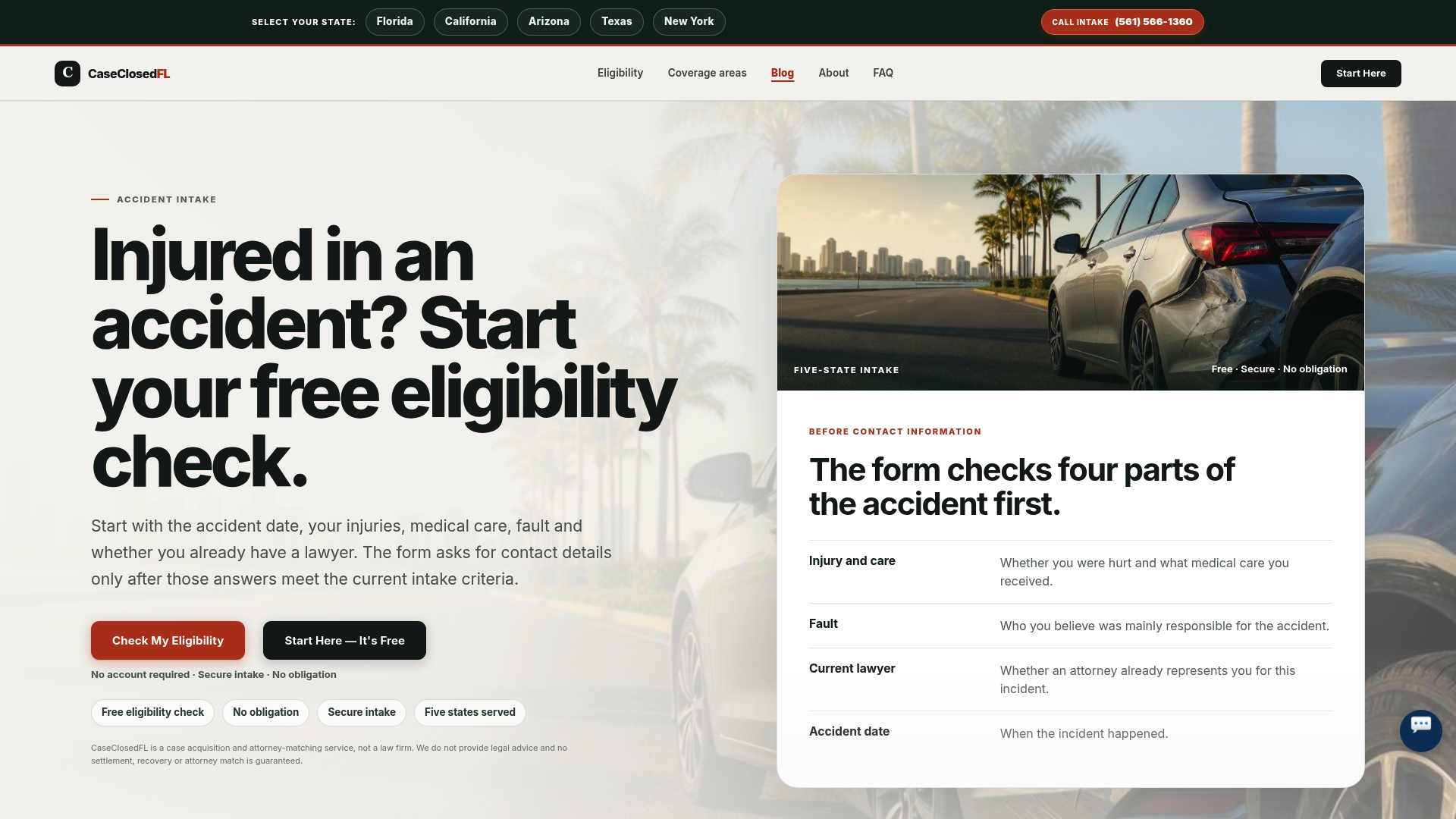
Before you start, have a few basics ready: the date and location of the crash, a short summary of your injuries and treatment so far, and your contact information. Every submission goes through a human review process before being routed to an attorney, rather than solely automated decision-making. If you were hurt in a bus accident anywhere Caseclosedfl operates, including Florida, California, Arizona, Texas, and New York, start your free eligibility check today and find out whether your case qualifies for attorney review.
Where to Find Official Claim Forms and Safety Data
- File public-entity claims through the agency’s own portal, such as the NYC Comptroller’s claims office.
- Review federal safety context through the NTSB and the FTA.
- Check national injury trends through NSC injury facts on school buses.
This article is general information, not a substitute for advice from a qualified lawyer. Consult a qualified legal professional about your own circumstances before acting on anything here.
Sources
FAQ
How Much Compensation Can You Get for Being Hit by a Bus?
Compensation depends on injury severity, lost wages, medical costs, and the at-fault party’s insurance limits, so there’s no fixed number. Cases with permanent injuries or strong liability evidence generally recover more than claims with minor injuries or disputed fault.
How Much Money Can You Get From a Bus Accident Settlement?
Settlement value is driven by documented economic losses (medical bills and lost wages) plus non-economic damages like pain and suffering. Policy limits on the bus operator’s insurance often cap what’s realistically recoverable, regardless of injury severity.
How Long Does a Bus Accident Settlement Take?
A simple private-party claim with clear liability can settle within a few months of finishing treatment. Claims against a public transit agency typically take longer because of mandatory notice-of-claim procedures and agency review timelines.
What Happens If a Bus Gets in an Accident?
The driver and agency or company must report the crash, and passengers should seek medical care and document the scene immediately. Liability then gets investigated across the driver, the operator, and potentially a parts manufacturer or maintenance contractor, guided by evidence like maintenance logs and telematics data.
Does Caseclosedfl Charge for Its Eligibility Check?
No, the eligibility check is free, with no obligation to move forward if you’re matched with an attorney. You only provide contact details after your case meets the intake criteria.
Recommended
Frequently asked questions
Table of Contents What to Do in the First Hours and Days After a Bus Accident Who Is Liable for a Bus Accident? How Do You File a Bus Accident Claim? What Evidence Proves a Bus Accident Claim? How Much Compensation Can You Get and How Long Does It Take? When Should You Hire a Bus Accident Attorney? What the Data Actually Tells Us About Bus Claims Get Matched With an Attorney Through a Free Eligibility Check Where to Find Official Claim Forms and Safety Data Sources FAQ What to Do in the First Hours and Days After a Bus Accident The steps you take in the first 24 to 48 hours often decide whether a bus accident claim succeeds or stalls. Evidence disappears fast, memories fade, and some agencies overwrite camera footage within days. Call 911 and get medical attention , even if injuries seem minor. Adrenaline masks pain, and a documented ER or urgent care visit creates the first medical record tying your injuries to the crash. Record the bus identification. Note the route number, bus number, and license plate. Transit agencies and private carriers operate large fleets, and without this identifier, investigators can lose days confirming which vehicle was involved. Photograph and video everything. Capture the scene, vehicle damage, road conditions, traffic signals, and visible injuries before anything gets moved or cleared. Collect witness information. Ask bystanders and other passengers for names and phone numbers, and note any nearby businesses or transit cameras that may have captured footage. File or request a police report. Get the report number before you leave the scene whenever possible; you’ll need it for insurance notice and any notice-of-claim filing . Limit what you tell insurers. Give basic facts but decline recorded statements until you’ve spoken with an attorney. Write down your own account of what happened while it’s fresh, including time, weather, and anything the driver or other passengers said. Pro Tip: Text yourself a timestamped note right after the crash, even a few bullet points. That message becomes a contemporaneous record that’s hard for an insurance adjuster to dispute later. Who Is Liable for a Bus Accident?
Liability in a bus accident claim rarely rests on one party. Figuring out who pays starts with understanding several overlapping legal theories.
How Do You File a Bus Accident Claim?
Filing looks different depending on whether a private company or a government agency operated the bus, and that difference can decide whether you have a case at all.
What Evidence Proves a Bus Accident Claim?
Strong bus accident claims are built on layers of evidence, not a single document. Practitioner guides on starting a bus accident legal claim consistently point to a handful of records that carry the most weight.
How Much Compensation Can You Get and How Long Does It Take?
Compensation in a bus accident claim generally falls into two categories: economic and non-economic damages.
When Should You Hire a Bus Accident Attorney?
Hire an attorney immediately if a government-operated bus was involved, multiple people were injured, your losses are significant, or an insurer is pressuring you to settle fast. Early counsel sends preservation letters before footage is erased, values your claim accurately, and handles insurer negotiations. A free eligibility check service connects you with attorneys across several states through a privacy-first intake that only requests contact details once your case qualifies.
What the Data Actually Tells Us About Bus Claims Most guides on bus accident claims focus heavily on medical documentation and treat the legal process like any other car accident case. That’s a mistake. The single biggest risk in a bus accident claim isn’t proving your injuries, it’s missing a notice-of-claim deadline you didn’t know existed. A 90-day window against a private insurer feels generous. Against a city transit agency, it can evaporate while you’re still in physical therapy trying to figure out how badly you’re hurt. The conventional advice to “focus on healing first and deal with the claim later” works fine for a private-party fender bender. It’s dangerous advice for a public bus crash. Telematics data gets overwritten, witnesses move on, and agency clocks don’t pause for your recovery. If you take one thing from this article, let it be this: identify whether a government entity operated the bus within the first week, not the first month. That single fact determines your entire timeline. — Luis Get Matched With an Attorney Through a Free Eligibility Check A certain service aims to provide a faster path to legal help than searching through directories or cold-calling law firms, with no cost to find out where you stand. The intake asks about your accident, your injuries, whether you’re already represented, and your location, then only requests your contact information if your case meets the criteria attorneys are looking for. This upfront screening is designed to protect privacy and reduce unwanted solicitation calls. Before you start, have a few basics ready: the date and location of the crash, a short summary of your injuries and treatment so far, and your contact information. Every submission goes through a human review process before being routed to an attorney, rather than solely automated decision-making. If you were hurt in a bus accident anywhere Caseclosedfl operates, including Florida, California, Arizona, Texas, and New York, start your free eligibility check today and find out whether your case qualifies for attorney review. Where to Find Official Claim Forms and Safety Data File public-entity claims through the agency’s own portal, such as the NYC Comptroller’s claims office . Review federal safety context through the NTSB and the FTA . Check national injury trends through NSC injury facts on school buses . This article is general information, not a substitute for advice from a qualified lawyer. Consult a qualified legal professional about your own circumstances before acting on anything here. Sources NYC Comptroller — Claims FMCSA crash statistics portal Usa Bus accident law — Justia FAQ How Much Compensation Can You Get for Being Hit by a Bus?
Compensation depends on injury severity, lost wages, medical costs, and the at-fault party’s insurance limits, so there’s no fixed number. Cases with permanent injuries or strong liability evidence generally recover more than claims with minor injuries or disputed fault.
How Much Money Can You Get From a Bus Accident Settlement?
Settlement value is driven by documented economic losses (medical bills and lost wages) plus non-economic damages like pain and suffering. Policy limits on the bus operator’s insurance often cap what’s realistically recoverable, regardless of injury severity.
How Long Does a Bus Accident Settlement Take?
A simple private-party claim with clear liability can settle within a few months of finishing treatment. Claims against a public transit agency typically take longer because of mandatory notice-of-claim procedures and agency review timelines.
Ready to enter the accident details?
The eligibility form asks about the accident, injury, treatment, fault and representation before contact information.
Start Eligibility Check