Keep Florida PIP Benefits: Start Care in 14 Days With Free Check
Protect Florida PIP benefits: start treatment within 14 days, document EMC and bills, learn appeal steps, and try a free eligibility check.
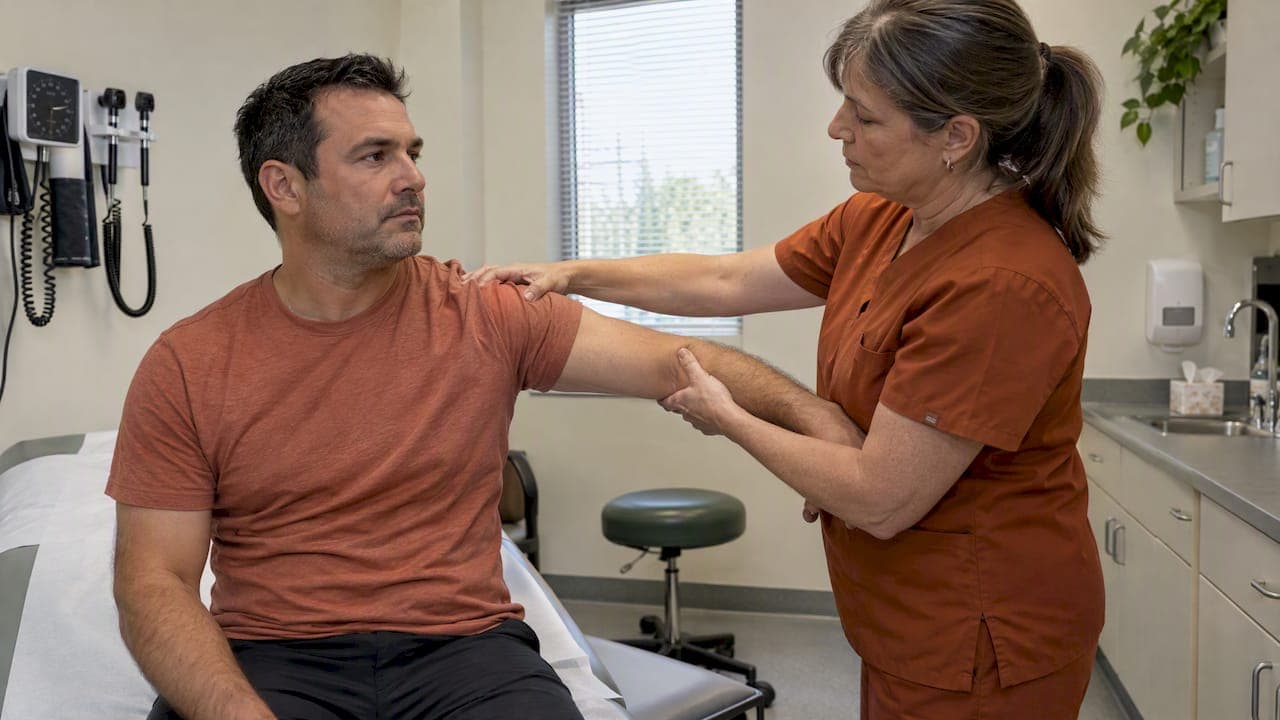

Florida PIP benefits pay 80% of reasonable medical expenses and 60% of lost wages, up to a $10,000 medical cap when an Emergency Medical Condition is diagnosed, or just $2,500 when it is not. A death benefit of $5,000 applies as well. The single biggest risk to these benefits is timing: initial treatment must begin within 14 days of the crash, or medical coverage can be denied outright.
TL;DR:
- The medical benefit cap drops from $10,000 to $2,500 if treatment does not start within 14 days, risking significant coverage loss.
- Realize that emergency medical condition certification can make the difference in receiving a larger payout during a claim.
- Delays in treatment or lack of proper documentation can lead to claim denial or underpayment, emphasizing the importance of prompt, thorough record-keeping.
- Once damages exceed PIP limits or involve severe injuries, victims can pursue lawsuits for additional compensation, including pain and suffering.
- Filing a claim after an accident does not typically impact future premiums unless multiple claims suggest higher risk to insurers.
Table of Contents
- What PIP covers: benefit categories and who is insured
- How the EMC rule, deductibles, and payment percentages affect your payout
- How to file a PIP claim: timeline, documents, and next steps
- When you can sue or seek more than PIP pays
- Common exclusions and how to resolve a PIP dispute
- Does using PIP affect future claims or your premiums?
- Appealing a denied PIP claim in Florida
- A publisher’s perspective on when to seek legal help
- Get a free eligibility check through CaseClosedFL
- FAQ
- Sources
What PIP covers: benefit categories and who is insured
Florida’s no-fault insurance system requires every registered vehicle owner to carry PIP with a minimum limit of $10,000, alongside at least $10,000 in Property Damage Liability coverage, according to Florida Highway Safety and Motor Vehicles. PIP pays regardless of who caused the crash, which is the trade-off at the center of no-fault coverage: faster payment, but a capped amount.
The benefit splits into four categories, each with its own rules and payment rate:
- Medical benefits cover 80% of reasonable, necessary treatment related to the crash, including emergency care, follow-up visits, diagnostic imaging, and surgery, though some services like massage therapy and acupuncture are statutorily excluded.
- Disability and lost-wage benefits reimburse 60% of gross income lost because the injury prevents work, calculated from documented wages before the accident.
- Replacement services pay for tasks the injured person can no longer perform, such as housekeeping or childcare, when a family member or hired help steps in.
- Death benefits pay $5,000 to the insured’s estate or named survivors when the crash is fatal.
Coverage extends beyond the named policyholder. Resident relatives in the household, authorized drivers, and passengers in the insured vehicle typically qualify. Pedestrians and bicyclists struck by a covered vehicle may also draw PIP benefits from that vehicle’s policy, even though they were not inside it.
How the EMC rule, deductibles, and payment percentages affect your payout
The gap between a $10,000 payout and a $2,500 payout usually comes down to one determination: whether a qualified medical provider certifies an Emergency Medical Condition. An EMC is a condition with acute symptoms severe enough that the absence of immediate care could reasonably result in serious health consequences. Physicians, physician assistants, osteopathic physicians, and advanced practice registered nurses can make this determination, according to the official PIP notice published by the Florida Office of Insurance Regulation.

Accident victims who delay treatment past 14 days risk losing medical PIP benefits entirely, since the statute ties eligibility directly to that window, per Florida’s PIP notice.
Here is how the math works in practice:
- A provider bills $6,000 for treatment tied to a diagnosed EMC.
- PIP pays 80% of that amount, or $4,800, leaving $1,200 as the insured’s responsibility before any deductible.
- If lost wages total $2,000, PIP pays 60%, or $1,200, following the same percentage rule described by ValuePenguin.
Policyholders can choose an optional deductible, at various levels, which applies before PIP starts paying and lowers monthly premiums in exchange for higher out-of-pocket exposure after a crash. Insurers may also elect to pay claims using the statutory schedule of maximum charges rather than billed amounts, but they must notify policyholders of that election in the policy itself.
How to file a PIP claim: timeline, documents, and next steps
Seeking medical attention within 14 days is the first and most urgent step, since it both protects the medical benefit and creates the record a provider needs to certify an EMC. Waiting past that window, even for symptoms that seem minor at first, can cut the available medical benefit from $10,000 down to $2,500.
Once treatment begins, building a clean paper trail matters as much as the treatment itself:
- Keep copies of all medical records, discharge paperwork, and the EMC determination if one was made.
- Request itemized bills from every provider rather than summary statements.
- Gather wage verification from your employer, typically covering a 13-week lookback period, to support lost-income claims.
- Save receipts for replacement services, such as hired housekeeping or childcare, with dates and amounts.
Florida insurers generally have 30 days from receiving written notice of a covered loss to pay or deny the claim. Overdue payments accrue interest under state law, which gives insurers a real incentive to process claims promptly once documentation is complete.
Pro Tip: If treatment is delayed for any reason, document why in writing and get care as soon as possible. A short explanation in your file can matter later if your insurer questions the gap.
When you can sue or seek more than PIP pays
PIP is designed to cover routine accident costs quickly, but it is not unlimited. Florida law allows an injured person to step outside no-fault coverage and pursue a liability claim against the at-fault driver when the injury meets a “serious injury” threshold, such as significant and permanent scarring, permanent injury, or loss of a bodily function, or when medical expenses exceed PIP’s limits.
Once that threshold is met, damages beyond PIP’s medical and wage reimbursement become available, including full lost wages, future earning capacity, and pain and suffering. If your bills already exceed what PIP paid, the practical next step is to keep every bill and record organized and consult an attorney about whether your case meets the legal threshold for a claim beyond PIP.
Common exclusions and how to resolve a PIP dispute
Not every expense or situation qualifies for PIP payment. Coverage can be denied for injuries sustained while committing a felony, while operating a vehicle without the owner’s consent, or for specific excluded services such as massage therapy and acupuncture, as outlined in the official PIP benefits notice.
Certain patterns tend to trigger insurer scrutiny and should be avoided where possible:
- Gaps between the accident date and the first medical visit.
- Inconsistent treatment notes across different providers.
- No documented EMC determination in the file.
When a claim is denied or underpaid, Florida offers a mediation process through the Department of Financial Services using Form DFS-10-510, which gives both sides a chance to resolve the dispute without litigation. If mediation fails or the dispute involves significant sums, consulting an attorney becomes a reasonable next step, particularly when the insurer has missed the 30-day payment window without a documented reason.
Does using PIP affect future claims or your premiums?
Filing a PIP claim after a covered accident is a routine use of coverage you are required to carry, not an unusual event that automatically raises red flags. Unlike some liability claims, PIP claims are not fault-based, so a single claim following a crash typically does not carry the same weight as an at-fault liability claim when insurers evaluate risk.
That said, insurers do consider claims history broadly when setting rates at renewal. A pattern of multiple claims, regardless of type, can influence how an insurer prices a policy going forward, and insurers also weigh the frequency of accidents on a record rather than the mere existence of one PIP claim. Florida’s broader insurance market has also seen rate pressure tied to fraud and overutilization, which is part of why the legislature has repeatedly adjusted fee schedules and documentation requirements over the years.
For an individual driver, the most practical approach is to file the claim you are entitled to and keep documentation clean and complete. A well-documented, properly filed PIP claim following a legitimate accident is simply the coverage working as designed. Readers concerned about premium impact are better served asking their own insurer directly, since rating practices vary by carrier and are not uniform across the state.
Appealing a denied PIP claim in Florida
A PIP denial is not necessarily the end of the process. The first step is requesting a written explanation from the insurer specifying the reason for denial, since Florida law requires insurers to provide a basis for nonpayment rather than a blanket refusal.
From there, policyholders have a few paths forward. Reviewing the denial against your medical records and the EMC determination can reveal whether the insurer simply lacked documentation that your provider can supply. Resubmitting the claim with additional records, an itemized bill, or a corrected EMC certification resolves many denials without further escalation.
When a resubmission does not resolve the dispute, the Department of Financial Services mediation program using Form DFS-10-510 offers a formal but non-litigation path to challenge the denial. Mediation is often faster and less costly than a lawsuit, and it gives both the insured and the insurer a neutral forum to present their positions.

If mediation does not resolve the dispute, or if the denied amount is substantial relative to your overall damages, consulting a personal injury attorney about litigation options is a reasonable next step. An attorney can also evaluate whether the denial reflects a pattern worth challenging more broadly, particularly in cases involving fee-schedule disputes under the framework described in Florida Supreme Court opinion SC18-1390.
A publisher’s perspective on when to seek legal help
PIP benefits work well for routine accidents with modest bills and short recovery times. Where they fall short is clear: an EMC denial, bills exceeding $10,000, complicated wage-loss documentation, or a dispute an insurer refuses to resolve through mediation.
We offer an eligibility check that gathers details about the accident, injuries, fault, and any existing legal representation before requesting contact information, and every submission goes through human review before possible referral to attorneys. We do not provide legal advice, and we do not guarantee that a submission will result in attorney contact or a successful case.
— Luis
Get a free eligibility check through CaseClosedFL
When PIP falls short of covering your bills, or a claim gets denied and mediation stalls, the next step is usually a conversation with an attorney, not another round of paperwork with your insurer. Our free eligibility check exists for exactly that moment.
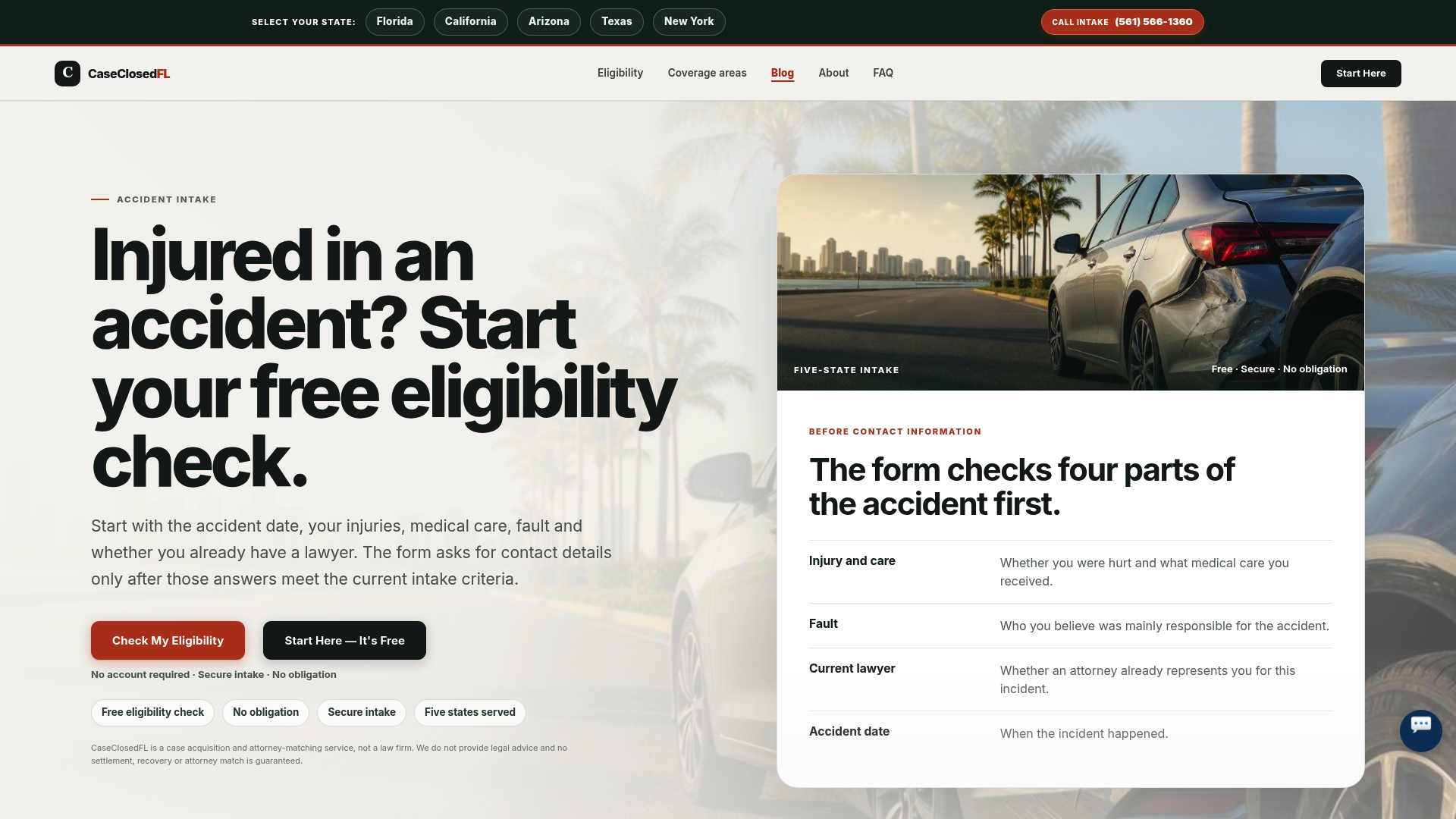
We ask about the accident, the injuries, fault, and whether you already have legal representation, and we request personal contact information only after your answers suggest a potential case. Every submission gets a human review before anything moves forward, which keeps unqualified leads from reaching attorneys and keeps your information out of unnecessary solicitation.
- No cost and no obligation to use the eligibility check.
- Privacy-first intake that limits who sees your information and when.
- Human review before any referral to a participating Florida personal injury attorney.
| What you get | What it is not |
|---|---|
| A free, no-obligation eligibility check | Legal advice |
| Human review of your submission | A guarantee of attorney contact |
| A possible connection to a participating attorney | A law firm or legal representation itself |
We are a matching service, not a law firm, and we cannot promise a specific outcome. If your PIP benefits have not covered your losses, start the eligibility check and find out whether your case qualifies for attorney review.
This article is general information, not a substitute for advice from a qualified financial advisor. Consult a qualified financial professional about your own circumstances before acting on anything here.
FAQ
Does Florida require PIP coverage?
Yes. Florida law requires every registered vehicle owner to carry Personal Injury Protection with a minimum limit of $10,000, along with at least $10,000 in Property Damage Liability coverage, according to Florida Highway Safety and Motor Vehicles.
What is the 14-day rule in Florida PIP claims?
The 14-day rule requires an injured person to receive initial medical treatment within 14 days of the accident in order to qualify for PIP medical benefits. Missing that window can reduce or eliminate the medical benefit, which is why prompt care matters even for injuries that seem minor at first, per the official PIP notice.
What is a PIP claim?
It is filed directly with your own insurer rather than the at-fault driver’s.
How much can I sue for pain and suffering in Florida?
Florida does not set a fixed dollar cap on pain and suffering damages in most auto accident cases, but you can only pursue them once you meet the statutory threshold of a serious or permanent injury, or medical expenses exceeding PIP’s limits. The actual amount recoverable depends on the severity of the injury and the specific facts of the case, which is why many people consult an attorney before pursuing a claim beyond PIP.
What happens if my PIP claim is denied?
You can request a written explanation from your insurer, supply additional documentation such as an EMC certification or itemized bills, and resubmit the claim. If the dispute remains unresolved, Florida’s Department of Financial Services offers mediation through Form DFS-10-510 before litigation becomes necessary.
Sources
Frequently asked questions
Table of Contents What PIP covers: benefit categories and who is insured How the EMC rule, deductibles, and payment percentages affect your payout How to file a PIP claim: timeline, documents, and next steps When you can sue or seek more than PIP pays Common exclusions and how to resolve a PIP dispute Does using PIP affect future claims or your premiums? Appealing a denied PIP claim in Florida A publisher’s perspective on when to seek legal help Get a free eligibility check through CaseClosedFL FAQ Sources What PIP covers: benefit categories and who is insured Florida’s no-fault insurance system requires every registered vehicle owner to carry PIP with a minimum limit of $10,000, alongside at least $10,000 in Property Damage Liability coverage, according to Florida Highway Safety and Motor Vehicles . PIP pays regardless of who caused the crash, which is the trade-off at the center of no-fault coverage: faster payment, but a capped amount. The benefit splits into four categories, each with its own rules and payment rate: Medical benefits cover 80% of reasonable, necessary treatment related to the crash, including emergency care, follow-up visits, diagnostic imaging, and surgery, though some services like massage therapy and acupuncture are statutorily excluded. Disability and lost-wage benefits reimburse 60% of gross income lost because the injury prevents work, calculated from documented wages before the accident. Replacement services pay for tasks the injured person can no longer perform, such as housekeeping or childcare, when a family member or hired help steps in. Death benefits pay $5,000 to the insured’s estate or named survivors when the crash is fatal. Coverage extends beyond the named policyholder. Resident relatives in the household, authorized drivers, and passengers in the insured vehicle typically qualify. Pedestrians and bicyclists struck by a covered vehicle may also draw PIP benefits from that vehicle’s policy, even though they were not inside it. How the EMC rule, deductibles, and payment percentages affect your payout The gap between a $10,000 payout and a $2,500 payout usually comes down to one determination: whether a qualified medical provider certifies an Emergency Medical Condition. An EMC is a condition with acute symptoms severe enough that the absence of immediate care could reasonably result in serious health consequences. Physicians, physician assistants, osteopathic physicians, and advanced practice registered nurses can make this determination, according to the official PIP notice published by the Florida Office of Insurance Regulation. Accident victims who delay treatment past 14 days risk losing medical PIP benefits entirely, since the statute ties eligibility directly to that window, per Florida’s PIP notice. Here is how the math works in practice: A provider bills $6,000 for treatment tied to a diagnosed EMC. PIP pays 80% of that amount, or $4,800, leaving $1,200 as the insured’s responsibility before any deductible. If lost wages total $2,000, PIP pays 60%, or $1,200, following the same percentage rule described by ValuePenguin . Policyholders can choose an optional deductible, at various levels, which applies before PIP starts paying and lowers monthly premiums in exchange for higher out-of-pocket exposure after a crash. Insurers may also elect to pay claims using the statutory schedule of maximum charges rather than billed amounts, but they must notify policyholders of that election in the policy itself. How to file a PIP claim: timeline, documents, and next steps Seeking medical attention within 14 days is the first and most urgent step, since it both protects the medical benefit and creates the record a provider needs to certify an EMC. Waiting past that window, even for symptoms that seem minor at first, can cut the available medical benefit from $10,000 down to $2,500. Once treatment begins, building a clean paper trail matters as much as the treatment itself: Keep copies of all medical records, discharge paperwork, and the EMC determination if one was made. Request itemized bills from every provider rather than summary statements. Gather wage verification from your employer, typically covering a 13-week lookback period, to support lost-income claims. Save receipts for replacement services, such as hired housekeeping or childcare, with dates and amounts. Florida insurers generally have 30 days from receiving written notice of a covered loss to pay or deny the claim. Overdue payments accrue interest under state law, which gives insurers a real incentive to process claims promptly once documentation is complete. Pro Tip: If treatment is delayed for any reason, document why in writing and get care as soon as possible. A short explanation in your file can matter later if your insurer questions the gap. When you can sue or seek more than PIP pays PIP is designed to cover routine accident costs quickly, but it is not unlimited. Florida law allows an injured person to step outside no-fault coverage and pursue a liability claim against the at-fault driver when the injury meets a “serious injury” threshold, such as significant and permanent scarring, permanent injury, or loss of a bodily function, or when medical expenses exceed PIP’s limits. Once that threshold is met, damages beyond PIP’s medical and wage reimbursement become available, including full lost wages, future earning capacity, and pain and suffering. If your bills already exceed what PIP paid, the practical next step is to keep every bill and record organized and consult an attorney about whether your case meets the legal threshold for a claim beyond PIP. Common exclusions and how to resolve a PIP dispute Not every expense or situation qualifies for PIP payment. Coverage can be denied for injuries sustained while committing a felony, while operating a vehicle without the owner’s consent, or for specific excluded services such as massage therapy and acupuncture, as outlined in the official PIP benefits notice. Certain patterns tend to trigger insurer scrutiny and should be avoided where possible: Gaps between the accident date and the first medical visit. Inconsistent treatment notes across different providers. No documented EMC determination in the file. When a claim is denied or underpaid, Florida offers a mediation process through the Department of Financial Services using Form DFS-10-510, which gives both sides a chance to resolve the dispute without litigation. If mediation fails or the dispute involves significant sums, consulting an attorney becomes a reasonable next step, particularly when the insurer has missed the 30-day payment window without a documented reason. Does using PIP affect future claims or your premiums?
Filing a PIP claim after a covered accident is a routine use of coverage you are required to carry, not an unusual event that automatically raises red flags. Unlike some liability claims, PIP claims are not fault-based, so a single claim following a crash typically does not carry the same weight as an at-fault liability claim when insurers evaluate risk.
Appealing a denied PIP claim in Florida A PIP denial is not necessarily the end of the process. The first step is requesting a written explanation from the insurer specifying the reason for denial, since Florida law requires insurers to provide a basis for nonpayment rather than a blanket refusal. From there, policyholders have a few paths forward. Reviewing the denial against your medical records and the EMC determination can reveal whether the insurer simply lacked documentation that your provider can supply. Resubmitting the claim with additional records, an itemized bill, or a corrected EMC certification resolves many denials without further escalation. When a resubmission does not resolve the dispute, the Department of Financial Services mediation program using Form DFS-10-510 offers a formal but non-litigation path to challenge the denial. Mediation is often faster and less costly than a lawsuit, and it gives both the insured and the insurer a neutral forum to present their positions. If mediation does not resolve the dispute, or if the denied amount is substantial relative to your overall damages, consulting a personal injury attorney about litigation options is a reasonable next step. An attorney can also evaluate whether the denial reflects a pattern worth challenging more broadly, particularly in cases involving fee-schedule disputes under the framework described in Florida Supreme Court opinion SC18-1390 . A publisher’s perspective on when to seek legal help PIP benefits work well for routine accidents with modest bills and short recovery times. Where they fall short is clear: an EMC denial, bills exceeding $10,000, complicated wage-loss documentation, or a dispute an insurer refuses to resolve through mediation. We offer an eligibility check that gathers details about the accident, injuries, fault, and any existing legal representation before requesting contact information, and every submission goes through human review before possible referral to attorneys. We do not provide legal advice, and we do not guarantee that a submission will result in attorney contact or a successful case. — Luis Get a free eligibility check through CaseClosedFL When PIP falls short of covering your bills, or a claim gets denied and mediation stalls, the next step is usually a conversation with an attorney, not another round of paperwork with your insurer. Our free eligibility check exists for exactly that moment. We ask about the accident, the injuries, fault, and whether you already have legal representation, and we request personal contact information only after your answers suggest a potential case. Every submission gets a human review before anything moves forward, which keeps unqualified leads from reaching attorneys and keeps your information out of unnecessary solicitation. No cost and no obligation to use the eligibility check. Privacy-first intake that limits who sees your information and when. Human review before any referral to a participating Florida personal injury attorney. What you get What it is not A free, no-obligation eligibility check Legal advice Human review of your submission A guarantee of attorney contact A possible connection to a participating attorney A law firm or legal representation itself We are a matching service, not a law firm, and we cannot promise a specific outcome. If your PIP benefits have not covered your losses, start the eligibility check and find out whether your case qualifies for attorney review. This article is general information, not a substitute for advice from a qualified financial advisor. Consult a qualified financial professional about your own circumstances before acting on anything here. FAQ Does Florida require PIP coverage?
Yes. Florida law requires every registered vehicle owner to carry Personal Injury Protection with a minimum limit of $10,000, along with at least $10,000 in Property Damage Liability coverage, according to Florida Highway Safety and Motor Vehicles.
What is the 14-day rule in Florida PIP claims?
The 14-day rule requires an injured person to receive initial medical treatment within 14 days of the accident in order to qualify for PIP medical benefits. Missing that window can reduce or eliminate the medical benefit, which is why prompt care matters even for injuries that seem minor at first, per the official PIP notice.
What is a PIP claim?
It is filed directly with your own insurer rather than the at-fault driver’s.
How much can I sue for pain and suffering in Florida?
Florida does not set a fixed dollar cap on pain and suffering damages in most auto accident cases, but you can only pursue them once you meet the statutory threshold of a serious or permanent injury, or medical expenses exceeding PIP’s limits. The actual amount recoverable depends on the severity of the injury and the specific facts of the case, which is why many people consult an attorney before pursuing a claim beyond PIP.
What happens if my PIP claim is denied?
You can request a written explanation from your insurer, supply additional documentation such as an EMC certification or itemized bills, and resubmit the claim. If the dispute remains unresolved, Florida’s Department of Financial Services offers mediation through Form DFS-10-510 before litigation becomes necessary.
Ready to enter the accident details?
The eligibility form asks about the accident, injury, treatment, fault and representation before contact information.
Start Eligibility Check