Free Eligibility Check for U.S. Car Accidents: When to Hire a Lawyer
After a U.S. car accident, learn which immediate steps matter, when to hire an attorney, and how a free private eligibility check can connect you to counsel.


Hire a lawyer when the crash involves a serious injury, disputed fault, mounting medical bills, or a death. For minor, property-only claims with no injuries and a cooperative insurer, you can often handle the process yourself. Most personal injury lawyers work on contingency and offer a free consultation, so the immediate move is to get medical care first, then consider a free case review.
TL;DR:
- If your injury requires surgery, ongoing treatment, or results in high medical bills and lost wages, legal help is advisable.
- Disputed fault, involvement of commercial vehicles, or a wrongful death significantly increase the need for legal representation.
- For minor crashes with no injury and cooperative insurers, managing the claim yourself can be efficient, especially if damages are straightforward.
- Early documentation, medical attention, and avoiding recorded statements are crucial steps to strengthen a future claim.
- Contact a lawyer promptly if symptoms are delayed or if insurance pushback occurs, and review your state’s filing deadlines to avoid losing your case.
Table of Contents
- Signs you should hire an attorney after an accident
- When you may not need a lawyer
- What a car-accident lawyer does and how fees work
- Timing: when to contact a lawyer and key deadlines
- How to choose a lawyer and questions to ask in a consultation
- Immediate steps after an accident to protect a later claim
- Publisher perspective: why a privacy-first eligibility check makes sense
- Free eligibility check: how CaseClosedFL can connect you to counsel
- Sources
- FAQ
Signs you should hire an attorney after an accident
Some crashes carry enough risk or complexity that legal representation changes the outcome. The following signs indicate it’s time to talk to an attorney rather than handle the claim alone.
- Serious injury or ongoing treatment: Surgery, hospitalization, or physical therapy points to a claim with real financial exposure.
- High medical bills or lost wages: Claims involving future care needs or missed income are harder to value without legal help.
- Disputed fault or multiple parties: Crashes involving commercial or large vehicles often involve corporate insurers with more resources to fight a claim.
- Wrongful death or catastrophic injury: These cases carry the highest stakes and the most complex damage calculations.
- Insurance pushback: A denied claim, pressure to sign a release, or a request for a recorded statement are all reasons to get counsel before responding.
Deciding whether to hire an attorney depends largely on the severity of the injury, whether fault is disputed, and the financial risk the claim carries, according to Best Lawyers. Minor incidents with clear fault and modest damage can often be resolved without a lawyer, but anything involving significant injury or liability disputes usually calls for one.
When you may not need a lawyer
Not every accident calls for legal representation. If the crash caused property damage only, no one was injured, and the insurer is cooperating, you may be able to manage the claim yourself. Small-dollar claims are another case where a contingency fee could eat up most of the recovery, leaving little benefit to hiring counsel.
- Document the scene yourself: Take photos of both vehicles, get a copy of the police report, and collect a repair estimate.
- Keep it simple: If the insurer accepts fault quickly and the payout covers your costs, a lawyer may add expense without adding value.
- Watch for delayed symptoms: Whiplash and other soft-tissue injuries can appear days after a crash, according to the National Institute of Neurological Disorders and Stroke, so a case that looked minor at the scene can change once symptoms surface.
- Reassess if costs grow: Rising medical bills or a stalled claim are reasons to revisit the decision.
What a car-accident lawyer does and how fees work
A personal injury lawyer’s job is to build the case the insurance company doesn’t want to pay out on. That means investigating the crash, gathering medical records, consulting experts when needed, negotiating with the insurer, and preparing for trial if a fair settlement doesn’t materialize.
- Investigate the scene, collect witness statements, and secure crash reports.
- Gather medical records to document injuries and connect them to the accident.
- Calculate damages, including medical costs, lost income, future care, and pain and suffering.
- Negotiate with insurance adjusters and, if necessary, litigate.
Personal injury law centers on proving liability and damages, and most cases settle before trial, according to the American Bar Association. Fee arrangements are typically contingency-based: the lawyer is paid only if you recover money, often a significant portion of the settlement, though the ABA notes clients may still owe case-related costs such as filing fees even if the case is lost.
Pro Tip: Bring your police report, medical records, insurance correspondence, and photos to a free consultation so the attorney can give you a realistic read on your case on the spot.

Timing: when to contact a lawyer and key deadlines
Contact a lawyer immediately if you’ve suffered a serious injury, and before you give a recorded statement or sign anything from an insurer. Evidence like traffic camera footage, witness contacts, and scene photos degrades or disappears quickly, so early action protects your case.
- Reach out before speaking with an adjuster on the record.
- Preserve video, photos, and witness information as soon as possible.
- Check your state’s statute of limitations, since deadlines to file a claim vary and missing one can end your case entirely.
- Recognize that earlier legal involvement often strengthens your negotiating position later.
The Best Lawyers guidance is consistent on this point: contact counsel right after a serious injury, and consult before giving statements or signing releases that could limit your options.
How to choose a lawyer and questions to ask in a consultation
Not every personal injury lawyer is the right fit for every case. A short vetting process during your first consultation can save you from a mismatch later.
- Ask about experience with your type of crash, especially motorcycle, rideshare, or commercial vehicle cases, which carry different insurance rules.
- Ask whether the firm is prepared to go to trial, particularly for catastrophic injury claims where insurers may not offer a fair settlement voluntarily.
- Ask about the fee percentage and whether it changes if the case goes to trial.
- Ask who covers case costs, such as expert witness fees or court costs, if you don’t win.
- Confirm who will handle your file day to day and how often you’ll get updates.
Pro Tip: Be cautious of any lawyer who guarantees a specific settlement amount before reviewing your medical records and the police report. No legitimate attorney can promise a result this early.
Immediate steps after an accident to protect a later claim
What you do in the hours and days after a crash can determine whether a later claim succeeds. A few priorities matter most.
- Get medical attention right away, even if you feel fine, since some injuries like whiplash can take time to appear, according to NINDS.
- File a police report and photograph the scene, vehicle damage, and any visible injuries.
- Collect witness contact information and save dashcam or traffic camera footage if available.
- Avoid giving a recorded statement to an insurer until you understand how it could affect your claim.
Documenting early medical visits and reporting new symptoms promptly strengthens the connection between the crash and the injury, per NINDS, which matters most when symptoms don’t show up immediately.
Publisher perspective: why a privacy-first eligibility check makes sense
Readers often hesitate to call a law firm before they know if their case qualifies for representation. The intake process asks for accident details first and only requests contact information once a submission meets its criteria, with human review before any referral. That structure fits readers who want a low-pressure way to find out where they stand before speaking with anyone directly.
— Luis
Free eligibility check: how CaseClosedFL can connect you to counsel
If your accident involves an injury, disputed fault, or bills that are already adding up, a free eligibility check is a low-friction way to find out whether your case is a fit for legal representation. You answer a short set of questions about the crash, the injury, fault, and any existing legal representation, and a human reviews the submission before any attorney referral happens.
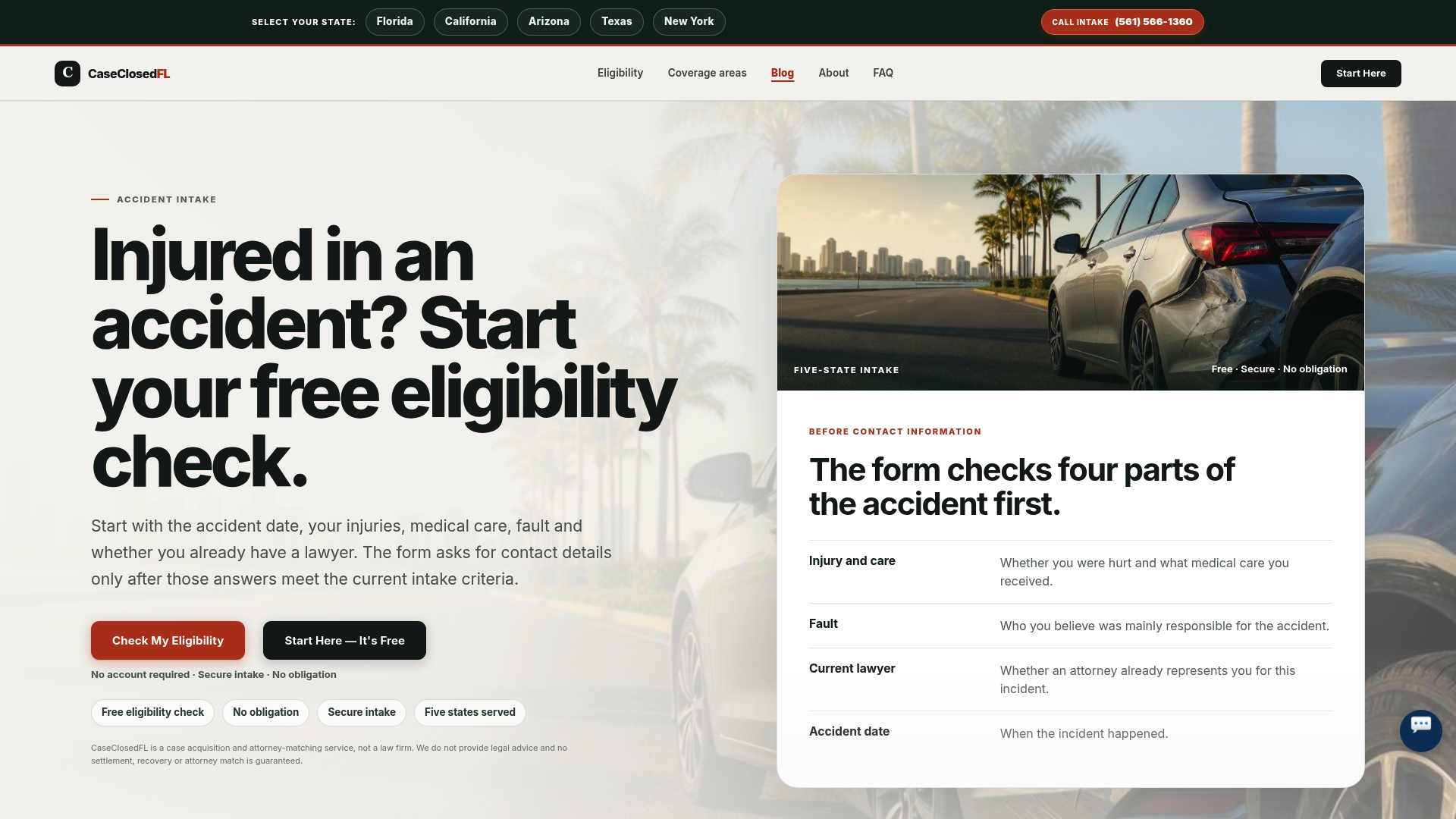
There’s no obligation attached, and CaseClosedFL doesn’t guarantee results or attorney contact. For readers in Florida markets, localized reviews are also available, including Fort Lauderdale and Hialeah, and the same free eligibility check applies regardless of location within the states CaseClosedFL serves.
Sources
For deeper reading, the ABA’s guide to contingency fees explains fee structures, and Usa lists free and low-cost legal aid options by state.
This article is general information, not a substitute for advice from a qualified lawyer. Consult a qualified legal professional about your own circumstances before acting on anything here.
FAQ
Is it worth hiring an attorney for a car accident?
It’s usually worth it when there’s a serious injury, disputed fault, or bills that exceed what a quick settlement would cover. Most personal injury attorneys work on contingency and offer a free consultation, so there’s little financial risk in finding out where you stand, according to the American Bar Association.
How much of a settlement will I get after attorney fees?
It depends entirely on the fee arrangement and case costs, which vary by firm and case. Contingency fees are commonly around one-third of the recovery, and clients may still owe certain case-related costs regardless of the fee percentage, per the ABA.
How long after an accident do you have to hire an attorney?
There’s no single deadline for hiring a lawyer, but the clock is ticking on your state’s statute of limitations for filing a claim, and evidence like witness accounts and video footage becomes harder to gather over time. Contacting an attorney early, especially before giving a recorded statement, protects your options according to Best Lawyers.
Is it worth suing after a car accident?
Suing is usually a last resort after settlement negotiations fail, and most personal injury cases resolve before ever reaching trial, according to the American Bar Association. Whether it’s worth it depends on the strength of the evidence, the extent of damages, and whether the insurer’s offer reflects the actual cost of the injury.
Recommended
Frequently asked questions
Table of Contents Signs you should hire an attorney after an accident When you may not need a lawyer What a car-accident lawyer does and how fees work Timing: when to contact a lawyer and key deadlines How to choose a lawyer and questions to ask in a consultation Immediate steps after an accident to protect a later claim Publisher perspective: why a privacy-first eligibility check makes sense Free eligibility check: how CaseClosedFL can connect you to counsel Sources FAQ Signs you should hire an attorney after an accident Some crashes carry enough risk or complexity that legal representation changes the outcome. The following signs indicate it’s time to talk to an attorney rather than handle the claim alone. Serious injury or ongoing treatment: Surgery, hospitalization, or physical therapy points to a claim with real financial exposure. High medical bills or lost wages: Claims involving future care needs or missed income are harder to value without legal help. Disputed fault or multiple parties: Crashes involving commercial or large vehicles often involve corporate insurers with more resources to fight a claim. Wrongful death or catastrophic injury: These cases carry the highest stakes and the most complex damage calculations. Insurance pushback: A denied claim, pressure to sign a release, or a request for a recorded statement are all reasons to get counsel before responding. Deciding whether to hire an attorney depends largely on the severity of the injury, whether fault is disputed, and the financial risk the claim carries, according to Best Lawyers . Minor incidents with clear fault and modest damage can often be resolved without a lawyer, but anything involving significant injury or liability disputes usually calls for one. When you may not need a lawyer Not every accident calls for legal representation. If the crash caused property damage only, no one was injured, and the insurer is cooperating, you may be able to manage the claim yourself. Small-dollar claims are another case where a contingency fee could eat up most of the recovery, leaving little benefit to hiring counsel. Document the scene yourself: Take photos of both vehicles, get a copy of the police report, and collect a repair estimate. Keep it simple: If the insurer accepts fault quickly and the payout covers your costs, a lawyer may add expense without adding value. Watch for delayed symptoms: Whiplash and other soft-tissue injuries can appear days after a crash, according to the National Institute of Neurological Disorders and Stroke , so a case that looked minor at the scene can change once symptoms surface. Reassess if costs grow: Rising medical bills or a stalled claim are reasons to revisit the decision. What a car-accident lawyer does and how fees work A personal injury lawyer’s job is to build the case the insurance company doesn’t want to pay out on. That means investigating the crash, gathering medical records, consulting experts when needed, negotiating with the insurer, and preparing for trial if a fair settlement doesn’t materialize. Investigate the scene, collect witness statements, and secure crash reports. Gather medical records to document injuries and connect them to the accident. Calculate damages, including medical costs, lost income, future care, and pain and suffering. Negotiate with insurance adjusters and, if necessary, litigate. Personal injury law centers on proving liability and damages, and most cases settle before trial, according to the American Bar Association. Fee arrangements are typically contingency-based: the lawyer is paid only if you recover money, often a significant portion of the settlement, though the ABA notes clients may still owe case-related costs such as filing fees even if the case is lost. Pro Tip: Bring your police report, medical records, insurance correspondence, and photos to a free consultation so the attorney can give you a realistic read on your case on the spot. Timing: when to contact a lawyer and key deadlines Contact a lawyer immediately if you’ve suffered a serious injury, and before you give a recorded statement or sign anything from an insurer. Evidence like traffic camera footage, witness contacts, and scene photos degrades or disappears quickly, so early action protects your case. Reach out before speaking with an adjuster on the record. Preserve video, photos, and witness information as soon as possible. Check your state’s statute of limitations, since deadlines to file a claim vary and missing one can end your case entirely. Recognize that earlier legal involvement often strengthens your negotiating position later. The Best Lawyers guidance is consistent on this point: contact counsel right after a serious injury, and consult before giving statements or signing releases that could limit your options. How to choose a lawyer and questions to ask in a consultation Not every personal injury lawyer is the right fit for every case. A short vetting process during your first consultation can save you from a mismatch later. Ask about experience with your type of crash , especially motorcycle, rideshare, or commercial vehicle cases, which carry different insurance rules. Ask whether the firm is prepared to go to trial , particularly for catastrophic injury claims where insurers may not offer a fair settlement voluntarily. Ask about the fee percentage and whether it changes if the case goes to trial. Ask who covers case costs , such as expert witness fees or court costs, if you don’t win. Confirm who will handle your file day to day and how often you’ll get updates. Pro Tip: Be cautious of any lawyer who guarantees a specific settlement amount before reviewing your medical records and the police report. No legitimate attorney can promise a result this early. Immediate steps after an accident to protect a later claim What you do in the hours and days after a crash can determine whether a later claim succeeds. A few priorities matter most. Get medical attention right away , even if you feel fine, since some injuries like whiplash can take time to appear, according to NINDS. File a police report and photograph the scene, vehicle damage, and any visible injuries. Collect witness contact information and save dashcam or traffic camera footage if available. Avoid giving a recorded statement to an insurer until you understand how it could affect your claim. Documenting early medical visits and reporting new symptoms promptly strengthens the connection between the crash and the injury , per NINDS, which matters most when symptoms don’t show up immediately. Publisher perspective: why a privacy-first eligibility check makes sense Readers often hesitate to call a law firm before they know if their case qualifies for representation. The intake process asks for accident details first and only requests contact information once a submission meets its criteria, with human review before any referral. That structure fits readers who want a low-pressure way to find out where they stand before speaking with anyone directly. — Luis Free eligibility check: how CaseClosedFL can connect you to counsel If your accident involves an injury, disputed fault, or bills that are already adding up, a free eligibility check is a low-friction way to find out whether your case is a fit for legal representation. You answer a short set of questions about the crash, the injury, fault, and any existing legal representation, and a human reviews the submission before any attorney referral happens. There’s no obligation attached, and CaseClosedFL doesn’t guarantee results or attorney contact. For readers in Florida markets, localized reviews are also available, including Fort Lauderdale and Hialeah , and the same free eligibility check applies regardless of location within the states CaseClosedFL serves. Sources For deeper reading, the ABA’s guide to contingency fees explains fee structures, and Usa lists free and low-cost legal aid options by state. This article is general information, not a substitute for advice from a qualified lawyer. Consult a qualified legal professional about your own circumstances before acting on anything here. Best Lawyers — Do I need a lawyer for a car accident? NINDS — Whiplash FAQ Is it worth hiring an attorney for a car accident?
It’s usually worth it when there’s a serious injury, disputed fault, or bills that exceed what a quick settlement would cover. Most personal injury attorneys work on contingency and offer a free consultation, so there’s little financial risk in finding out where you stand, according to the American Bar Association.
How much of a settlement will I get after attorney fees?
It depends entirely on the fee arrangement and case costs, which vary by firm and case. Contingency fees are commonly around one-third of the recovery, and clients may still owe certain case-related costs regardless of the fee percentage, per the ABA.
How long after an accident do you have to hire an attorney?
There’s no single deadline for hiring a lawyer, but the clock is ticking on your state’s statute of limitations for filing a claim, and evidence like witness accounts and video footage becomes harder to gather over time. Contacting an attorney early, especially before giving a recorded statement, protects your options according to Best Lawyers.
Is it worth suing after a car accident?
Suing is usually a last resort after settlement negotiations fail, and most personal injury cases resolve before ever reaching trial, according to the American Bar Association. Whether it’s worth it depends on the strength of the evidence, the extent of damages, and whether the insurer’s offer reflects the actual cost of the injury.
Ready to enter the accident details?
The eligibility form asks about the accident, injury, treatment, fault and representation before contact information.
Start Eligibility Check