Liability vs Collision: 10% Rule for U.S. Drivers and 4 Scenarios
A practical U.S. explainer on liability vs collision: apply the 10% rule, review four real scenarios, and decide whether to keep collision.
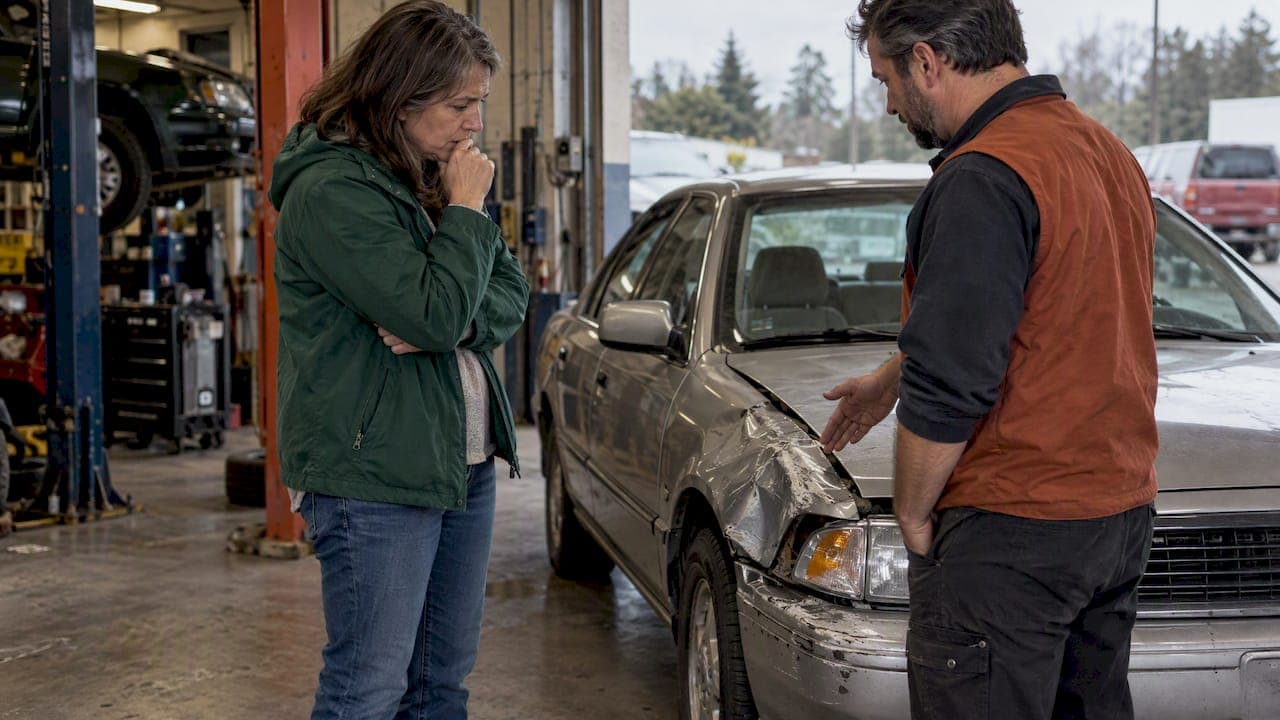

Liability insurance pays for injuries and damage you cause to other people when you’re at fault, while collision insurance pays to repair or replace your own car after a crash, no matter who caused it. Liability is required in nearly every U.S. state. Collision stays optional unless a lender or leasing company requires it as a loan condition.
TL;DR:
- Liability limits are often outdated, so a serious crash can exceed minimum policies, leaving you responsible for the difference.
- Collision coverage typically costs less for older cars and may be worth dropping once premiums approach 10% of your vehicle’s current value.
- Using your collision insurance can result in faster repairs even if you’re not at fault, with reimbursement of your deductible after subrogation.
- Lenders almost always require collision and comprehensive coverage when financing or leasing, which may leave you owing money if the car is totaled early.
- State minimum liability limits do not cover your own injuries or vehicle damage, which require separate coverage options like medical payments or collision.
Table of Contents
- What liability coverage pays for and why your limits matter
- What collision coverage pays for, and how it differs from comprehensive
- How fault and subrogation affect your claim and your deductible
- Should you keep collision coverage? A practical way to decide
- When lenders require collision, and what gap insurance covers
- Four scenarios that show who actually pays
- Typical exclusions and limits you’ll find in these policies
- How these coverage rules change depending on your state
- What I’d actually tell a friend shopping for coverage
- If you were hurt in a crash, here’s a next step worth knowing about
- FAQ
- Sources
What liability coverage pays for and why your limits matter
Liability insurance splits into two parts, and knowing both helps you understand what you’re actually buying.
Bodily injury liability pays for the other driver’s medical bills, lost wages, and in some cases pain and suffering when you cause a crash. Property damage liability pays to fix the other car, a fence, a utility pole, or any structure you damage. Neither pays for your own injuries or your own vehicle.

Policies list these limits as a set of three numbers, like 25/50/25: $25,000 per person for bodily injury, $50,000 per accident for bodily injury, and $25,000 for property damage. Some insurers offer a combined single limit instead, which pools the whole amount for one accident rather than splitting it by category. Liability insurance is mandatory in almost every state, and collision stays optional and pays for your own vehicle regardless of fault, according to the same insurer resource.
State minimums were often set decades ago and rarely keep pace with medical costs or vehicle prices. A serious crash can exceed a minimum policy fast, leaving you personally on the hook for the difference.
- Bodily injury liability covers medical bills, lost wages, and related costs for people you injure.
- Property damage liability covers repairs to other vehicles or property you damage.
- Limits are written as per-person, per-accident, and property damage amounts, or as one combined limit.
What collision coverage pays for, and how it differs from comprehensive
Collision coverage pays to repair or replace your car after it hits another vehicle, a guardrail, a pothole, or rolls over. It applies no matter who caused the crash. It does not cover normal wear and tear or mechanical breakdowns unrelated to a collision.
- Collision pays for damage from hitting another car or object.
- Collision pays for single-car rollovers and pothole damage.
- Collision does not cover mechanical failure or routine wear.
You choose a deductible, often between $250 and $1,000, and the insurer subtracts that amount from any claim payout. A higher deductible usually lowers your premium but raises your out-of-pocket cost when you file a claim.
Collision coverage pays for damage to your car from a collision with another vehicle or object, and insurers typically sell it with a deductible, paying out the car’s market value if it’s totaled. That market-value cap matters: if your car is worth $6,000 and repairs would cost $9,000, the insurer pays you $6,000 minus your deductible rather than covering the full repair.
Comprehensive coverage pairs with collision but handles different risks: theft, vandalism, fire, falling objects, and animal strikes. Most lenders that require collision also require comprehensive.
How fault and subrogation affect your claim and your deductible
You don’t have to wait for the other driver’s insurer to act. You can file your own collision claim right away and let the insurers sort out fault later.
- You report the accident and file a collision claim with your own insurer to understand the claims process better through Claims and coverage · Clinicly.
- Your insurer pays for repairs minus your deductible, then pursues the at-fault driver’s insurer through subrogation.
- If subrogation succeeds, your insurer typically reimburses your deductible.
Using your own collision coverage, even when you’re not at fault, often gets your car repaired faster than waiting on the other insurer, though reimbursement timing varies by company and depends on subrogation succeeding first. When the at-fault driver has no insurance, uninsured motorist coverage can step in where liability and collision leave gaps.
Should you keep collision coverage? A practical way to decide
The decision usually comes down to one comparison: what you pay in premiums each year versus what your car is actually worth.

A frequently cited guideline suggests reconsidering collision once your annual premium approaches 10% of your car’s value, since you could end up paying more in premiums over time than you’d ever collect on a claim. A 12-year-old sedan worth $3,000 with a $350 annual collision premium sits right at that threshold.
Vehicle age plays a direct role. Older cars depreciate to the point where a claim payout barely covers a tow and a rental, while repair costs stay roughly the same regardless of the car’s age. Your own finances matter just as much: if you couldn’t comfortably cover a $4,000 repair or replacement out of pocket, collision coverage protects your savings, not just your car.
- Compare your annual collision premium against your car’s current market value.
- Weigh your emergency savings against the cost of an unplanned repair or replacement.
- Check whether your state or lender requires minimum coverage levels that limit your options.
Pro Tip: Get a quick valuation from a site like Kelley Blue Book before you drop collision, since a car’s real resale value often surprises owners who haven’t checked in years.
When lenders require collision, and what gap insurance covers
Lenders and leasing companies typically require collision and comprehensive for as long as you owe money on the car. Since payouts cap at market value rather than your loan balance, a totaled car early in a loan can leave you owing money with no vehicle.
- Confirm your lender’s minimum coverage requirements before shopping policies.
- Ask whether gap insurance is included or available as an add-on.
- Reassess once your loan balance drops below your car’s market value.
Four scenarios that show who actually pays
- At-fault crash: Your liability pays the other driver’s medical bills and car repairs. Your collision pays for your own car’s repairs minus your deductible.
- Not-at-fault crash: Your collision can get your car repaired immediately while your insurer pursues the at-fault driver’s insurer; a successful subrogation often returns your deductible.
- Totaled car: Collision pays market value, not repair cost or replacement cost, and diminished value typically isn’t included in that payout.
- Hit-and-run: With no at-fault driver to pursue, collision or uninsured motorist coverage becomes your main path to getting paid.
Typical exclusions and limits you’ll find in these policies
Both coverages have boundaries that catch drivers off guard. Liability never pays for your own injuries or your own car. That’s what medical payments coverage, personal injury protection, and collision exist to handle instead.
Collision excludes damage from mechanical breakdown, engine failure, or normal wear, since those aren’t collision events. It also typically excludes diminished value when you caused the crash. If someone else is at fault, you may be able to recover diminished value from their liability insurer instead, though the outcome depends heavily on your state’s rules.
Intentional damage is excluded from both coverages, as is damage from racing or using your car for unlisted commercial purposes like rideshare driving without the proper endorsement. Policies also commonly exclude passengers’ personal belongings left in the car.
Keep your repair estimates, receipts, and claim correspondence organized. Thorough documentation speeds up subrogation and supports any diminished-value claim you pursue against the at-fault driver’s insurer.
How these coverage rules change depending on your state
Every state sets its own minimum liability limits, and most require some form of liability insurance before you can legally register a car. A few states allow alternatives like a surety bond or proof of financial responsibility instead of a traditional policy, though these remain uncommon.
Collision requirements come from lenders, not state law, so they apply the same way regardless of where you live as long as you’re financing or leasing. What does vary by state is how insurers handle subrogation, diminished-value claims, and whether your state follows an at-fault or no-fault system, which changes how medical costs get paid after a crash. Premiums themselves vary widely by location, driving record, and insurer, so comparing quotes within your own state gives a far more useful picture than any national average.
What I’d actually tell a friend shopping for coverage
Buy more liability coverage than your state requires. Minimums were written for a different era of medical and repair costs, and a bad crash can wipe out savings a minimum policy never touches. Keep collision on anything financed or under five years old. On an older paid-off car, run the numbers once a year and drop it if premiums creep toward that car’s actual value. Whatever you decide, keep an emergency fund sized for your deductible and a surprise repair, because even solid coverage leaves gaps.
— Luis
If you were hurt in a crash, here’s a next step worth knowing about
Figuring out your insurance coverage is one part of recovering from an accident. When another driver’s negligence leaves you injured, a free eligibility check can help you understand whether you have a case worth pursuing with an attorney.
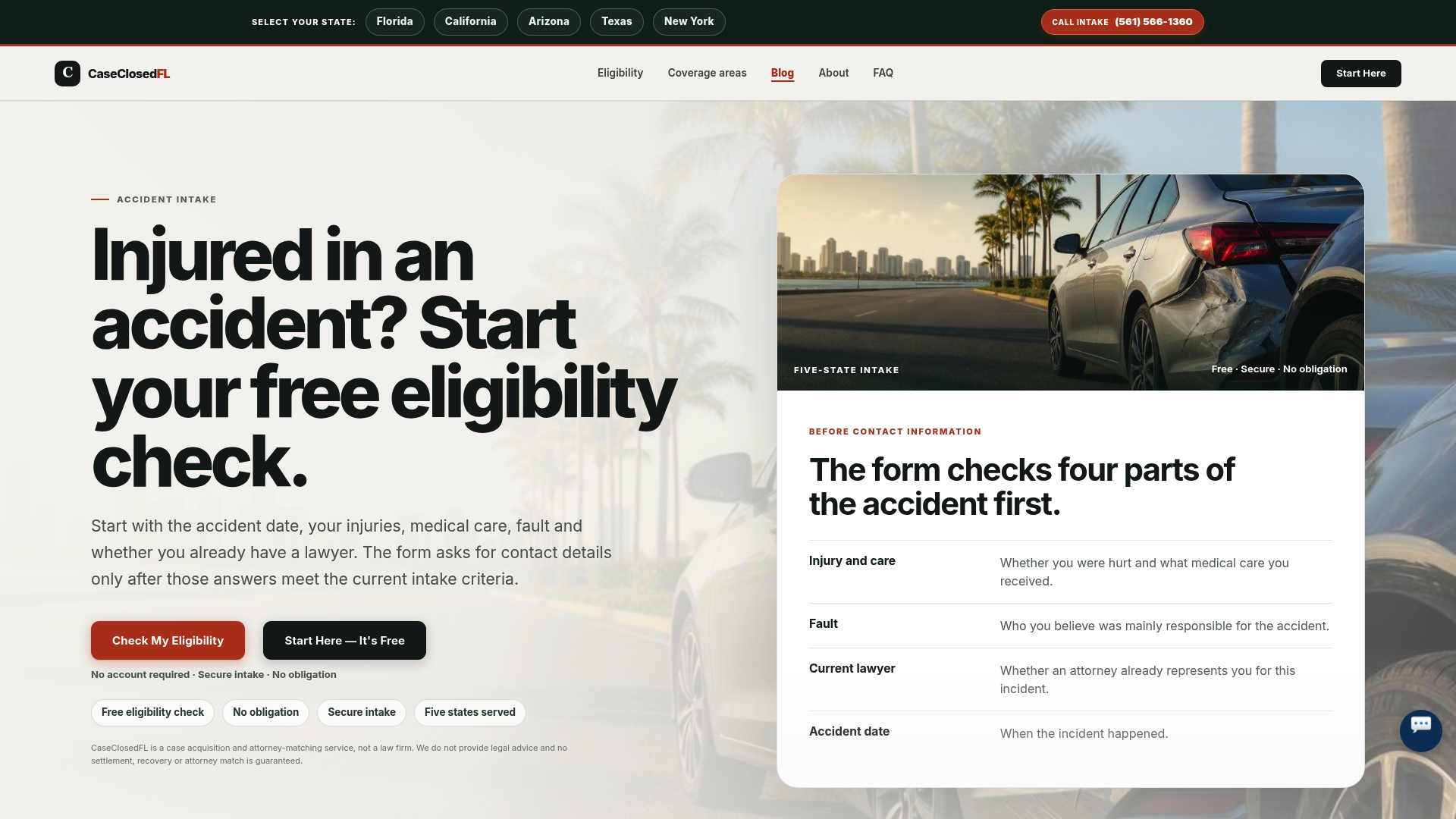
The intake process gathers details about your injury, who was at fault, your current treatment, and whether you already have legal representation for assessment. Every submission goes through human review before any referral, which helps manage the process and reduce unwanted calls.
- The eligibility check is free and carries no obligation to proceed.
- Intake covers injury details, fault, treatment status, and existing representation.
- Intake submissions receive human review before potential referral to attorneys.
If a crash left you dealing with injuries on top of insurance paperwork, checking your eligibility takes a few minutes and costs nothing.
This article is general information, not a substitute for advice from a qualified financial advisor. Consult a qualified financial professional about your own circumstances before acting on anything here.
FAQ
What is the difference between bodily injury liability and property damage liability?
Bodily injury liability pays for medical bills, lost wages, and related costs for people you injure in an at-fault crash. Property damage liability pays separately to repair or replace vehicles, fences, or structures you damage, and both are typically listed as separate limits on your policy.
What should you avoid saying to your insurance company after an accident?
Avoid guessing about fault, speculating on your injuries before a medical evaluation, or giving a recorded statement before you understand the claims process. Stick to factual details about what happened and let documentation, not assumptions, support your claim.
Is a $500 deductible or a $1,000 deductible better?
A lower deductible means a smaller out-of-pocket cost when you file a claim but usually comes with a higher premium, while a $1,000 deductible lowers your premium but raises your cost at claim time. The right choice depends on how much you can comfortably pay upfront if you need to file.
What is not covered by liability insurance?
Liability insurance never pays for your own injuries or your own vehicle’s damage, which is what collision and medical payments coverage exist to handle. It also excludes intentional damage and typically excludes commercial use of your vehicle unless you’ve added the right endorsement.
Sources
Frequently asked questions
Table of Contents What liability coverage pays for and why your limits matter What collision coverage pays for, and how it differs from comprehensive How fault and subrogation affect your claim and your deductible Should you keep collision coverage? A practical way to decide When lenders require collision, and what gap insurance covers Four scenarios that show who actually pays Typical exclusions and limits you’ll find in these policies How these coverage rules change depending on your state What I’d actually tell a friend shopping for coverage If you were hurt in a crash, here’s a next step worth knowing about FAQ Sources What liability coverage pays for and why your limits matter Liability insurance splits into two parts, and knowing both helps you understand what you’re actually buying. Bodily injury liability pays for the other driver’s medical bills, lost wages, and in some cases pain and suffering when you cause a crash. Property damage liability pays to fix the other car, a fence, a utility pole, or any structure you damage. Neither pays for your own injuries or your own vehicle. Policies list these limits as a set of three numbers, like 25/50/25: $25,000 per person for bodily injury, $50,000 per accident for bodily injury, and $25,000 for property damage. Some insurers offer a combined single limit instead, which pools the whole amount for one accident rather than splitting it by category. Liability insurance is mandatory in almost every state , and collision stays optional and pays for your own vehicle regardless of fault, according to the same insurer resource. State minimums were often set decades ago and rarely keep pace with medical costs or vehicle prices. A serious crash can exceed a minimum policy fast, leaving you personally on the hook for the difference. Bodily injury liability covers medical bills, lost wages, and related costs for people you injure. Property damage liability covers repairs to other vehicles or property you damage. Limits are written as per-person, per-accident, and property damage amounts, or as one combined limit. What collision coverage pays for, and how it differs from comprehensive Collision coverage pays to repair or replace your car after it hits another vehicle, a guardrail, a pothole, or rolls over. It applies no matter who caused the crash. It does not cover normal wear and tear or mechanical breakdowns unrelated to a collision. Collision pays for damage from hitting another car or object. Collision pays for single-car rollovers and pothole damage. Collision does not cover mechanical failure or routine wear. You choose a deductible, often between $250 and $1,000, and the insurer subtracts that amount from any claim payout. A higher deductible usually lowers your premium but raises your out-of-pocket cost when you file a claim. Collision coverage pays for damage to your car from a collision with another vehicle or object, and insurers typically sell it with a deductible, paying out the car’s market value if it’s totaled. That market-value cap matters: if your car is worth $6,000 and repairs would cost $9,000, the insurer pays you $6,000 minus your deductible rather than covering the full repair. Comprehensive coverage pairs with collision but handles different risks: theft, vandalism, fire, falling objects, and animal strikes. Most lenders that require collision also require comprehensive. How fault and subrogation affect your claim and your deductible You don’t have to wait for the other driver’s insurer to act. You can file your own collision claim right away and let the insurers sort out fault later. You report the accident and file a collision claim with your own insurer to understand the claims process better through Claims and coverage · Clinicly . Your insurer pays for repairs minus your deductible, then pursues the at-fault driver’s insurer through subrogation. If subrogation succeeds, your insurer typically reimburses your deductible . Using your own collision coverage, even when you’re not at fault, often gets your car repaired faster than waiting on the other insurer, though reimbursement timing varies by company and depends on subrogation succeeding first. When the at-fault driver has no insurance, uninsured motorist coverage can step in where liability and collision leave gaps. Should you keep collision coverage? A practical way to decide The decision usually comes down to one comparison: what you pay in premiums each year versus what your car is actually worth. A frequently cited guideline suggests reconsidering collision once your annual premium approaches 10% of your car’s value , since you could end up paying more in premiums over time than you’d ever collect on a claim. A 12-year-old sedan worth $3,000 with a $350 annual collision premium sits right at that threshold. Vehicle age plays a direct role. Older cars depreciate to the point where a claim payout barely covers a tow and a rental, while repair costs stay roughly the same regardless of the car’s age. Your own finances matter just as much: if you couldn’t comfortably cover a $4,000 repair or replacement out of pocket, collision coverage protects your savings, not just your car. Compare your annual collision premium against your car’s current market value. Weigh your emergency savings against the cost of an unplanned repair or replacement. Check whether your state or lender requires minimum coverage levels that limit your options. Pro Tip: Get a quick valuation from a site like Kelley Blue Book before you drop collision, since a car’s real resale value often surprises owners who haven’t checked in years. When lenders require collision, and what gap insurance covers Lenders and leasing companies typically require collision and comprehensive for as long as you owe money on the car. Since payouts cap at market value rather than your loan balance, a totaled car early in a loan can leave you owing money with no vehicle. Confirm your lender’s minimum coverage requirements before shopping policies. Ask whether gap insurance is included or available as an add-on. Reassess once your loan balance drops below your car’s market value. Four scenarios that show who actually pays At-fault crash: Your liability pays the other driver’s medical bills and car repairs. Your collision pays for your own car’s repairs minus your deductible. Not-at-fault crash: Your collision can get your car repaired immediately while your insurer pursues the at-fault driver’s insurer; a successful subrogation often returns your deductible. Totaled car: Collision pays market value, not repair cost or replacement cost, and diminished value typically isn’t included in that payout. Hit-and-run: With no at-fault driver to pursue, collision or uninsured motorist coverage becomes your main path to getting paid. Typical exclusions and limits you’ll find in these policies Both coverages have boundaries that catch drivers off guard. Liability never pays for your own injuries or your own car. That’s what medical payments coverage, personal injury protection, and collision exist to handle instead. Collision excludes damage from mechanical breakdown, engine failure, or normal wear, since those aren’t collision events. It also typically excludes diminished value when you caused the crash. If someone else is at fault, you may be able to recover diminished value from their liability insurer instead, though the outcome depends heavily on your state’s rules. Intentional damage is excluded from both coverages, as is damage from racing or using your car for unlisted commercial purposes like rideshare driving without the proper endorsement. Policies also commonly exclude passengers’ personal belongings left in the car. Keep your repair estimates, receipts, and claim correspondence organized. Thorough documentation speeds up subrogation and supports any diminished-value claim you pursue against the at-fault driver’s insurer. How these coverage rules change depending on your state Every state sets its own minimum liability limits, and most require some form of liability insurance before you can legally register a car. A few states allow alternatives like a surety bond or proof of financial responsibility instead of a traditional policy, though these remain uncommon. Collision requirements come from lenders, not state law, so they apply the same way regardless of where you live as long as you’re financing or leasing. What does vary by state is how insurers handle subrogation, diminished-value claims, and whether your state follows an at-fault or no-fault system, which changes how medical costs get paid after a crash. Premiums themselves vary widely by location, driving record, and insurer, so comparing quotes within your own state gives a far more useful picture than any national average. What I’d actually tell a friend shopping for coverage Buy more liability coverage than your state requires. Minimums were written for a different era of medical and repair costs, and a bad crash can wipe out savings a minimum policy never touches. Keep collision on anything financed or under five years old. On an older paid-off car, run the numbers once a year and drop it if premiums creep toward that car’s actual value. Whatever you decide, keep an emergency fund sized for your deductible and a surprise repair, because even solid coverage leaves gaps. — Luis If you were hurt in a crash, here’s a next step worth knowing about Figuring out your insurance coverage is one part of recovering from an accident. When another driver’s negligence leaves you injured, a free eligibility check can help you understand whether you have a case worth pursuing with an attorney. The intake process gathers details about your injury, who was at fault, your current treatment, and whether you already have legal representation for assessment. Every submission goes through human review before any referral, which helps manage the process and reduce unwanted calls. The eligibility check is free and carries no obligation to proceed. Intake covers injury details, fault, treatment status, and existing representation. Intake submissions receive human review before potential referral to attorneys. If a crash left you dealing with injuries on top of insurance paperwork, checking your eligibility takes a few minutes and costs nothing. This article is general information, not a substitute for advice from a qualified financial advisor. Consult a qualified financial professional about your own circumstances before acting on anything here. FAQ What is the difference between bodily injury liability and property damage liability?
Bodily injury liability pays for medical bills, lost wages, and related costs for people you injure in an at-fault crash. Property damage liability pays separately to repair or replace vehicles, fences, or structures you damage, and both are typically listed as separate limits on your policy.
What should you avoid saying to your insurance company after an accident?
Avoid guessing about fault, speculating on your injuries before a medical evaluation, or giving a recorded statement before you understand the claims process. Stick to factual details about what happened and let documentation, not assumptions, support your claim.
Is a $500 deductible or a $1,000 deductible better?
A lower deductible means a smaller out-of-pocket cost when you file a claim but usually comes with a higher premium, while a $1,000 deductible lowers your premium but raises your cost at claim time. The right choice depends on how much you can comfortably pay upfront if you need to file.
What is not covered by liability insurance?
Liability insurance never pays for your own injuries or your own vehicle’s damage, which is what collision and medical payments coverage exist to handle. It also excludes intentional damage and typically excludes commercial use of your vehicle unless you’ve added the right endorsement.
Ready to enter the accident details?
The eligibility form asks about the accident, injury, treatment, fault and representation before contact information.
Start Eligibility Check