U.S. Lyft Accident Claimants: Use a Private Intake to Get a Lawyer Fast
Check if you have a Lyft accident claim and get a lawyer through a private eligibility intake. Act within days to preserve app evidence.


If you were hurt in a Lyft crash and want a lawyer, connect with one now instead of waiting on the app’s process. A rideshare personal-injury attorney preserves evidence that disappears fast and works on contingency, so cost is not a barrier. Start an eligibility intake or schedule a free consult with a rideshare attorney today, before trip data ages out and filing deadlines start working against you.
TL;DR:
- Contact a rideshare attorney immediately to preserve critical trip data, GPS logs, and witness information before they are overwritten or lost.
- The case value heavily depends on whether the driver was offline, waiting, or actively on a trip, with commercial policy coverage reaching up to one million dollars.
- Filing deadlines vary by state and claim type, so prompt legal engagement is essential to avoid losing your right to compensation.
- An eligibility intake can quickly assess your case’s strength and connect you with specialized legal help, with no obligation or detailed personal info required upfront.
Table of Contents
- What a Lyft Accident Claim Actually Involves
- Why You Should Contact a Rideshare Attorney Now
- How a Rideshare Attorney Builds and Pays for Your Case
- How to Choose the Right Rideshare Injury Attorney
- How CaseClosedFL Connects You to a Rideshare Attorney
- What to Do in the Hours and Days After a Lyft Crash
- Why Speed After a Crash Changes the Outcome
- Start a Free Eligibility Check With CaseClosedFL
- Sources
- FAQ
What a Lyft Accident Claim Actually Involves
This guide is about pursuing a personal-injury claim after a Lyft crash and getting a lawyer in your corner, not about filing an internal report with the company. The two are different tracks, and only one gets you compensated for medical bills and lost income.
Coverage in a Lyft accident claim depends heavily on the driver’s app status at the moment of the crash. A driver who is offline has only personal auto coverage in play. A driver who is logged on but waiting for a ride request falls under a different, more limited tier. A driver who has accepted a trip or has a passenger aboard typically triggers Lyft’s commercial policy, which can reach $1 million in liability coverage. Sorting out which tier applies is often the single biggest factor in what your claim is worth.
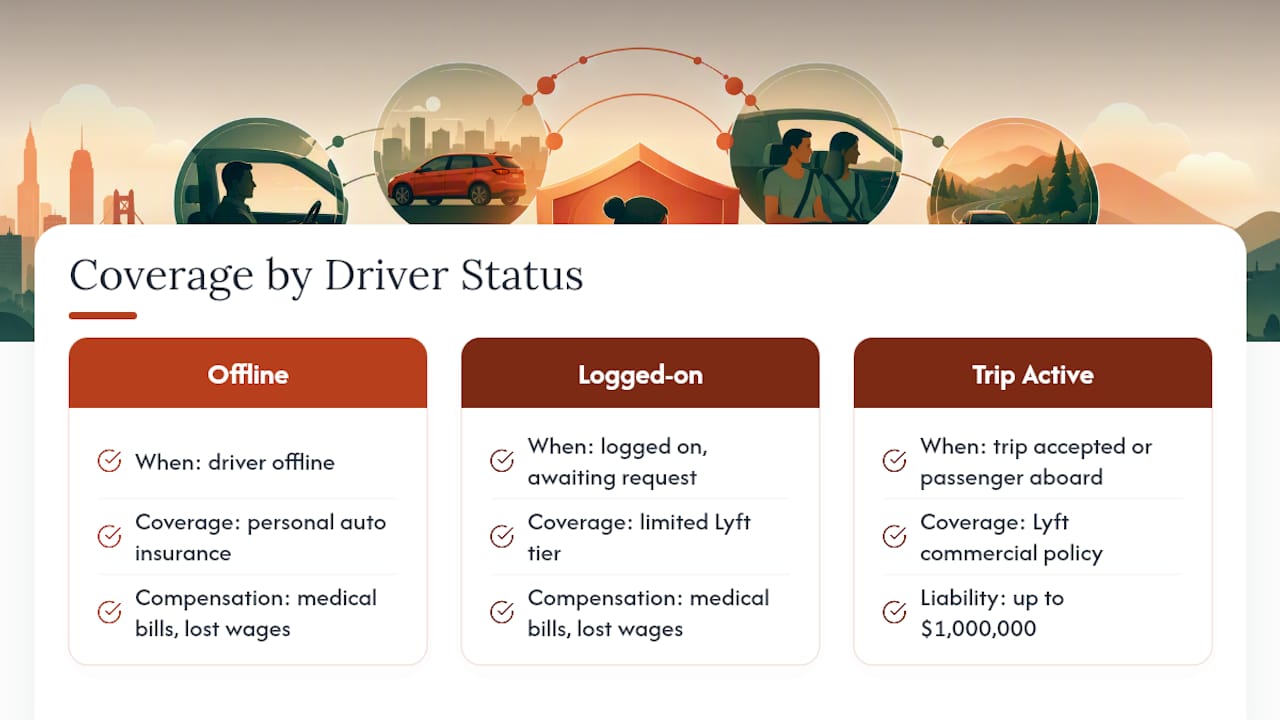
A personal-injury claim can seek compensation for medical bills, lost wages, property damage, and pain and suffering. Some cases also involve long-term care costs if injuries are severe.
Why You Should Contact a Rideshare Attorney Now
Every state sets its own statute of limitations for personal-injury claims, and missing that deadline can bar recovery entirely. Deadlines vary by state and by claim type, and some states have recently shortened certain filing windows, so treat “I’ll deal with it later” as a real risk, not a formality.
Speed matters just as much for evidence. Lyft’s app generates trip logs, GPS pings, and driver status records at the moment of the crash, but that telemetry does not stay available forever. An attorney who gets involved early can request and lock down this data before it gets overwritten or lost in a routine data cycle.
A rideshare attorney typically moves fast on:
- Sending spoliation letters that legally require Lyft and the driver to preserve app and trip data
- Subpoenaing GPS records and driver-status logs tied to the exact time of the crash
- Collecting the police report, witness contact information, and scene photos before memories fade
- Coordinating with your medical providers to start a documented treatment record early
How a Rideshare Attorney Builds and Pays for Your Case
A rideshare personal-injury attorney generally works through the same core steps regardless of state: verify the driver’s app status at impact, pull trip and GPS data, gather medical records and bills, send a demand letter to the applicable insurer, negotiate, and file suit if the insurer won’t offer fair value.
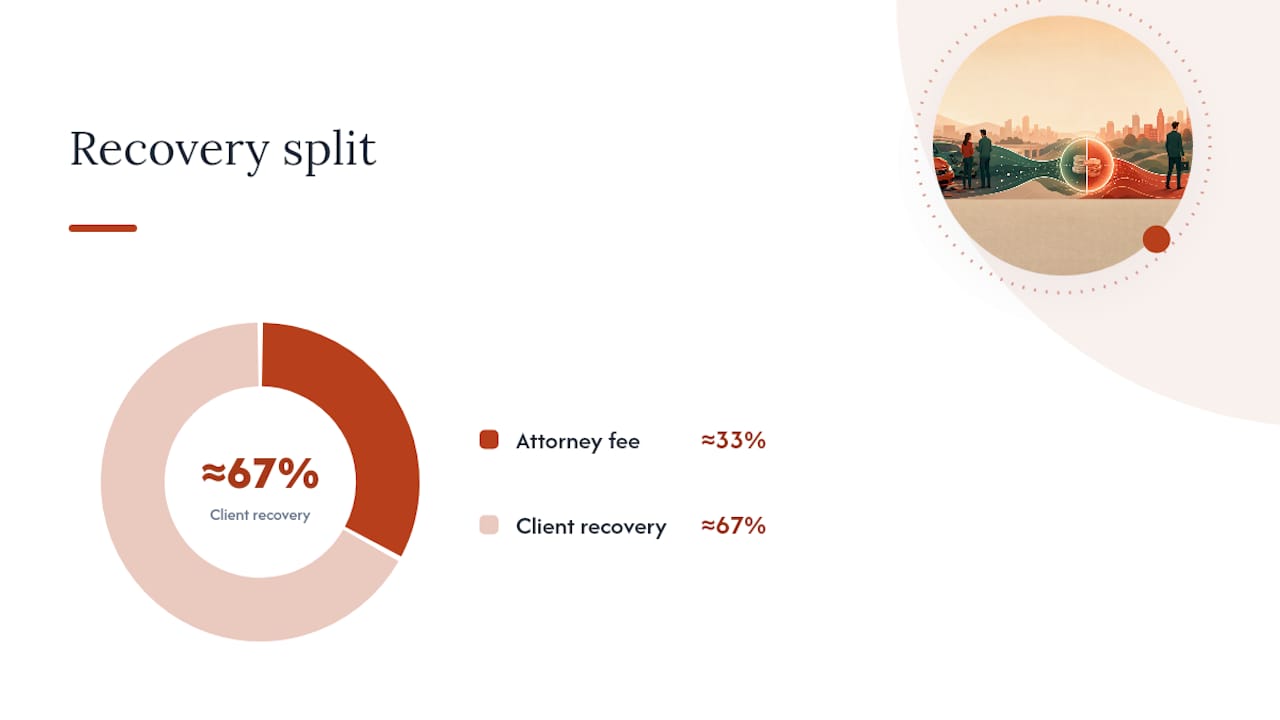
Pro Tip: Ask early which insurance tier your attorney believes applies to your crash. If it’s Lyft’s commercial policy rather than the driver’s personal coverage, your case just got access to a much larger pool of money.
Payment structure is where most people hesitate, and it shouldn’t be a mystery. Contingency fees commonly run around one third of the recovery, though the exact percentage can shift with a sliding scale depending on how far the case progresses. That means:
- You pay nothing up front to hire the attorney
- The attorney typically advances case costs like expert fees and filing costs
- Those advanced costs get deducted from the settlement or verdict, not billed separately
- If there’s no recovery, you generally owe nothing for fees
Simple claims with clear liability and modest injuries can resolve in a few months. Cases involving disputed fault, serious injuries, or multiple insurers often take a year or longer, depending on complexity and litigation needs.
How to Choose the Right Rideshare Injury Attorney
Not every personal-injury lawyer has handled a rideshare case, and that distinction matters more than it seems. General car-accident experience doesn’t automatically translate into knowing how to pull app telemetry or trigger a TNC’s commercial policy. Use this checklist to vet quickly:
- Rideshare-specific experience. Ask how many Lyft or Uber cases the firm has handled and what insurance tiers they’ve successfully triggered.
- Trial record. A lawyer who only settles may accept less than your case is worth because they’re not prepared to litigate.
- Communication style. Find out who actually handles your file day to day, not just whose name is on the door.
- Contingency fee details. Get the exact percentage in writing and ask if it changes if the case goes to trial.
- Local court knowledge. Ask about experience in the specific county or court where your case would be filed.
Pro Tip: During the first call, ask directly: “If we don’t win, do I owe you anything?” A reputable contingency attorney should answer without hesitation, and most offer that first consult free.
Watch for red flags like vague answers about cost advances, pressure to sign before you’ve asked questions, or reluctance to put fee terms in writing. A firm explaining fee mechanics clearly, the way outlined in this contingency fee breakdown, is usually a good sign you’re dealing with a transparent practice.
How CaseClosedFL Connects You to a Rideshare Attorney
An eligibility intake is available built for situations where you were hurt in a Lyft crash and want to know if a personal-injury attorney can take your case, without committing to anything upfront.
The process starts with a handful of questions about the accident, your injuries, fault, and whether you already have legal representation. Contact information isn’t requested until after that screening, which keeps your details private and avoids the flood of solicitation calls that often follows filing a report elsewhere.
Every submission gets a human review before it’s routed anywhere. The service covers multiple states, and it does not guarantee attorney contact for every submission. It offers a fast, low-pressure way to get in front of an attorney while your evidence, and your filing window, are still intact.
What to Do in the Hours and Days After a Lyft Crash
- Get medical care immediately, even if injuries seem minor, and request copies of all records and bills.
- Screenshot your Lyft trip receipt, driver information, and license plate before the app updates or the trip disappears from history.
- Photograph the scene, vehicle damage, and visible injuries from multiple angles.
- Get the police report number and the responding officer’s name.
- Collect contact information from any witnesses on scene.
- Avoid giving a recorded statement to any insurance adjuster until you’ve spoken with an attorney.
- Keep a written timeline of symptoms and follow-up appointments as they happen.
- Start an eligibility intake or schedule a free consult with a rideshare personal-injury attorney within days, not weeks.
Why Speed After a Crash Changes the Outcome
The cases that go sideways are rarely the ones with bad injuries. They’re the ones where nobody moved fast enough to lock down the app data or figure out which insurance tier applied before the trail went cold. Contingency fee arrangements exist precisely so that financial hesitation doesn’t become the reason someone walks away from a claim they were entitled to pursue.
That said, contingency representation lowers the barrier to hiring a lawyer. It doesn’t promise a particular outcome, and no honest attorney will tell you otherwise. What early representation does reliably improve is your evidence position, and evidence position is what settlements and verdicts are actually built on.
— Luis
Start a Free Eligibility Check With CaseClosedFL
This service helps get you past the guesswork of searching for a rideshare attorney on your own. The eligibility intake takes a few minutes, asks about your injury, fault, and any existing representation, and requests contact details only after that screening, so you’re never handing over your information without knowing what happens to it first.
Coverage includes state-specific intake paths, including Arizona case reviews and regional Florida pages such as the Fort Lauderdale accident case review and the Hialeah accident case review. If your crash happened in South Florida, the Miami rideshare accident claims page is built specifically for Uber and Lyft cases in that area.
Every submission goes through human review before anything moves forward, and attorney contact is never guaranteed. The service guarantees a private, no-pressure way to find out if you have a case. Start your free eligibility check now while your evidence is still fresh.
This article is general information, not a substitute for advice from a qualified lawyer. Consult a qualified legal professional about your own circumstances before acting on anything here.
Sources
- Contingency fee — Legal Information Institute (Cornell Law)
- Contingency Fee — NYC Bar (Get Legal Help)
- Rideshare injury lawyer: Essential hiring guide — Carey & Leisure
- Do you need a lawyer for a rideshare accident case? — Viles & Beckman
FAQ
How Long Do I Have to File a Lyft Accident Claim?
Filing deadlines are set by each state’s statute of limitations and vary by state and claim type, so check with an attorney promptly rather than assuming you have a full year or more.
Do I Have to Pay an Attorney Upfront for a Lyft Injury Claim?
No. Most rideshare personal-injury attorneys work on contingency, meaning you pay nothing upfront and fees, often around one third of the recovery, come out of the settlement only if you win.
What Insurance Covers My Injuries if I Was a Passenger in a Lyft?
If the driver had accepted your ride or had you in the car, Lyft’s commercial insurance policy typically applies and can offer significantly higher coverage limits than the driver’s personal auto policy.
Is CaseClosedFL a Law Firm?
No. Caseclosedfl is an eligibility intake platform that screens accident details and connects qualifying cases with participating personal-injury attorneys after a human review, and it does not provide legal advice or guarantee attorney contact.
What Evidence Should I Preserve After a Lyft Accident?
Save your trip receipt, driver information, screenshots of the ride, photos of the scene and injuries, the police report number, and witness contacts, and get an attorney involved quickly since app data can be lost if too much time passes.
Recommended
Frequently asked questions
Table of Contents What a Lyft Accident Claim Actually Involves Why You Should Contact a Rideshare Attorney Now How a Rideshare Attorney Builds and Pays for Your Case How to Choose the Right Rideshare Injury Attorney How CaseClosedFL Connects You to a Rideshare Attorney What to Do in the Hours and Days After a Lyft Crash Why Speed After a Crash Changes the Outcome Start a Free Eligibility Check With CaseClosedFL Sources FAQ What a Lyft Accident Claim Actually Involves This guide is about pursuing a personal-injury claim after a Lyft crash and getting a lawyer in your corner, not about filing an internal report with the company. The two are different tracks, and only one gets you compensated for medical bills and lost income. Coverage in a Lyft accident claim depends heavily on the driver’s app status at the moment of the crash. A driver who is offline has only personal auto coverage in play. A driver who is logged on but waiting for a ride request falls under a different, more limited tier. A driver who has accepted a trip or has a passenger aboard typically triggers Lyft’s commercial policy, which can reach $1 million in liability coverage . Sorting out which tier applies is often the single biggest factor in what your claim is worth. A personal-injury claim can seek compensation for medical bills, lost wages, property damage, and pain and suffering. Some cases also involve long-term care costs if injuries are severe. Why You Should Contact a Rideshare Attorney Now Every state sets its own statute of limitations for personal-injury claims, and missing that deadline can bar recovery entirely. Deadlines vary by state and by claim type, and some states have recently shortened certain filing windows , so treat “I’ll deal with it later” as a real risk, not a formality. Speed matters just as much for evidence. Lyft’s app generates trip logs, GPS pings, and driver status records at the moment of the crash, but that telemetry does not stay available forever. An attorney who gets involved early can request and lock down this data before it gets overwritten or lost in a routine data cycle. A rideshare attorney typically moves fast on: Sending spoliation letters that legally require Lyft and the driver to preserve app and trip data Subpoenaing GPS records and driver-status logs tied to the exact time of the crash Collecting the police report, witness contact information, and scene photos before memories fade Coordinating with your medical providers to start a documented treatment record early How a Rideshare Attorney Builds and Pays for Your Case A rideshare personal-injury attorney generally works through the same core steps regardless of state: verify the driver’s app status at impact, pull trip and GPS data, gather medical records and bills, send a demand letter to the applicable insurer, negotiate, and file suit if the insurer won’t offer fair value. Pro Tip: Ask early which insurance tier your attorney believes applies to your crash. If it’s Lyft’s commercial policy rather than the driver’s personal coverage, your case just got access to a much larger pool of money. Payment structure is where most people hesitate, and it shouldn’t be a mystery. Contingency fees commonly run around one third of the recovery, though the exact percentage can shift with a sliding scale depending on how far the case progresses. That means: You pay nothing up front to hire the attorney The attorney typically advances case costs like expert fees and filing costs Those advanced costs get deducted from the settlement or verdict, not billed separately If there’s no recovery, you generally owe nothing for fees Simple claims with clear liability and modest injuries can resolve in a few months. Cases involving disputed fault, serious injuries, or multiple insurers often take a year or longer, depending on complexity and litigation needs. How to Choose the Right Rideshare Injury Attorney Not every personal-injury lawyer has handled a rideshare case, and that distinction matters more than it seems. General car-accident experience doesn’t automatically translate into knowing how to pull app telemetry or trigger a TNC’s commercial policy. Use this checklist to vet quickly: Rideshare-specific experience. Ask how many Lyft or Uber cases the firm has handled and what insurance tiers they’ve successfully triggered. Trial record. A lawyer who only settles may accept less than your case is worth because they’re not prepared to litigate. Communication style. Find out who actually handles your file day to day, not just whose name is on the door. Contingency fee details. Get the exact percentage in writing and ask if it changes if the case goes to trial. Local court knowledge. Ask about experience in the specific county or court where your case would be filed. Pro Tip: During the first call, ask directly: “If we don’t win, do I owe you anything?” A reputable contingency attorney should answer without hesitation, and most offer that first consult free. Watch for red flags like vague answers about cost advances, pressure to sign before you’ve asked questions, or reluctance to put fee terms in writing. A firm explaining fee mechanics clearly, the way outlined in this contingency fee breakdown , is usually a good sign you’re dealing with a transparent practice. How CaseClosedFL Connects You to a Rideshare Attorney An eligibility intake is available built for situations where you were hurt in a Lyft crash and want to know if a personal-injury attorney can take your case, without committing to anything upfront. The process starts with a handful of questions about the accident, your injuries, fault, and whether you already have legal representation. Contact information isn’t requested until after that screening, which keeps your details private and avoids the flood of solicitation calls that often follows filing a report elsewhere. Every submission gets a human review before it’s routed anywhere. The service covers multiple states, and it does not guarantee attorney contact for every submission. It offers a fast, low-pressure way to get in front of an attorney while your evidence, and your filing window, are still intact. What to Do in the Hours and Days After a Lyft Crash Get medical care immediately, even if injuries seem minor, and request copies of all records and bills. Screenshot your Lyft trip receipt, driver information, and license plate before the app updates or the trip disappears from history. Photograph the scene, vehicle damage, and visible injuries from multiple angles. Get the police report number and the responding officer’s name. Collect contact information from any witnesses on scene. Avoid giving a recorded statement to any insurance adjuster until you’ve spoken with an attorney. Keep a written timeline of symptoms and follow-up appointments as they happen. Start an eligibility intake or schedule a free consult with a rideshare personal-injury attorney within days, not weeks. Why Speed After a Crash Changes the Outcome The cases that go sideways are rarely the ones with bad injuries. They’re the ones where nobody moved fast enough to lock down the app data or figure out which insurance tier applied before the trail went cold. Contingency fee arrangements exist precisely so that financial hesitation doesn’t become the reason someone walks away from a claim they were entitled to pursue. That said, contingency representation lowers the barrier to hiring a lawyer. It doesn’t promise a particular outcome, and no honest attorney will tell you otherwise. What early representation does reliably improve is your evidence position, and evidence position is what settlements and verdicts are actually built on. — Luis Start a Free Eligibility Check With CaseClosedFL This service helps get you past the guesswork of searching for a rideshare attorney on your own. The eligibility intake takes a few minutes, asks about your injury, fault, and any existing representation, and requests contact details only after that screening, so you’re never handing over your information without knowing what happens to it first. Coverage includes state-specific intake paths, including Arizona case reviews and regional Florida pages such as the Fort Lauderdale accident case review and the Hialeah accident case review . If your crash happened in South Florida, the Miami rideshare accident claims page is built specifically for Uber and Lyft cases in that area. Every submission goes through human review before anything moves forward, and attorney contact is never guaranteed. The service guarantees a private, no-pressure way to find out if you have a case. Start your free eligibility check now while your evidence is still fresh. This article is general information, not a substitute for advice from a qualified lawyer. Consult a qualified legal professional about your own circumstances before acting on anything here. Sources Contingency fee — Legal Information Institute (Cornell Law) Contingency Fee — NYC Bar (Get Legal Help) Rideshare injury lawyer: Essential hiring guide — Carey & Leisure Do you need a lawyer for a rideshare accident case? — Viles & Beckman FAQ How Long Do I Have to File a Lyft Accident Claim?
Filing deadlines are set by each state’s statute of limitations and vary by state and claim type, so check with an attorney promptly rather than assuming you have a full year or more.
Do I Have to Pay an Attorney Upfront for a Lyft Injury Claim?
No. Most rideshare personal-injury attorneys work on contingency, meaning you pay nothing upfront and fees, often around one third of the recovery, come out of the settlement only if you win.
What Insurance Covers My Injuries if I Was a Passenger in a Lyft?
If the driver had accepted your ride or had you in the car, Lyft’s commercial insurance policy typically applies and can offer significantly higher coverage limits than the driver’s personal auto policy.
Is CaseClosedFL a Law Firm?
No. Caseclosedfl is an eligibility intake platform that screens accident details and connects qualifying cases with participating personal-injury attorneys after a human review, and it does not provide legal advice or guarantee attorney contact.
What Evidence Should I Preserve After a Lyft Accident?
Save your trip receipt, driver information, screenshots of the ride, photos of the scene and injuries, the police report number, and witness contacts, and get an attorney involved quickly since app data can be lost if too much time passes.
Ready to enter the accident details?
The eligibility form asks about the accident, injury, treatment, fault and representation before contact information.
Start Eligibility Check