Get Your U.S. Car Accident Police Report: Local vs State, TX $6, MA $20
Order your U.S. car accident police report from local police or the state DMV. See timing and fees (TX $6, MA $20) and get a free private legal check.
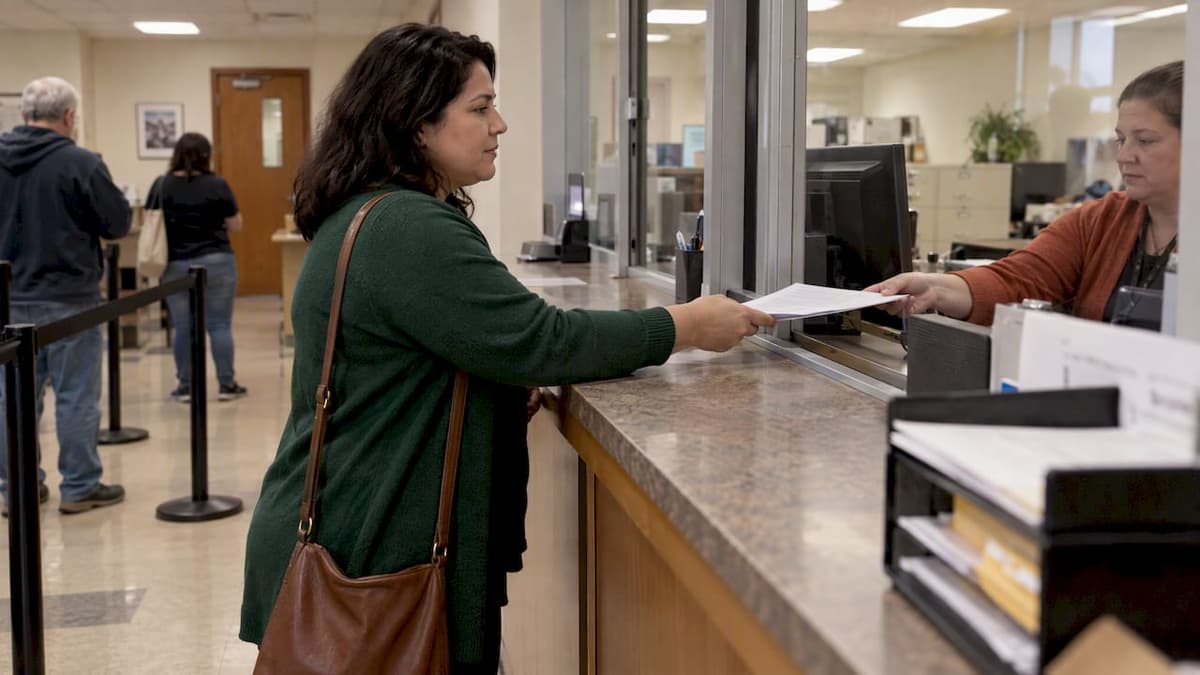

To get a police report after a car accident, identify the agency that responded to the crash, local police, county sheriff, or state police, then order the report through that agency’s online portal, by mail, or in person. If the local agency does not hold it, check your state’s DMV or transportation department, or use an authorized distributor such as LexisNexis BuyCrash. Expect a processing window of days to weeks and a state-set fee, generally ranging from a low to a moderate amount.
TL;DR:
- Most crash reports are obtained from the responding agency, but if unavailable locally, they can be found through state portals or multi-state search tools, with processing times ranging from days to weeks.
- Access is restricted to those directly involved, vehicle owners, or authorized representatives, with redacted copies removing sensitive personal data like Social Security and phone numbers.
- The report contains detailed crash data, including identifiers, vehicle and injury info, witness statements, and diagrams, but does not determine fault, requiring additional evidence for full understanding.
- Processing fees and wait times vary by state, such as $6 in Texas with a 10-day submission window or four weeks in Massachusetts, with delays common for older records.
- If a record is missing or contains errors, wait the appropriate period, then contact the agency or officer directly, providing supporting documents and recording all attempts for future reference.
Table of Contents
- How to Find the Right Agency and Order Your Report
- Who Can Request a Report and Why Some Copies Are Redacted
- What’s Inside the Report and How to Use It
- State Timing and Fee Examples Worth Knowing
- No Record Found or Errors on the Report: What to Do Next
- How Insurance Claims Work With or Without a Police Report
- When Legal Help Makes Sense After an Accident
- A Free Way to Check if You Qualify for Legal Help
- FAQ
- Sources
How to Find the Right Agency and Order Your Report
Before you request anything, gather the details that let an official records system match your crash to its file. Most portals reject a search when even one field is off.
- Write down the crash date and exact location, including intersection or mile marker.
- Note the report or case number if an officer gave you one at the scene.
- Collect the names of the other driver and any passengers involved.
- Have the last four digits of your plate or vehicle identification number ready.
Start with the agency that actually responded: city police, county sheriff, or state highway patrol. If that search comes up empty, the record may have moved to a state-level custodian. Texas, for example, routes crash reports through the Texas Department of Transportation crash reports system, while Massachusetts keeps them with its Registry of Motor Vehicles. A city department can investigate a crash, yet the official file ends up with a state agency once it is submitted, so checking only the local police website can send you looking in the wrong place.
Ordering channels generally fall into four categories:
- Official state portals, where you pay online and download a PDF directly.
- Precinct or station front counters, useful when a report was filed recently.
- Mail-in request forms, often required for certified copies or older records.
- Multi-state search tools like BuyCrash, which let you pick your state and search its participating agencies in one place.
Bring a government-issued ID, a payment method, and, if you are requesting on someone else’s behalf, a signed authorization or proof of your relationship to the crash. Matching your search fields exactly, correct spelling of names, the right date format, the full case number, cuts down on “no record found” results that waste time and fees.
Pro Tip: If your report search fails on the first try, wait a few extra business days before ordering again. Many departments take longer than expected to upload a crash into the state system, and repeat purchases before then often get rejected.
Who Can Request a Report and Why Some Copies Are Redacted
Not everyone can pull a full, unredacted crash report. Most states limit access to people with a direct stake in the crash, which protects driver privacy under federal guidance tied to the Driver’s Privacy Protection Act.
- Drivers and passengers directly involved in the crash.
- Registered owners of a vehicle named in the report.
- Attorneys or insurance adjusters acting on an involved party’s behalf.
- Authorized representatives with signed permission from someone listed on the report.
Redacted versions typically strip out Social Security numbers, phone numbers, and sometimes home addresses, while keeping the narrative, diagram, and vehicle details intact. Release rules differ by state. Texas limits full copies to people “directly concerned” in the crash or their authorized agents, per the Texas Department of Transportation’s crash records guidance. Virginia handles eligibility through a front-counter process detailed in its Driver Licensing Guide policy on crash reports, and Massachusetts applies its own permitted-user standards when processing RMV requests.
What’s Inside the Report and How to Use It
A standard crash report includes more than a summary of what happened. Expect these recurring sections:
- Crash identifiers: date, time, exact location, and case number.
- Driver, passenger, and vehicle information, including insurance details.
- Injury notes and any witness names or statements collected at the scene.
- A written narrative and a diagram showing vehicle positions and points of impact.
- Citation information or results from field sobriety or chemical testing, when applicable.
The report documents the officer’s on-scene investigation, but it does not decide fault or liability on its own. Official manuals describe it as an investigative record, and insurers and courts weigh it alongside other evidence rather than treating it as a final verdict.
Pair the report with photos of the vehicles and scene, medical records tied to any injuries, repair estimates, and written witness statements. Together, these build a fuller picture than the report alone, especially when the narrative is brief or a detail seems incomplete.
State Timing and Fee Examples Worth Knowing
Processing times and fees vary enough by state that ordering too early is one of the most common mistakes people make. A few examples illustrate the range.
| State | Agency | Typical fee | Processing window |
|---|---|---|---|
| Texas | TxDOT (CR-3 system) | $6 regular, $8 certified | Officers must submit within 10 days of the crash |
| Massachusetts | RMV | $20 search fee | Allow 4 weeks; continued search up to 90 days |
| New York City | NYPD, then NYS DMV | Varies by portal | Precinct holds report 30 days, then forwards to the state |
| Virginia | DMV (CRD-93 form) | Set by form instructions | Front-counter workflow; monitoring continues if not yet filed |
In Texas, officers submit crash reports within 10 days, and the TxDOT online system lists $6 for a regular copy and $8 for a certified one, with delivery by email once processed.
Massachusetts asks requesters to wait a full four weeks before expecting results, charges a non-refundable $20 search fee, and will keep searching for up to 90 days if the report has not yet been filed, according to Mass.
New York City precincts hold collision reports for 30 days before forwarding them to the New York State DMV, so your first stop depends entirely on how recently the crash occurred, a detail confirmed on the NYPD’s motor vehicle collision reports page. After that window, the Collision Report Retrieval Portal becomes the faster route.
Virginia’s DMV documents a front-counter process built around the CRD-93 form, with identification and payment requirements spelled out in its Driver Licensing Guide policy, including a monitoring period for crashes not yet on file. Florida separates long-form and short-form reports: long-form versions cover injuries, DUI, tow-away, and commercial vehicle crashes, and carry their own narrative and diagram requirements, as outlined by Florida’s DHSMV traffic crash reports page.

No Record Found or Errors on the Report: What to Do Next
A “no record found” result or a report full of mistakes is frustrating, but both have clear fixes.
- Confirm you waited the appropriate window for your state, four weeks in Massachusetts, shorter in Texas, before assuming the record is missing.
- Ask the records office about refund policies or whether they will keep searching automatically, since some states continue for up to 90 days.
- Contact the investigating officer or precinct directly for scene notes, photos, or to flag an error for correction.
- Gather supporting documents, your own photos, witness contact information, medical records, when requesting a correction.
- Ask whether a subpoena is needed for materials like dash-cam footage, since the state custodian often holds only the final written report.
Pro Tip: Keep a dated log of every call and request you make. If a correction takes multiple attempts, that record helps you show an insurer or attorney exactly what happened and when.
How Insurance Claims Work With or Without a Police Report
Insurers can usually open a claim without a police report in hand, leaning instead on photos, recorded statements, and repair estimates while the report is pending, according to Progressive’s guidance on filing claims without a police report.
A report becomes far more important when the crash involved injuries, a hit-and-run, suspected impaired driving, or a dispute over who caused the collision. Criminal conduct at the scene, including DUI or hit-and-run, can also trigger separate legal proceedings beyond the insurance claim itself, a topic covered in more detail in this overview of DUI and hit-and-run charges.
While you wait for the report:
- Notify your insurer promptly, even before the report is available.
- Preserve evidence: photos, repair estimates, and contact information for witnesses.
- Order the report as soon as the agency’s processing window allows.
- Keep a written record of every call and email with your insurer.
When Legal Help Makes Sense After an Accident
Once you have your report in hand, a clear narrative and diagram can still leave real questions about fault, injury severity, or how an insurer is handling your claim. Disputed liability, significant injuries, or complex evidence are good reasons to get a qualified opinion. Checking eligibility for attorney help costs nothing and does not commit you to anything.
— Luis
A Free Way to Check if You Qualify for Legal Help
If your crash involved an injury, a liability dispute, or evidence that feels too complicated to sort out alone, a free eligibility check can connect you with a participating attorney without any upfront cost.
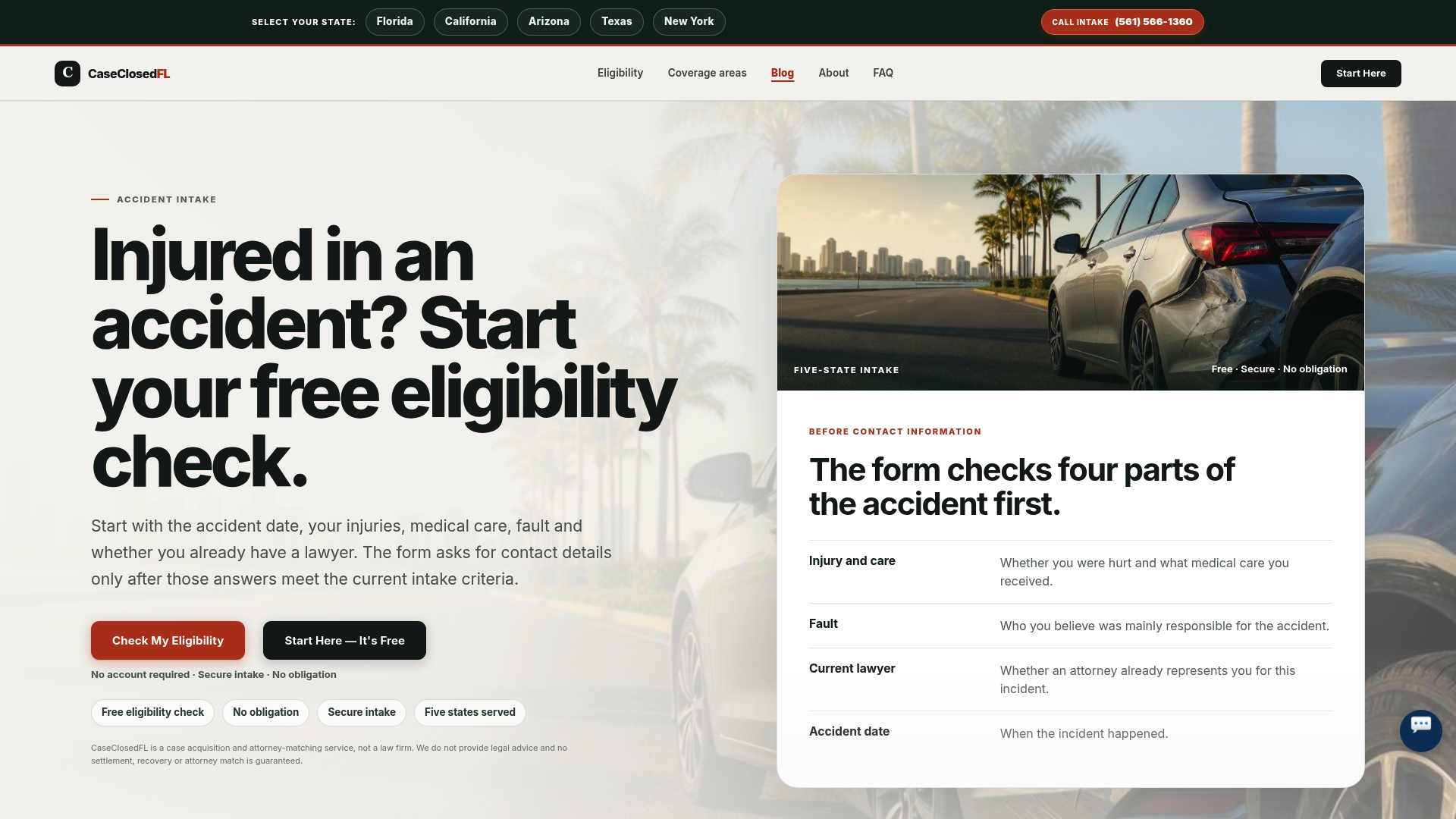
- We ask about your injury, treatment so far, current legal representation, and your location before anything else.
- Every submission goes through a review process before any referral to an attorney.
- We request your contact information only after your case meets intake criteria, helping to limit unwanted solicitation.
Start your free eligibility check to see where you stand.
This article is general information, not a substitute for advice from a qualified lawyer. Consult a qualified legal professional about your own circumstances before acting on anything here.
FAQ
How long after an accident should it be reported?
Report serious crashes to police at the scene whenever possible, especially when there are injuries, significant damage, or a hit-and-run. States set their own submission deadlines for the investigating officer, for example Texas requires officer submission within 10 days under its crash reporting rules, and this timeline affects how soon you can successfully order a copy.
How can I find out if someone’s been in a car accident?
The most reliable way is to ask the person directly or check with the investigating police agency named at the scene. If a report was filed, you can often search for it through the agency’s records portal or a multi-state tool like BuyCrash, provided you have enough identifying details to match the file.
What do the codes on an Alabama crash report mean?
Crash report codes vary by state and typically represent standardized categories for things like road conditions, contributing factors, and vehicle types. Because these codes differ across states and reporting forms, check the issuing agency’s own key or legend rather than assuming a code means the same thing everywhere.
How do I check accident details on my report?
Compare the narrative and diagram sections against your own memory and any photos you took, since these sections describe what the officer observed and concluded at the scene. If something looks wrong, contact the investigating officer or precinct directly, as outlined in Virginia DMV’s crash report policy, to request a correction.
Do I need a police report to file an insurance claim?
Not always. Insurers can open a claim using photos, statements, and repair estimates, as Progressive explains in its guidance on claims without a police report, though a report becomes more important when injuries, disputes, or criminal conduct are involved.
Sources
Frequently asked questions
Table of Contents How to Find the Right Agency and Order Your Report Who Can Request a Report and Why Some Copies Are Redacted What’s Inside the Report and How to Use It State Timing and Fee Examples Worth Knowing No Record Found or Errors on the Report: What to Do Next How Insurance Claims Work With or Without a Police Report When Legal Help Makes Sense After an Accident A Free Way to Check if You Qualify for Legal Help FAQ Sources How to Find the Right Agency and Order Your Report Before you request anything, gather the details that let an official records system match your crash to its file. Most portals reject a search when even one field is off. Write down the crash date and exact location, including intersection or mile marker. Note the report or case number if an officer gave you one at the scene. Collect the names of the other driver and any passengers involved. Have the last four digits of your plate or vehicle identification number ready. Start with the agency that actually responded: city police, county sheriff, or state highway patrol. If that search comes up empty, the record may have moved to a state-level custodian. Texas, for example, routes crash reports through the Texas Department of Transportation crash reports system , while Massachusetts keeps them with its Registry of Motor Vehicles. A city department can investigate a crash, yet the official file ends up with a state agency once it is submitted, so checking only the local police website can send you looking in the wrong place. Ordering channels generally fall into four categories: Official state portals, where you pay online and download a PDF directly. Precinct or station front counters, useful when a report was filed recently. Mail-in request forms, often required for certified copies or older records. Multi-state search tools like BuyCrash, which let you pick your state and search its participating agencies in one place. Bring a government-issued ID, a payment method, and, if you are requesting on someone else’s behalf, a signed authorization or proof of your relationship to the crash. Matching your search fields exactly, correct spelling of names, the right date format, the full case number, cuts down on “no record found” results that waste time and fees. Pro Tip: If your report search fails on the first try, wait a few extra business days before ordering again. Many departments take longer than expected to upload a crash into the state system, and repeat purchases before then often get rejected. Who Can Request a Report and Why Some Copies Are Redacted Not everyone can pull a full, unredacted crash report. Most states limit access to people with a direct stake in the crash, which protects driver privacy under federal guidance tied to the Driver’s Privacy Protection Act. Drivers and passengers directly involved in the crash. Registered owners of a vehicle named in the report. Attorneys or insurance adjusters acting on an involved party’s behalf. Authorized representatives with signed permission from someone listed on the report. Redacted versions typically strip out Social Security numbers, phone numbers, and sometimes home addresses, while keeping the narrative, diagram, and vehicle details intact. Release rules differ by state. Texas limits full copies to people “directly concerned” in the crash or their authorized agents, per the Texas Department of Transportation’s crash records guidance. Virginia handles eligibility through a front-counter process detailed in its Driver Licensing Guide policy on crash reports , and Massachusetts applies its own permitted-user standards when processing RMV requests. What’s Inside the Report and How to Use It A standard crash report includes more than a summary of what happened. Expect these recurring sections: Crash identifiers: date, time, exact location, and case number. Driver, passenger, and vehicle information, including insurance details. Injury notes and any witness names or statements collected at the scene. A written narrative and a diagram showing vehicle positions and points of impact. Citation information or results from field sobriety or chemical testing, when applicable. The report documents the officer’s on-scene investigation, but it does not decide fault or liability on its own. Official manuals describe it as an investigative record, and insurers and courts weigh it alongside other evidence rather than treating it as a final verdict. Pair the report with photos of the vehicles and scene, medical records tied to any injuries, repair estimates, and written witness statements. Together, these build a fuller picture than the report alone, especially when the narrative is brief or a detail seems incomplete. State Timing and Fee Examples Worth Knowing Processing times and fees vary enough by state that ordering too early is one of the most common mistakes people make. A few examples illustrate the range. State Agency Typical fee Processing window Texas TxDOT (CR-3 system) $6 regular, $8 certified Officers must submit within 10 days of the crash Massachusetts RMV $20 search fee Allow 4 weeks; continued search up to 90 days New York City NYPD, then NYS DMV Varies by portal Precinct holds report 30 days, then forwards to the state Virginia DMV (CRD-93 form) Set by form instructions Front-counter workflow; monitoring continues if not yet filed In Texas, officers submit crash reports within 10 days, and the TxDOT online system lists $6 for a regular copy and $8 for a certified one, with delivery by email once processed. Massachusetts asks requesters to wait a full four weeks before expecting results, charges a non-refundable $20 search fee, and will keep searching for up to 90 days if the report has not yet been filed, according to Mass . New York City precincts hold collision reports for 30 days before forwarding them to the New York State DMV, so your first stop depends entirely on how recently the crash occurred, a detail confirmed on the NYPD’s motor vehicle collision reports page . After that window, the Collision Report Retrieval Portal becomes the faster route. Virginia’s DMV documents a front-counter process built around the CRD-93 form, with identification and payment requirements spelled out in its Driver Licensing Guide policy, including a monitoring period for crashes not yet on file. Florida separates long-form and short-form reports: long-form versions cover injuries, DUI, tow-away, and commercial vehicle crashes, and carry their own narrative and diagram requirements, as outlined by Florida’s DHSMV traffic crash reports page . No Record Found or Errors on the Report: What to Do Next A “no record found” result or a report full of mistakes is frustrating, but both have clear fixes. Confirm you waited the appropriate window for your state, four weeks in Massachusetts, shorter in Texas, before assuming the record is missing. Ask the records office about refund policies or whether they will keep searching automatically, since some states continue for up to 90 days. Contact the investigating officer or precinct directly for scene notes, photos, or to flag an error for correction. Gather supporting documents, your own photos, witness contact information, medical records, when requesting a correction. Ask whether a subpoena is needed for materials like dash-cam footage, since the state custodian often holds only the final written report. Pro Tip: Keep a dated log of every call and request you make. If a correction takes multiple attempts, that record helps you show an insurer or attorney exactly what happened and when. How Insurance Claims Work With or Without a Police Report Insurers can usually open a claim without a police report in hand, leaning instead on photos, recorded statements, and repair estimates while the report is pending, according to Progressive’s guidance on filing claims without a police report. A report becomes far more important when the crash involved injuries, a hit-and-run, suspected impaired driving, or a dispute over who caused the collision. Criminal conduct at the scene, including DUI or hit-and-run, can also trigger separate legal proceedings beyond the insurance claim itself, a topic covered in more detail in this overview of DUI and hit-and-run charges. While you wait for the report: Notify your insurer promptly, even before the report is available. Preserve evidence: photos, repair estimates, and contact information for witnesses. Order the report as soon as the agency’s processing window allows. Keep a written record of every call and email with your insurer. When Legal Help Makes Sense After an Accident Once you have your report in hand, a clear narrative and diagram can still leave real questions about fault, injury severity, or how an insurer is handling your claim. Disputed liability, significant injuries, or complex evidence are good reasons to get a qualified opinion. Checking eligibility for attorney help costs nothing and does not commit you to anything. — Luis A Free Way to Check if You Qualify for Legal Help If your crash involved an injury, a liability dispute, or evidence that feels too complicated to sort out alone, a free eligibility check can connect you with a participating attorney without any upfront cost. We ask about your injury, treatment so far, current legal representation, and your location before anything else. Every submission goes through a review process before any referral to an attorney. We request your contact information only after your case meets intake criteria, helping to limit unwanted solicitation. Start your free eligibility check to see where you stand. This article is general information, not a substitute for advice from a qualified lawyer. Consult a qualified legal professional about your own circumstances before acting on anything here. FAQ How long after an accident should it be reported?
Report serious crashes to police at the scene whenever possible, especially when there are injuries, significant damage, or a hit-and-run. States set their own submission deadlines for the investigating officer, for example Texas requires officer submission within 10 days under its crash reporting rules, and this timeline affects how soon you can successfully order a copy.
How can I find out if someone’s been in a car accident?
The most reliable way is to ask the person directly or check with the investigating police agency named at the scene. If a report was filed, you can often search for it through the agency’s records portal or a multi-state tool like BuyCrash, provided you have enough identifying details to match the file.
What do the codes on an Alabama crash report mean?
Crash report codes vary by state and typically represent standardized categories for things like road conditions, contributing factors, and vehicle types. Because these codes differ across states and reporting forms, check the issuing agency’s own key or legend rather than assuming a code means the same thing everywhere.
How do I check accident details on my report?
Compare the narrative and diagram sections against your own memory and any photos you took, since these sections describe what the officer observed and concluded at the scene. If something looks wrong, contact the investigating officer or precinct directly, as outlined in Virginia DMV’s crash report policy, to request a correction.
Do I need a police report to file an insurance claim?
Not always. Insurers can open a claim using photos, statements, and repair estimates, as Progressive explains in its guidance on claims without a police report, though a report becomes more important when injuries, disputes, or criminal conduct are involved.
Ready to enter the accident details?
The eligibility form asks about the accident, injury, treatment, fault and representation before contact information.
Start Eligibility Check