Soft Tissue Injuries: PEACE & LOVE, Check Crash Legal Options
Learn modern early care—PEACE & LOVE steps, rehab milestones, and expected recovery timelines. If your injury followed a crash, check CaseClosedFL's free...
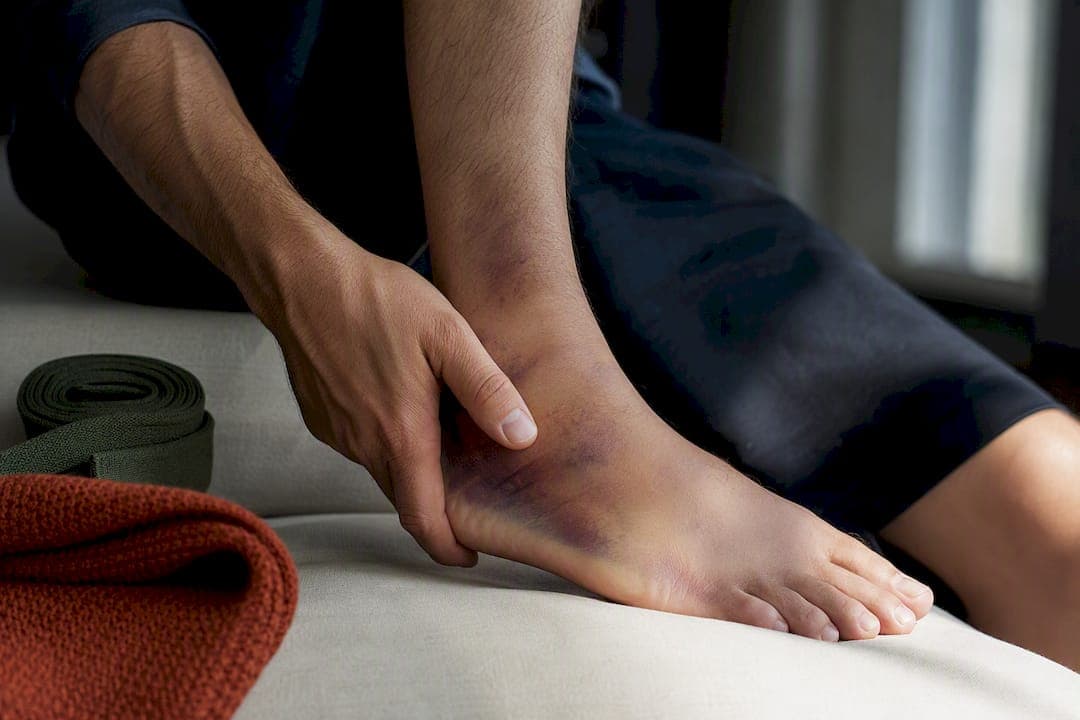
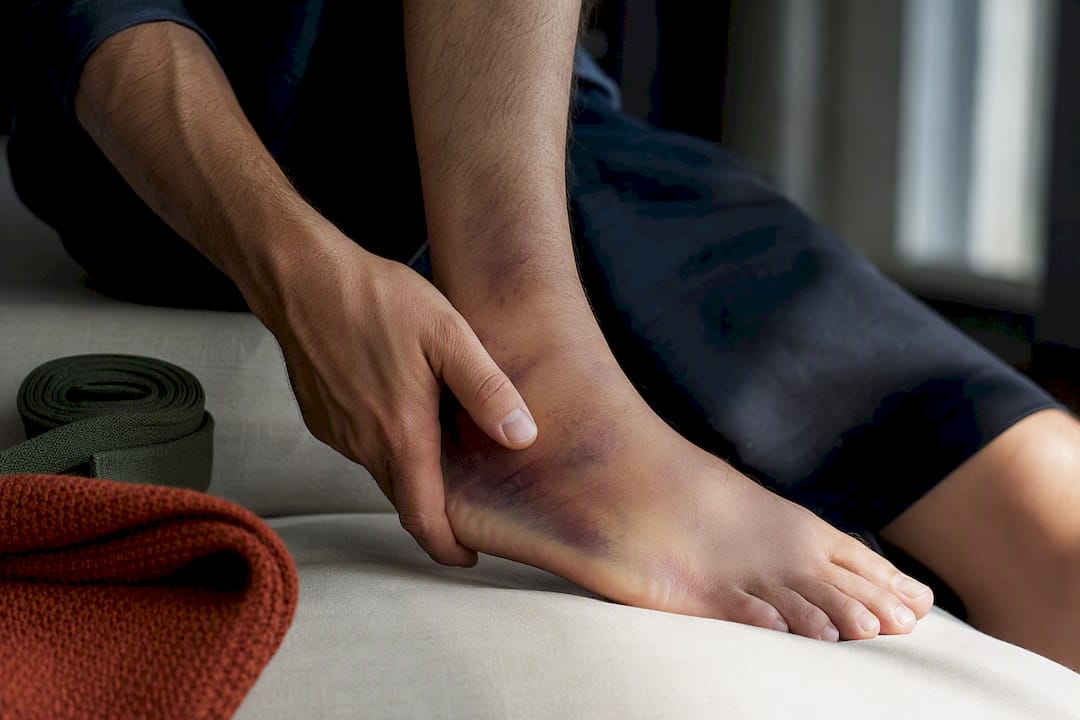
Soft tissue injuries are damage to muscles, tendons, ligaments, or bursae, ranging from sprains and strains to contusions, tendonitis, and bursitis. Most result from acute trauma or repetitive overuse and respond well to conservative care. The immediate action: protect the injured area, control swelling, and get urgent evaluation if you notice deformity, numbness, or an inability to bear weight.
TL;DR:
- Soft tissue injuries include sprains, strains, contusions, tendonitis, and bursitis, with severity graded from mild to complete rupture, affecting healing time.
- Signs requiring urgent care include visible deformity, inability to bear weight, numbness, increasing swelling, or signs of infection, especially if symptoms persist beyond a week.
- Diagnosis relies on history, physical exam, and imaging like X-ray, ultrasound, or MRI, with most cases starting with conservative home treatment focusing on protection and inflammation control.
- Early treatment now favors protection, elevation, and load management over traditional ice and rest, with pain managed by acetaminophen and NSAIDs used later in recovery.
- Prolonged or severe injuries may need surgical repair, particularly for complete ruptures or unresponsive chronic conditions, and proper rehab is essential for full recovery.
Table of Contents
- Common Types of Soft Tissue Injuries and Their Severity
- Symptoms and When to Seek Care
- How Doctors Diagnose Soft Tissue Damage
- Early Treatment: From RICE to PEACE and LOVE
- Rehabilitation and Getting Back to Activity
- What to Expect: Recovery Time and Possible Complications
- Preventing the Next Injury
- About This Guide
- Fracture or Soft Tissue Injury? How to Tell the Difference
- Pain Management Options Beyond the First Few Days
- When Surgery Becomes Necessary
- Living With It: Scar Tissue and Long-Term Mobility
- A Realistic Note on Recovery
- If Your Injury Followed an Accident, Here’s a Separate Path Worth Knowing About
- Sources
- FAQ
Common Types of Soft Tissue Injuries and Their Severity
A sprain stretches or tears a ligament, the tissue connecting bone to bone, most often at the ankle, knee, or wrist. A strain damages a muscle or tendon, typically from lifting, sprinting, or an awkward twist. A contusion is a bruise caused by direct blunt force that ruptures small blood vessels under the skin. Tendonitis is inflammation of a tendon from repetitive stress, common in the shoulder (rotator cuff), elbow (tennis elbow), and Achilles. Bursitis inflames the small fluid-filled sacs that cushion joints, frequently in the hip, knee, or shoulder.
Johns Hopkins Medicine classifies these injuries as either acute, from a single traumatic event, or overuse, from repeated stress over weeks or months.
Severity follows a three-grade scale that applies across sprains and strains:
- Grade 1 (mild): Slight stretching, minimal fiber damage, mild pain, and little functional loss.
- Grade 2 (moderate): Partial tearing with noticeable swelling, bruising, and moderate instability.
- Grade 3 (severe): Complete rupture, often with a “pop” sensation, significant instability, and inability to use the joint or limb normally.
Symptoms and When to Seek Care
Most soft tissue injuries share a recognizable pattern: localized pain, swelling, bruising, stiffness, and some loss of strength or range of motion. Mild cases often improve within days using home care. But certain signs mean you should not wait it out.
- Visible deformity or a joint that looks out of place.
- Inability to bear weight or use the limb at all, which can signal a fracture rather than a pure soft tissue injury.
- Numbness, tingling, or a cold, pale limb, suggesting nerve or blood vessel involvement.
- Rapidly increasing swelling or intense, disproportionate pain, which can point to compartment syndrome or vascular compromise.
- Fever, warmth, or redness spreading from the injury, which may indicate infected bursitis.
If pain, swelling, or weakness has not started improving within five to seven days of consistent home care, that is your cue to have a clinician take a closer look rather than waiting it out further.
How Doctors Diagnose Soft Tissue Damage
A clinician typically starts with a history (how the injury happened, what you felt at the moment) and a physical exam checking swelling, tenderness, stability, and range of motion compared to the uninjured side. That exam is usually enough to distinguish a soft tissue injury from a fracture, but imaging fills in the gaps when the picture is unclear.
- X-ray is the first imaging step when a fracture or dislocation is suspected, since it shows bone but not soft tissue detail.
- Ultrasound offers a quick, low-cost look at tendons and superficial ligament tears in real time during movement.
- MRI is reserved for suspected ligament or tendon tears that need surgical planning, or when symptoms persist despite conservative treatment and the exam alone cannot confirm the extent of damage.
- Referral to orthopedics or sports medicine generally follows a Grade 3 tear, a joint that feels unstable, or an injury that fails to improve after several weeks of standard care.
Early Treatment: From RICE to PEACE and LOVE
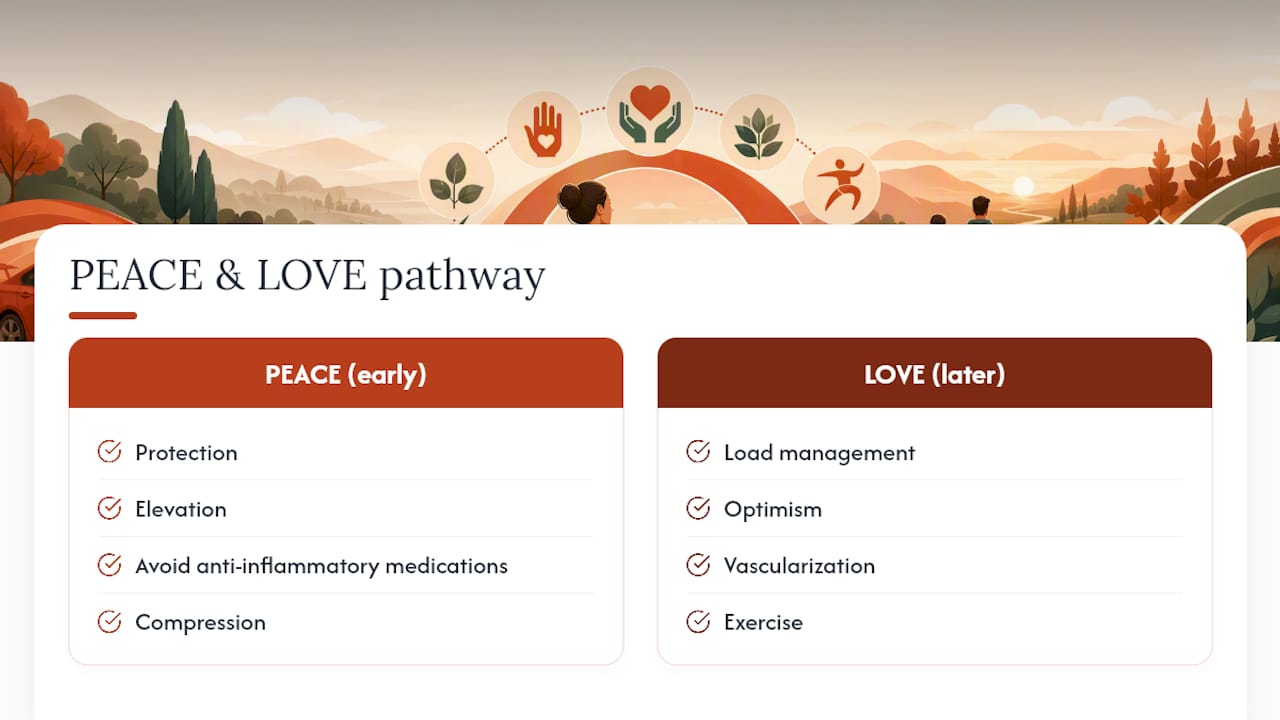
For decades, RICE (rest, ice, compression, elevation) was the standard advice for a fresh sprain or strain. It later evolved into PRICE, adding “protection” as the first step to avoid further damage in the initial hours. The newest framework, PEACE & LOVE, pushes the thinking further: Protection, Elevation, Avoiding anti-inflammatory medications early, Compression, and Education in the first days, followed by Load management, Optimism, Vascularization, and Exercise as healing progresses.
The shift reflects a simple insight: some inflammation is a necessary part of tissue repair, so blunting it too aggressively or too early can actually slow recovery rather than speed it up.
Cold therapy still has a role in the first 48 hours for pain and swelling control. Apply ice with a cloth or towel barrier between the pack and your skin, and limit sessions to 15 to 20 minutes with a few hours between applications to avoid cold-related skin injury. Compression wraps and elevating the limb above heart level when possible both help limit fluid buildup.
For pain, acetaminophen is generally the preferred first-line option in the acute phase. NSAIDs like ibuprofen can reduce pain and swelling, but taking them too early may interfere with the inflammatory signaling your body needs to start repairing tissue, so many clinicians now suggest using them selectively and later in the process rather than immediately. Splints or braces come into play for unstable joints, and anyone with a suspected fracture, an open wound, or signs of nerve or vascular compromise needs emergency evaluation, not home care.
Pro Tip: Do not skip the “protection” step just because pain feels manageable. A Grade 2 ankle sprain that gets walked on too soon in the first 48 hours often takes longer to heal than one that gets a few days of real rest first.
Rehabilitation and Getting Back to Activity
Prolonged immobilization is no longer the default advice. Moving the injured area within a pain-tolerable range, starting within days rather than weeks, generally produces better outcomes than keeping it still. Recovery tends to progress in three overlapping stages.
- Range of motion: Gentle stretching and controlled movement to prevent stiffness without stressing healing tissue.
- Strength: Progressive resistance exercises, often starting with resistance bands before adding weight.
- Function: Sport-specific or job-specific movements that mimic what you’ll actually be doing once cleared.
A physical therapist becomes valuable when a Grade 2 or 3 injury is involved, when a joint feels unstable, or when pain plateaus instead of improving. Adherence to a guided rehab program is one of the strongest predictors of a full recovery, often mattering more than any single treatment you try in the first week. You’re generally ready to progress when an exercise no longer causes pain during or after; you should slow down if swelling returns or pain sharpens rather than fades.
What to Expect: Recovery Time and Possible Complications
Mild sprains and strains often resolve in a few weeks. Moderate injuries may take several weeks, and severe, Grade 3 tears sometimes require months, occasionally longer if surgery is involved. Age, blood supply to the tissue, and how closely you follow rehab guidance all affect the timeline.
Chronic problems can follow inadequate healing, including persistent tendinopathy, lingering joint instability, and a higher long-term risk of osteoarthritis in a joint that was severely sprained. Rare but serious complications include compartment syndrome, nerve or blood vessel injury, and infected bursitis, all of which need prompt medical attention rather than home management.
Preventing the Next Injury
Most soft tissue injuries are preventable with a few consistent habits rather than one perfect fix.
- Warm up before activity and build training intensity gradually instead of jumping straight into peak effort.
- Balance strength and flexibility work, since tight or weak muscles around a joint raise sprain and strain risk.
- Fix repetitive strain sources at a desk or workstation with better posture, ergonomic setup, and regular movement breaks.
- Wear appropriate footwear or braces for high-risk activities, and ease back into sport or physical work gradually after any injury rather than returning at full intensity immediately.
About This Guide
A platform connects people injured in accidents with attorneys through a streamlined intake process that includes human review, covering multiple states… This article is for general information only and is not a substitute for medical advice.
Fracture or Soft Tissue Injury? How to Tell the Difference
Fractures and soft tissue injuries can feel remarkably similar in the first hour, both bring pain, swelling, and reluctance to use the limb; which is exactly why misdiagnosis at home is common. A few distinctions help separate the two, though neither substitutes for a professional exam.
Fractures tend to produce pain localized directly over the bone rather than around a joint line, and the pain is often sharp and constant rather than worse only with specific movements. A visible deformity, such as a limb bending at an unnatural angle, points strongly toward a break. Grinding or grating sensations during movement, called crepitus, also suggest bone involvement rather than a pure ligament or muscle injury.
Soft tissue injuries usually produce pain that’s worse with specific movements or stress on the joint but more tolerable at rest, and swelling tends to build around the joint rather than directly on a bone shaft. Bruising in a soft tissue injury often appears within 24 to 48 hours, spreading from the injury site downward with gravity.
The overlap is real enough that clinicians rely on imaging rather than symptoms alone. A sprained ankle and a hairline fracture of the fibula can feel almost identical to the person experiencing them. This is precisely why an x-ray is the standard first step whenever there’s meaningful swelling, an inability to take four steps without significant pain, or tenderness directly over a bone, criteria borrowed from clinical decision rules used in emergency departments to decide who needs imaging and who doesn’t.
Pain Management Options Beyond the First Few Days
Once the acute phase passes, medication choices shift from simply controlling pain to supporting the return to normal movement without masking warning signs your body still needs you to notice.
Acetaminophen remains a reasonable option for ongoing mild to moderate pain and carries a lower risk profile than anti-inflammatory drugs for most healthy adults, provided dosing limits are respected. NSAIDs such as ibuprofen or naproxen can be used later in recovery, once the early inflammatory window has passed, to manage pain that interferes with sleep or rehab exercises. Topical NSAID gels and patches offer localized relief with less systemic exposure, which some clinicians prefer for injuries near the skin surface, like a sprained wrist or bruised shin.
For persistent tendon pain that doesn’t respond to standard measures, some clinicians consider corticosteroid injections, though these carry a tradeoff: they reduce inflammation and pain short-term but can weaken tendon tissue with repeated use, so they’re typically limited to a small number of injections per year. Muscle relaxants occasionally come into play for strains involving significant muscle spasm, usually for short courses given sedation risks.
Chronic pain that lingers well past expected healing time deserves its own conversation with a provider, since long-term pain management strategies differ meaningfully from acute injury care. Resources like Meddle’s chronic pain guidance outline why prompt evaluation and consistent treatment adherence matter more for long-term outcomes than any single medication choice.
When Surgery Becomes Necessary
Most soft tissue injuries never need an operating room. Surgery becomes a real consideration in a narrower set of circumstances, generally involving complete ruptures, significant instability, or failure of months of conservative treatment to restore function.
A complete (Grade 3) ligament tear, such as an ACL rupture in the knee, often gets surgically repaired in physically active patients because the joint can otherwise remain unstable and prone to further injury with normal activity. Fully ruptured tendons, including a torn Achilles tendon, frequently require surgical repair too, particularly in younger or more active patients, since the tendon ends can retract and fail to heal properly on their own.
Chronic tendonitis or bursitis that hasn’t responded to months of rest, physical therapy, and medication may eventually warrant a minor surgical procedure to remove damaged tissue or repair structural defects. Severe contusions that develop into a large hematoma occasionally need drainage if the blood pooling restricts blood flow or nerve function nearby.
Surgical decisions typically weigh age, activity level, occupation, and how much instability or dysfunction remains after conservative care. An orthopedic surgeon or sports medicine specialist makes this call, usually after imaging confirms the extent of the tear and after a reasonable trial of nonsurgical treatment has run its course. Recovery from surgical repair generally takes longer than conservative treatment for a comparable injury, often stretching to several months of structured rehab before a return to full activity.

Living With It: Scar Tissue and Long-Term Mobility
Healing tissue doesn’t return to its original structure. Scar tissue forms during repair, and it’s naturally less flexible and less organized than the tissue it replaces, which is part of why old injuries sometimes feel stiff or “off” years later even after full clinical healing.
Managing scar tissue well starts with consistent, gentle mobility work introduced as soon as a clinician or physical therapist clears it, since tissue that’s never stretched tends to remodel in a shorter, tighter pattern. Techniques like foam rolling, targeted stretching, and manual therapy from a physical therapist can help improve tissue flexibility around an old injury site. Some clinicians also use instrument-assisted soft tissue mobilization for stubborn scar adhesions, though evidence for specific techniques varies by injury type.
Long-term mobility maintenance matters most for injuries that involved a joint, since ligament laxity or residual scar restriction can quietly change how you move without you noticing day to day. A basic maintenance routine, a few minutes of targeted stretching several times a week, paired with periodic strength check-ins for the affected area, helps catch small deficits before they become new injuries. Anyone with a history of a significant sprain, especially at the ankle or knee, benefits from ongoing balance and proprioception work, since the nerve pathways that help a joint sense its position often don’t fully recover just because pain and swelling have resolved.
A Realistic Note on Recovery
Healing from a soft tissue injury rarely follows a straight line, and the biggest mistake people make is treating patience and progressive rehab as opposites when they actually depend on each other. Rest too long and you lose ground to stiffness and weakness. Push too hard and you reset the clock. If your injury followed an accident, start documenting it immediately: dates of onset, symptoms, photos of visible bruising or swelling, and every treatment record. That paper trail matters far more than most people realize, whether or not you ever need it.
— Luis
If Your Injury Followed an Accident, Here’s a Separate Path Worth Knowing About
Everything above covers the medical side of healing. If your soft tissue injury came from a car crash, a motorcycle wreck, or another accident that wasn’t your fault, there’s a separate, non-medical question worth considering: whether ongoing bills, a dispute over who was at fault, or a long-term injury justify talking to an attorney.
A service runs a streamlined, no-obligation eligibility check that gathers basic facts about injury, fault, legal representation, and location before requesting personal contact information. Submissions undergo human review before proceeding, helping prevent unwanted calls.

This isn’t a substitute for medical care, and The service doesn’t offer legal advice or guarantee matching with an attorney or case outcomes. It’s simply a faster way to find out if you have a case worth pursuing. If your accident happened in South Florida, you can start with the Fort Lauderdale eligibility check or review your options through the main intake page if you’re located elsewhere across the states Caseclosedfl covers.
Sources
- Soft Tissue Injury: What It Is, Types, Causes & Treatment
- Sprains, Strains & Other Soft-Tissue Injuries - OrthoInfo - AAOS
- Soft-Tissue Injuries | Johns Hopkins Medicine
- Overview of Sprains and Other Soft-Tissue Injuries - Merck Manual
FAQ
What Is the Difference Between a Sprain and a Strain?
A sprain injures a ligament connecting bone to bone, while a strain injures a muscle or tendon; both are graded from mild (Grade 1) to a complete tear (Grade 3).
How Long Does a Soft Tissue Injury Take to Heal?
Mild injuries often heal in two to four weeks, moderate ones in six to eight weeks, and severe Grade 3 tears can take three to six months or longer, especially if surgery is needed.
Is Ice or Heat Better for a Soft Tissue Injury?
Ice is generally preferred in the first 48 hours to control swelling, applied with a barrier for 15 to 20 minutes at a time, while heat is more useful later to ease stiffness during rehab.
When Should I See a Doctor for a Soft Tissue Injury?
See a clinician promptly if you notice deformity, cannot bear weight, have numbness or tingling, or if pain and swelling haven’t improved within five to seven days of home care.
Can Caseclosedfl Help if My Injury Happened in an Accident?
A free eligibility check reviews injury and accident details and connects qualifying cases with attorneys for evaluation, without providing medical or legal advice.
Recommended
Frequently asked questions
Table of Contents Common Types of Soft Tissue Injuries and Their Severity Symptoms and When to Seek Care How Doctors Diagnose Soft Tissue Damage Early Treatment: From RICE to PEACE and LOVE Rehabilitation and Getting Back to Activity What to Expect: Recovery Time and Possible Complications Preventing the Next Injury About This Guide Fracture or Soft Tissue Injury? How to Tell the Difference Pain Management Options Beyond the First Few Days When Surgery Becomes Necessary Living With It: Scar Tissue and Long-Term Mobility A Realistic Note on Recovery If Your Injury Followed an Accident, Here’s a Separate Path Worth Knowing About Sources FAQ Common Types of Soft Tissue Injuries and Their Severity A sprain stretches or tears a ligament, the tissue connecting bone to bone, most often at the ankle, knee, or wrist. A strain damages a muscle or tendon, typically from lifting, sprinting, or an awkward twist. A contusion is a bruise caused by direct blunt force that ruptures small blood vessels under the skin. Tendonitis is inflammation of a tendon from repetitive stress, common in the shoulder (rotator cuff), elbow (tennis elbow), and Achilles. Bursitis inflames the small fluid-filled sacs that cushion joints, frequently in the hip, knee, or shoulder. Johns Hopkins Medicine classifies these injuries as either acute, from a single traumatic event, or overuse, from repeated stress over weeks or months. Severity follows a three-grade scale that applies across sprains and strains: Grade 1 (mild): Slight stretching, minimal fiber damage, mild pain, and little functional loss. Grade 2 (moderate): Partial tearing with noticeable swelling, bruising, and moderate instability. Grade 3 (severe): Complete rupture, often with a “pop” sensation, significant instability, and inability to use the joint or limb normally. Symptoms and When to Seek Care Most soft tissue injuries share a recognizable pattern: localized pain, swelling, bruising, stiffness, and some loss of strength or range of motion. Mild cases often improve within days using home care. But certain signs mean you should not wait it out. Visible deformity or a joint that looks out of place. Inability to bear weight or use the limb at all, which can signal a fracture rather than a pure soft tissue injury. Numbness, tingling, or a cold, pale limb , suggesting nerve or blood vessel involvement. Rapidly increasing swelling or intense, disproportionate pain, which can point to compartment syndrome or vascular compromise . Fever, warmth, or redness spreading from the injury, which may indicate infected bursitis. If pain, swelling, or weakness has not started improving within five to seven days of consistent home care, that is your cue to have a clinician take a closer look rather than waiting it out further. How Doctors Diagnose Soft Tissue Damage A clinician typically starts with a history (how the injury happened, what you felt at the moment) and a physical exam checking swelling, tenderness, stability, and range of motion compared to the uninjured side. That exam is usually enough to distinguish a soft tissue injury from a fracture, but imaging fills in the gaps when the picture is unclear. X-ray is the first imaging step when a fracture or dislocation is suspected, since it shows bone but not soft tissue detail. Ultrasound offers a quick, low-cost look at tendons and superficial ligament tears in real time during movement. MRI is reserved for suspected ligament or tendon tears that need surgical planning, or when symptoms persist despite conservative treatment and the exam alone cannot confirm the extent of damage. Referral to orthopedics or sports medicine generally follows a Grade 3 tear, a joint that feels unstable, or an injury that fails to improve after several weeks of standard care. Early Treatment: From RICE to PEACE and LOVE For decades, RICE (rest, ice, compression, elevation) was the standard advice for a fresh sprain or strain. It later evolved into PRICE, adding “protection” as the first step to avoid further damage in the initial hours. The newest framework, PEACE & LOVE, pushes the thinking further: Protection, Elevation, Avoiding anti-inflammatory medications early, Compression, and Education in the first days, followed by Load management, Optimism, Vascularization, and Exercise as healing progresses. The shift reflects a simple insight: some inflammation is a necessary part of tissue repair, so blunting it too aggressively or too early can actually slow recovery rather than speed it up. Cold therapy still has a role in the first 48 hours for pain and swelling control. Apply ice with a cloth or towel barrier between the pack and your skin, and limit sessions to 15 to 20 minutes with a few hours between applications to avoid cold-related skin injury. Compression wraps and elevating the limb above heart level when possible both help limit fluid buildup. For pain, acetaminophen is generally the preferred first-line option in the acute phase. NSAIDs like ibuprofen can reduce pain and swelling, but taking them too early may interfere with the inflammatory signaling your body needs to start repairing tissue, so many clinicians now suggest using them selectively and later in the process rather than immediately. Splints or braces come into play for unstable joints, and anyone with a suspected fracture, an open wound, or signs of nerve or vascular compromise needs emergency evaluation, not home care. Pro Tip: Do not skip the “protection” step just because pain feels manageable. A Grade 2 ankle sprain that gets walked on too soon in the first 48 hours often takes longer to heal than one that gets a few days of real rest first. Rehabilitation and Getting Back to Activity Prolonged immobilization is no longer the default advice. Moving the injured area within a pain-tolerable range, starting within days rather than weeks, generally produces better outcomes than keeping it still. Recovery tends to progress in three overlapping stages. Range of motion: Gentle stretching and controlled movement to prevent stiffness without stressing healing tissue. Strength: Progressive resistance exercises, often starting with resistance bands before adding weight. Function: Sport-specific or job-specific movements that mimic what you’ll actually be doing once cleared. A physical therapist becomes valuable when a Grade 2 or 3 injury is involved, when a joint feels unstable, or when pain plateaus instead of improving. Adherence to a guided rehab program is one of the strongest predictors of a full recovery , often mattering more than any single treatment you try in the first week. You’re generally ready to progress when an exercise no longer causes pain during or after; you should slow down if swelling returns or pain sharpens rather than fades. What to Expect: Recovery Time and Possible Complications Mild sprains and strains often resolve in a few weeks. Moderate injuries may take several weeks, and severe, Grade 3 tears sometimes require months, occasionally longer if surgery is involved. Age, blood supply to the tissue, and how closely you follow rehab guidance all affect the timeline. Chronic problems can follow inadequate healing, including persistent tendinopathy, lingering joint instability, and a higher long-term risk of osteoarthritis in a joint that was severely sprained. Rare but serious complications include compartment syndrome, nerve or blood vessel injury, and infected bursitis, all of which need prompt medical attention rather than home management. Preventing the Next Injury Most soft tissue injuries are preventable with a few consistent habits rather than one perfect fix. Warm up before activity and build training intensity gradually instead of jumping straight into peak effort. Balance strength and flexibility work , since tight or weak muscles around a joint raise sprain and strain risk. Fix repetitive strain sources at a desk or workstation with better posture, ergonomic setup, and regular movement breaks. Wear appropriate footwear or braces for high-risk activities, and ease back into sport or physical work gradually after any injury rather than returning at full intensity immediately. About This Guide A platform connects people injured in accidents with attorneys through a streamlined intake process that includes human review, covering multiple states… This article is for general information only and is not a substitute for medical advice. Fracture or Soft Tissue Injury? How to Tell the Difference Fractures and soft tissue injuries can feel remarkably similar in the first hour, both bring pain, swelling, and reluctance to use the limb; which is exactly why misdiagnosis at home is common. A few distinctions help separate the two, though neither substitutes for a professional exam. Fractures tend to produce pain localized directly over the bone rather than around a joint line, and the pain is often sharp and constant rather than worse only with specific movements. A visible deformity, such as a limb bending at an unnatural angle, points strongly toward a break. Grinding or grating sensations during movement, called crepitus, also suggest bone involvement rather than a pure ligament or muscle injury. Soft tissue injuries usually produce pain that’s worse with specific movements or stress on the joint but more tolerable at rest, and swelling tends to build around the joint rather than directly on a bone shaft. Bruising in a soft tissue injury often appears within 24 to 48 hours, spreading from the injury site downward with gravity. The overlap is real enough that clinicians rely on imaging rather than symptoms alone. A sprained ankle and a hairline fracture of the fibula can feel almost identical to the person experiencing them. This is precisely why an x-ray is the standard first step whenever there’s meaningful swelling, an inability to take four steps without significant pain, or tenderness directly over a bone, criteria borrowed from clinical decision rules used in emergency departments to decide who needs imaging and who doesn’t. Pain Management Options Beyond the First Few Days Once the acute phase passes, medication choices shift from simply controlling pain to supporting the return to normal movement without masking warning signs your body still needs you to notice. Acetaminophen remains a reasonable option for ongoing mild to moderate pain and carries a lower risk profile than anti-inflammatory drugs for most healthy adults, provided dosing limits are respected. NSAIDs such as ibuprofen or naproxen can be used later in recovery, once the early inflammatory window has passed, to manage pain that interferes with sleep or rehab exercises. Topical NSAID gels and patches offer localized relief with less systemic exposure, which some clinicians prefer for injuries near the skin surface, like a sprained wrist or bruised shin. For persistent tendon pain that doesn’t respond to standard measures, some clinicians consider corticosteroid injections, though these carry a tradeoff: they reduce inflammation and pain short-term but can weaken tendon tissue with repeated use, so they’re typically limited to a small number of injections per year. Muscle relaxants occasionally come into play for strains involving significant muscle spasm, usually for short courses given sedation risks. Chronic pain that lingers well past expected healing time deserves its own conversation with a provider, since long-term pain management strategies differ meaningfully from acute injury care. Resources like Meddle’s chronic pain guidance outline why prompt evaluation and consistent treatment adherence matter more for long-term outcomes than any single medication choice. When Surgery Becomes Necessary Most soft tissue injuries never need an operating room. Surgery becomes a real consideration in a narrower set of circumstances, generally involving complete ruptures, significant instability, or failure of months of conservative treatment to restore function. A complete (Grade 3) ligament tear, such as an ACL rupture in the knee, often gets surgically repaired in physically active patients because the joint can otherwise remain unstable and prone to further injury with normal activity. Fully ruptured tendons, including a torn Achilles tendon, frequently require surgical repair too, particularly in younger or more active patients, since the tendon ends can retract and fail to heal properly on their own. Chronic tendonitis or bursitis that hasn’t responded to months of rest, physical therapy, and medication may eventually warrant a minor surgical procedure to remove damaged tissue or repair structural defects. Severe contusions that develop into a large hematoma occasionally need drainage if the blood pooling restricts blood flow or nerve function nearby. Surgical decisions typically weigh age, activity level, occupation, and how much instability or dysfunction remains after conservative care. An orthopedic surgeon or sports medicine specialist makes this call, usually after imaging confirms the extent of the tear and after a reasonable trial of nonsurgical treatment has run its course. Recovery from surgical repair generally takes longer than conservative treatment for a comparable injury, often stretching to several months of structured rehab before a return to full activity. Living With It: Scar Tissue and Long-Term Mobility Healing tissue doesn’t return to its original structure. Scar tissue forms during repair, and it’s naturally less flexible and less organized than the tissue it replaces, which is part of why old injuries sometimes feel stiff or “off” years later even after full clinical healing. Managing scar tissue well starts with consistent, gentle mobility work introduced as soon as a clinician or physical therapist clears it, since tissue that’s never stretched tends to remodel in a shorter, tighter pattern. Techniques like foam rolling, targeted stretching, and manual therapy from a physical therapist can help improve tissue flexibility around an old injury site. Some clinicians also use instrument-assisted soft tissue mobilization for stubborn scar adhesions, though evidence for specific techniques varies by injury type. Long-term mobility maintenance matters most for injuries that involved a joint, since ligament laxity or residual scar restriction can quietly change how you move without you noticing day to day. A basic maintenance routine, a few minutes of targeted stretching several times a week, paired with periodic strength check-ins for the affected area, helps catch small deficits before they become new injuries. Anyone with a history of a significant sprain, especially at the ankle or knee, benefits from ongoing balance and proprioception work, since the nerve pathways that help a joint sense its position often don’t fully recover just because pain and swelling have resolved. A Realistic Note on Recovery Healing from a soft tissue injury rarely follows a straight line, and the biggest mistake people make is treating patience and progressive rehab as opposites when they actually depend on each other. Rest too long and you lose ground to stiffness and weakness. Push too hard and you reset the clock. If your injury followed an accident, start documenting it immediately: dates of onset, symptoms, photos of visible bruising or swelling, and every treatment record. That paper trail matters far more than most people realize, whether or not you ever need it. — Luis If Your Injury Followed an Accident, Here’s a Separate Path Worth Knowing About Everything above covers the medical side of healing. If your soft tissue injury came from a car crash, a motorcycle wreck, or another accident that wasn’t your fault, there’s a separate, non-medical question worth considering: whether ongoing bills, a dispute over who was at fault, or a long-term injury justify talking to an attorney. A service runs a streamlined, no-obligation eligibility check that gathers basic facts about injury, fault, legal representation, and location before requesting personal contact information. Submissions undergo human review before proceeding, helping prevent unwanted calls. This isn’t a substitute for medical care, and The service doesn’t offer legal advice or guarantee matching with an attorney or case outcomes. It’s simply a faster way to find out if you have a case worth pursuing. If your accident happened in South Florida, you can start with the Fort Lauderdale eligibility check or review your options through the main intake page if you’re located elsewhere across the states Caseclosedfl covers. Sources Soft Tissue Injury: What It Is, Types, Causes & Treatment Sprains, Strains & Other Soft-Tissue Injuries - OrthoInfo - AAOS Soft-Tissue Injuries | Johns Hopkins Medicine Overview of Sprains and Other Soft-Tissue Injuries - Merck Manual FAQ What Is the Difference Between a Sprain and a Strain?
A sprain injures a ligament connecting bone to bone, while a strain injures a muscle or tendon; both are graded from mild (Grade 1) to a complete tear (Grade 3).
How Long Does a Soft Tissue Injury Take to Heal?
Mild injuries often heal in two to four weeks, moderate ones in six to eight weeks, and severe Grade 3 tears can take three to six months or longer, especially if surgery is needed.
Is Ice or Heat Better for a Soft Tissue Injury?
Ice is generally preferred in the first 48 hours to control swelling, applied with a barrier for 15 to 20 minutes at a time, while heat is more useful later to ease stiffness during rehab.
When Should I See a Doctor for a Soft Tissue Injury?
See a clinician promptly if you notice deformity, cannot bear weight, have numbness or tingling, or if pain and swelling haven’t improved within five to seven days of home care.
Can Caseclosedfl Help if My Injury Happened in an Accident?
A free eligibility check reviews injury and accident details and connects qualifying cases with attorneys for evaluation, without providing medical or legal advice.
Why do insurers scrutinize soft-tissue injury claims?
Sprains, strains and whiplash may not show on early imaging. Consistent treatment notes, symptom timing and activity limits often become the record a lawyer reviews.
Does delayed pain after a crash mean I should skip medical care?
Neck and back symptoms can appear hours or days later. Early evaluation creates a date-tied record. CaseClosedFL does not give medical advice; a clinician should decide what care you need.
How does Florida PIP timing relate to soft-tissue treatment?
Florida PIP questions often focus on how soon treatment starts and which bills the policy may cover. The exact rule depends on the policy and current law. A licensed Florida attorney can explain how it applies.
Ready to enter the accident details?
The eligibility form asks about the accident, injury, treatment, fault and representation before contact information.
Start Eligibility Check