Act Before the 2 Year Limit: Save Evidence for Texas Dram Shop Claims
Understand Texas Dram Shop law, the Raoger ruling, and the 2 year deadline. Learn evidence preservation steps and how to request a free eligibility check.
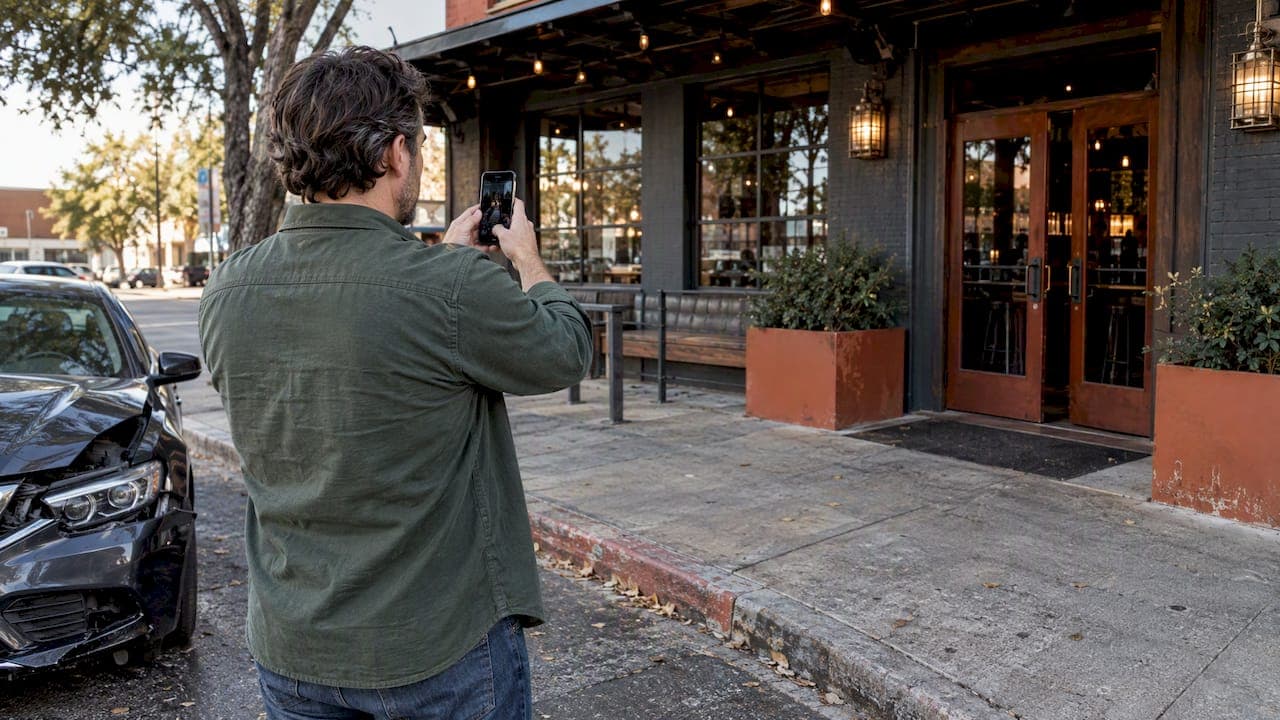

Yes, under Texas law you can sue an alcohol provider when that provider served someone who was obviously intoxicated and that intoxication proximately caused harm to you or someone else. This is a statutory claim under Tex. Alco. Bev. Code §2.02, and proving how the patron appeared at the moment of service is the central issue in almost every case. Claims involving injury or wrongful death generally must be filed within two years.
TL;DR:
- Proven liability requires showing the server knew the patron was obviously intoxicated when served, and that this caused the injury.
- Evidence collection must focus on the moment of service, with surveillance footage, receipts, and witness statements critical for success.
- The two-year deadline applies for filing a claim, making prompt preservation of evidence and legal consultation vital.
- The safe-harbor defense protects establishments with verified seller training and no encouragement of overserving, shifting the burden of proof.
- Liability extends beyond licensed businesses to social hosts and adults serving minors, but different rules and defenses apply.
Table of Contents
- What the Texas Dram Shop Act says: statutory elements and exclusivity
- Who can be held liable and who may sue
- Common defenses and the seller-training safe harbor
- How plaintiffs prove liability and what to preserve immediately
- Damages and deadlines: what you can recover and when you must act
- Step-by-step: filing a claim and choosing legal help
- How we can help you take the next step
- Free eligibility check: a discreet next step
- FAQ
- Sources
- Primary sources: statutes, court opinions, and official guidance
What the Texas Dram Shop Act says: statutory elements and exclusivity
Section 2.02 of the Texas Alcoholic Beverage Code creates a civil cause of action against a person who sold or served alcoholic beverages to someone who later caused harm. The statute does not punish ordinary overserving. It targets a specific, narrow scenario defined by three elements that a claimant must prove.
- The provider sold, served, or otherwise provided an alcoholic beverage to the individual.
- At the time of that service, it was apparent to the provider that the individual was obviously intoxicated to a degree that presented a clear danger to themselves or others.
- The intoxication was a proximate cause of the damages the claimant suffered.
Section 2.03 makes this statutory path the exclusive remedy for claims involving service to adults 18 and older. That exclusivity matters because it forecloses alternative common-law negligence theories against providers in most adult-service cases. The claim lives or dies on the statute’s own terms, not on a broader negligence standard.
Who can be held liable and who may sue
Dram shop liability does not stop at the bar door. Several categories of providers can be named as defendants, and the pool of potential plaintiffs is broader than many people expect.
- Licensed businesses such as bars, restaurants, and liquor stores, along with their employees who sold or served the alcohol.
- Social hosts, whose civil exposure works differently than commercial providers and is addressed separately in TABC guidance on social hosting.
- Adults 21 or older who knowingly serve or permit service to a minor under 18 on property they own or lease, unless that adult is the minor’s parent, guardian, spouse, or court-appointed custodian.
- Injured individuals themselves, along with family members pursuing a wrongful-death claim when intoxication-related harm results in a death.
The distinction between a licensed seller and a private host carries real consequences. Commercial providers face the statutory framework described above, while private hosts face a different set of exposures tied more closely to service to minors than to overserving adults.
Common defenses and the seller-training safe harbor
Providers rarely concede that a patron looked obviously intoxicated at the time of service, and Texas law gives them a specific way to fight back. The safe-harbor defense protects an employer who required and verified that the employee completed a commission-approved seller training course, and who did not directly or indirectly encourage the employee to violate the law. The burden to prove both elements falls on the establishment, not the claimant.
- Employers must show the specific employee completed approved seller training before the incident.
- Employers must also show they did not encourage overserving, whether through quotas, bonuses, or informal pressure.
- Defendants frequently rely on surveillance footage, server testimony, and the timing of drink purchases to argue the patron did not appear intoxicated when served.
Pro Tip: Ask any attorney you consult whether the venue has produced its seller-training certificates and surveillance footage, since missing or incomplete records often shift the case in the claimant’s favor.
How plaintiffs prove liability and what to preserve immediately

Winning a dram shop case depends almost entirely on reconstructing a single moment: how the patron looked and behaved when the provider handed over that last drink. Post-crash blood alcohol content numbers matter less than many assume. The Texas Supreme Court’s decision in Raoger Corporation v. Myers reinforced that circumstantial evidence cannot rest on “inferences upon inferences,” meaning a high BAC reading hours later does not by itself prove the person looked obviously intoxicated at the bar.
A pattern repeated across Texas appellate decisions is that courts treat the Dram Shop Act’s evidentiary burden as one of the more demanding standards in personal injury law, which is why early evidence collection carries so much weight.
- Request surveillance footage immediately, since many venues overwrite recordings within days or weeks.
- Collect contact information from bartenders, servers, and other patrons who witnessed the service.
- Preserve receipts and credit-card timestamps showing when and how many drinks were purchased.
- Obtain the police report and any body-camera footage from responding officers.
- Document injuries and ongoing treatment through medical records as soon as care begins.
Each of these sources helps build the chain of appearance and timing that Texas courts now expect, particularly after Raoger clarified how far circumstantial evidence can stretch.
Damages and deadlines: what you can recover and when you must act
Claimants who prove a dram shop violation can pursue the standard categories of compensatory damages tied to the underlying accident. These typically include medical expenses, lost income, pain and suffering, and property damage. Exemplary damages are possible in some cases but remain constrained by the statutory framework and the exclusivity provisions discussed earlier.
- Medical expenses and future treatment costs tied to the intoxication-related incident.
- Lost wages and diminished earning capacity.
- Pain and suffering, along with property damage where applicable.
Texas law sets a two-year statute of limitations for personal injury and wrongful-death claims, which includes most dram shop cases. Missing that window generally bars recovery entirely, so early evidence preservation and early legal consultation both matter for the same reason: time works against the claimant.
Step-by-step: filing a claim and choosing legal help
A dram shop claim moves through a fairly predictable sequence, though each step carries its own risk of losing key evidence or missing a procedural deadline.
- Intake and initial case evaluation, where the facts of service, intoxication, and resulting harm are gathered.
- Evidence preservation, including formal requests for surveillance footage and transactional records before they are deleted.
- Filing the petition, which starts the formal litigation process and the discovery clock.
- Discovery, focused on employee depositions, training records, receipts, and video evidence.
- Dispositive motions, where defendants often seek summary judgment by arguing the claimant cannot show obvious intoxication at the time of service.
- Settlement negotiations or trial, depending on how the evidence holds up through discovery.
When vetting an attorney, ask about direct experience with Alcoholic Beverage Code claims specifically, not just general personal injury work, since the obvious-intoxication standard is unusual and unforgiving. Ask how quickly the firm moves to preserve video and transactional evidence, and get a clear explanation of contingency fee terms before signing anything.
How we can help you take the next step
Finding the right attorney for a dram shop claim takes time most injured people do not have, especially while evidence windows are closing. A free eligibility check gathers the details of your case, including the type of accident, injury, fault, and any existing legal representation, before any personal contact information is requested. Every submission undergoes human review before being referred to an attorney, helping keep the process private and reduce unwanted solicitation. If you believe alcohol service played a role in your accident, preparing a clear timeline of events and any evidence you have already gathered will help the intake process move faster.
— Luis
Free eligibility check: a discreet next step
The free eligibility check asks for the core facts of your accident first, such as what happened, who may be at fault, and whether you already have an attorney, before ever asking for your contact details. That order matters: it helps keep your information private until your case has actually been reviewed by a person, not just a form.
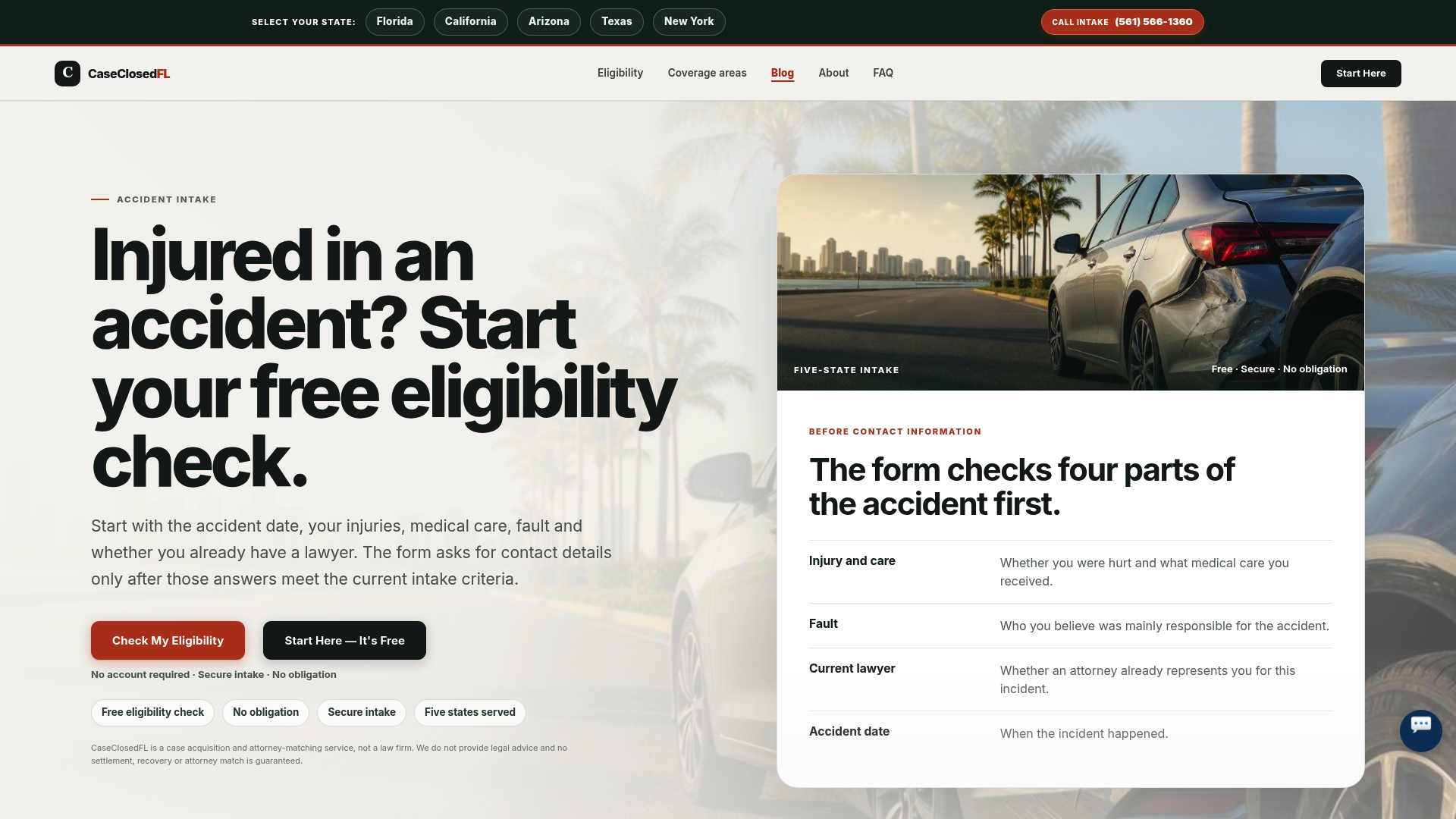
If your situation meets the intake criteria, your information may be routed to an attorney who handles dram shop and related personal injury claims. There is no obligation and no guarantee of a match, but the process is designed to screen quickly and avoid unnecessary calls or emails. You can start the free eligibility check directly on the CaseClosedFL site whenever you are ready to explore your options.
This article is general information, not a substitute for advice from a qualified lawyer. Consult a qualified legal professional about your own circumstances before acting on anything here.

FAQ
What is the 51% rule in Texas?
Below that threshold, any damages awarded are reduced by the claimant’s percentage of fault.
Which states have dram shop laws?
Most states have some form of dram shop or alcohol liability statute, though the specific standards, defenses, and damage caps vary widely from state to state. Texas’s version is notable for its “obviously intoxicated” and “clear danger” standard, which the Texas Supreme Court has described as an exacting evidentiary burden compared to looser standards used elsewhere.
Can an 18 year old go into a liquor store in Texas?
Texas law generally prohibits selling or serving alcohol to anyone under 21, regardless of whether they are merely present in a liquor store. Store employees and adults who knowingly provide alcohol to a minor can face liability under Chapter 2 of the Alcoholic Beverage Code unless a specific statutory exception applies, such as a parent or guardian providing it.
Did Texas pass a new drunk driving law?
Texas has not introduced a sweeping new drunk driving statute recently, but the Texas Supreme Court’s Raoger Corporation v. Myers decision reshaped how dram shop cases involving intoxicated drivers are litigated by tightening the evidentiary standard for proving obvious intoxication at the time of service.
Sources
- Texas Alcoholic Beverage Code Sec. 2.02 (statutory language)
- Texas Alcoholic Beverage Code Sec. 2.03 (exclusivity of remedy)
- Texas Civil Practice and Remedies Code §16.003 (statute of limitations)
- Raoger Corporation v. Myers, No. 23-0662 (Texas Supreme Court opinion)
- Texas Alcoholic Beverage Commission (TABC) – Social hosting/underage drinking guide
Primary sources: statutes, court opinions, and official guidance
Readers and attorneys researching this area should consult the statutes and opinions directly rather than relying on secondhand summaries.
Frequently asked questions
Table of Contents What the Texas Dram Shop Act says: statutory elements and exclusivity Who can be held liable and who may sue Common defenses and the seller-training safe harbor How plaintiffs prove liability and what to preserve immediately Damages and deadlines: what you can recover and when you must act Step-by-step: filing a claim and choosing legal help How we can help you take the next step Free eligibility check: a discreet next step FAQ Sources Primary sources: statutes, court opinions, and official guidance What the Texas Dram Shop Act says: statutory elements and exclusivity Section 2.02 of the Texas Alcoholic Beverage Code creates a civil cause of action against a person who sold or served alcoholic beverages to someone who later caused harm. The statute does not punish ordinary overserving. It targets a specific, narrow scenario defined by three elements that a claimant must prove. The provider sold, served, or otherwise provided an alcoholic beverage to the individual. At the time of that service, it was apparent to the provider that the individual was obviously intoxicated to a degree that presented a clear danger to themselves or others. The intoxication was a proximate cause of the damages the claimant suffered. Section 2.03 makes this statutory path the exclusive remedy for claims involving service to adults 18 and older. That exclusivity matters because it forecloses alternative common-law negligence theories against providers in most adult-service cases. The claim lives or dies on the statute’s own terms, not on a broader negligence standard. Who can be held liable and who may sue Dram shop liability does not stop at the bar door. Several categories of providers can be named as defendants, and the pool of potential plaintiffs is broader than many people expect. Licensed businesses such as bars, restaurants, and liquor stores, along with their employees who sold or served the alcohol. Social hosts, whose civil exposure works differently than commercial providers and is addressed separately in TABC guidance on social hosting . Adults 21 or older who knowingly serve or permit service to a minor under 18 on property they own or lease, unless that adult is the minor’s parent, guardian, spouse, or court-appointed custodian. Injured individuals themselves, along with family members pursuing a wrongful-death claim when intoxication-related harm results in a death. The distinction between a licensed seller and a private host carries real consequences. Commercial providers face the statutory framework described above, while private hosts face a different set of exposures tied more closely to service to minors than to overserving adults. Common defenses and the seller-training safe harbor Providers rarely concede that a patron looked obviously intoxicated at the time of service, and Texas law gives them a specific way to fight back. The safe-harbor defense protects an employer who required and verified that the employee completed a commission-approved seller training course, and who did not directly or indirectly encourage the employee to violate the law. The burden to prove both elements falls on the establishment, not the claimant. Employers must show the specific employee completed approved seller training before the incident. Employers must also show they did not encourage overserving, whether through quotas, bonuses, or informal pressure. Defendants frequently rely on surveillance footage, server testimony, and the timing of drink purchases to argue the patron did not appear intoxicated when served. Pro Tip: Ask any attorney you consult whether the venue has produced its seller-training certificates and surveillance footage, since missing or incomplete records often shift the case in the claimant’s favor. How plaintiffs prove liability and what to preserve immediately Winning a dram shop case depends almost entirely on reconstructing a single moment: how the patron looked and behaved when the provider handed over that last drink. Post-crash blood alcohol content numbers matter less than many assume. The Texas Supreme Court’s decision in Raoger Corporation v. Myers reinforced that circumstantial evidence cannot rest on “inferences upon inferences,” meaning a high BAC reading hours later does not by itself prove the person looked obviously intoxicated at the bar. A pattern repeated across Texas appellate decisions is that courts treat the Dram Shop Act’s evidentiary burden as one of the more demanding standards in personal injury law , which is why early evidence collection carries so much weight. Request surveillance footage immediately, since many venues overwrite recordings within days or weeks. Collect contact information from bartenders, servers, and other patrons who witnessed the service. Preserve receipts and credit-card timestamps showing when and how many drinks were purchased. Obtain the police report and any body-camera footage from responding officers. Document injuries and ongoing treatment through medical records as soon as care begins. Each of these sources helps build the chain of appearance and timing that Texas courts now expect, particularly after Raoger clarified how far circumstantial evidence can stretch. Damages and deadlines: what you can recover and when you must act Claimants who prove a dram shop violation can pursue the standard categories of compensatory damages tied to the underlying accident. These typically include medical expenses, lost income, pain and suffering, and property damage. Exemplary damages are possible in some cases but remain constrained by the statutory framework and the exclusivity provisions discussed earlier. Medical expenses and future treatment costs tied to the intoxication-related incident. Lost wages and diminished earning capacity. Pain and suffering, along with property damage where applicable. Texas law sets a two-year statute of limitations for personal injury and wrongful-death claims , which includes most dram shop cases. Missing that window generally bars recovery entirely, so early evidence preservation and early legal consultation both matter for the same reason: time works against the claimant. Step-by-step: filing a claim and choosing legal help A dram shop claim moves through a fairly predictable sequence, though each step carries its own risk of losing key evidence or missing a procedural deadline. Intake and initial case evaluation, where the facts of service, intoxication, and resulting harm are gathered. Evidence preservation, including formal requests for surveillance footage and transactional records before they are deleted. Filing the petition, which starts the formal litigation process and the discovery clock. Discovery, focused on employee depositions, training records, receipts, and video evidence. Dispositive motions, where defendants often seek summary judgment by arguing the claimant cannot show obvious intoxication at the time of service. Settlement negotiations or trial, depending on how the evidence holds up through discovery. When vetting an attorney, ask about direct experience with Alcoholic Beverage Code claims specifically, not just general personal injury work, since the obvious-intoxication standard is unusual and unforgiving. Ask how quickly the firm moves to preserve video and transactional evidence, and get a clear explanation of contingency fee terms before signing anything. How we can help you take the next step Finding the right attorney for a dram shop claim takes time most injured people do not have, especially while evidence windows are closing. A free eligibility check gathers the details of your case, including the type of accident, injury, fault, and any existing legal representation, before any personal contact information is requested. Every submission undergoes human review before being referred to an attorney, helping keep the process private and reduce unwanted solicitation. If you believe alcohol service played a role in your accident, preparing a clear timeline of events and any evidence you have already gathered will help the intake process move faster. — Luis Free eligibility check: a discreet next step The free eligibility check asks for the core facts of your accident first, such as what happened, who may be at fault, and whether you already have an attorney, before ever asking for your contact details. That order matters: it helps keep your information private until your case has actually been reviewed by a person, not just a form. If your situation meets the intake criteria, your information may be routed to an attorney who handles dram shop and related personal injury claims. There is no obligation and no guarantee of a match, but the process is designed to screen quickly and avoid unnecessary calls or emails. You can start the free eligibility check directly on the CaseClosedFL site whenever you are ready to explore your options. This article is general information, not a substitute for advice from a qualified lawyer. Consult a qualified legal professional about your own circumstances before acting on anything here. FAQ What is the 51% rule in Texas?
Below that threshold, any damages awarded are reduced by the claimant’s percentage of fault.
Which states have dram shop laws?
Most states have some form of dram shop or alcohol liability statute, though the specific standards, defenses, and damage caps vary widely from state to state. Texas’s version is notable for its “obviously intoxicated” and “clear danger” standard, which the Texas Supreme Court has described as an exacting evidentiary burden compared to looser standards used elsewhere.
Can an 18 year old go into a liquor store in Texas?
Texas law generally prohibits selling or serving alcohol to anyone under 21, regardless of whether they are merely present in a liquor store. Store employees and adults who knowingly provide alcohol to a minor can face liability under Chapter 2 of the Alcoholic Beverage Code unless a specific statutory exception applies, such as a parent or guardian providing it.
Did Texas pass a new drunk driving law?
Texas has not introduced a sweeping new drunk driving statute recently, but the Texas Supreme Court’s Raoger Corporation v. Myers decision reshaped how dram shop cases involving intoxicated drivers are litigated by tightening the evidentiary standard for proving obvious intoxication at the time of service.
Ready to enter the accident details?
The eligibility form asks about the accident, injury, treatment, fault and representation before contact information.
Start Eligibility Check