Traffic Camera Footage Request Template and When to Involve a Lawyer
Preserve and request traffic camera footage after a crash. Copy ready request fields, 48–72 hour retention windows, and when to involve a lawyer.
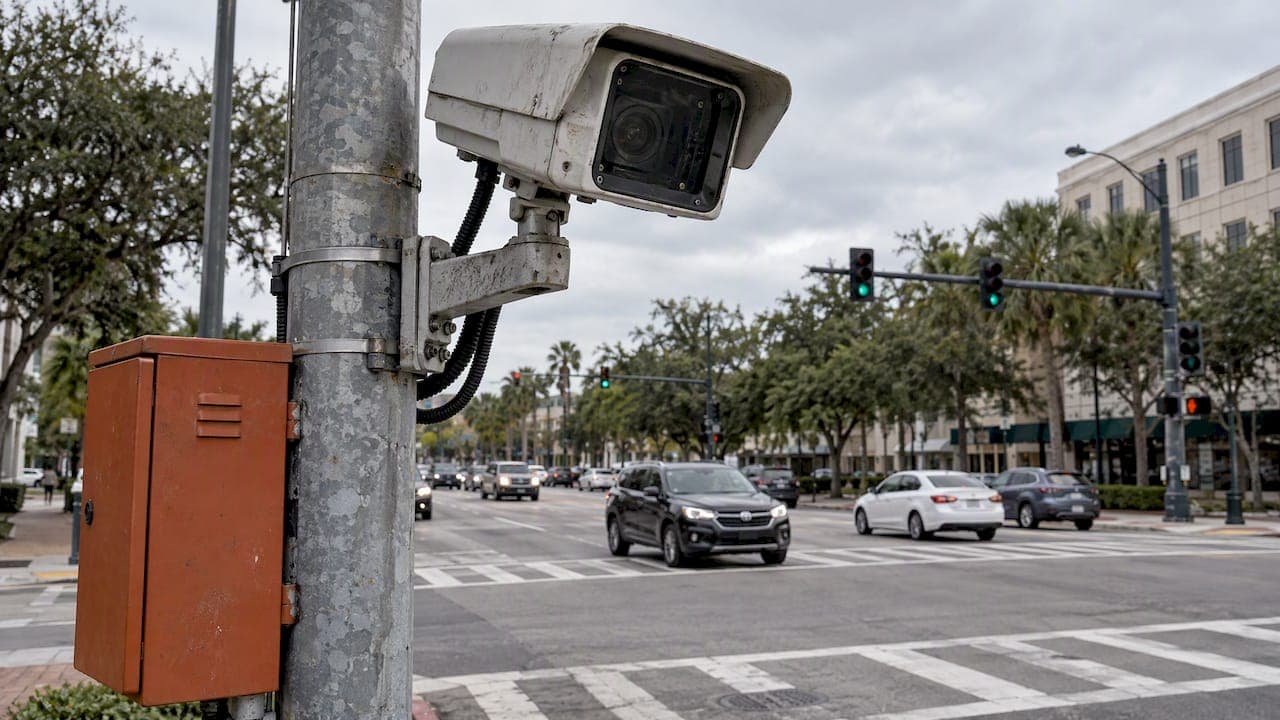

Getting traffic camera footage after an accident is possible, but success depends on two factors: who controls the camera and how fast you act. The moment you identify the custodian, which is often a state DOT, a local police department, or a private property owner, ask them in writing to preserve the recording before it loops or overwrites.
TL;DR:
- Traffic camera footage retrieval depends heavily on who controls the camera and how quickly you act to submit a detailed preservation request.
- Requests should specify the incident date, a narrow time window, location details, direction, camera ID, police report number, and a brief incident description.
- Retention periods vary greatly, with most systems overwriting footage within hours to days unless staff manually extract and preserve clips.
- Public agency footage is subject to exemptions and may take weeks or months to access, while private owner footage requires prompt requests and legal action after refusal.
- Engaging a qualified attorney for preservation letters or subpoenas can significantly expedite access when agencies delay or deny footage.
Table of Contents
- Who controls traffic camera recordings and why custody determines your route
- What to include in an accident-related footage request
- Timing and retention: what agencies typically keep and for how long
- Public records, private footage, and when a subpoena becomes necessary
- Fees, formats, and what happens after you submit a request
- When legal help shortens the path to preserved footage
- A free eligibility check if preservation becomes urgent
- FAQ
- Sources
Who controls traffic camera recordings and why custody determines your route
Traffic cameras fall into three custody buckets, and each one dictates a different request process. State highway cameras typically belong to a Department of Transportation or its traffic management center. Intersection cameras in cities and counties usually sit with local transportation departments or police. Cameras outside businesses, apartment complexes, or private homes belong to the property owner, not a government agency.
A law-enforcement custodian behaves differently than a DOT or city TMC. Police departments often treat footage as part of an investigatory file, which can trigger different exemptions and longer processing delays than a transportation agency’s routine public-records process.
To identify the right custodian:
- Check the crash or police report for a camera reference or officer notes about nearby cameras.
- Search the DOT or city’s traffic camera list or interactive map for the exact intersection or mile marker.
- Call the agency’s public-records or FOIA office directly and ask who owns the footage.
- Ask nearby businesses whether their own security systems captured the scene.
What to include in an accident-related footage request
Agencies and private owners need specific details to locate a clip before it disappears. Vague requests like “all footage from that intersection” slow everything down or get denied outright. Build your request around these fields:
- Exact date of the incident.
- A narrow time window, ideally within 15 to 30 minutes of the crash.
- The intersection, highway mile marker, or street address.
- Direction of travel for the vehicles involved.
- Camera ID or name, if listed on the agency’s camera map.
- Police or crash-report number, if one has been filed.
- A short, factual description of the incident (for example, “rear-end collision, two vehicles, minor injuries”).
Explicitly ask the agency to preserve and extract the clip rather than assuming a request alone stops deletion. Many TMC video-request processes only retain footage once staff pull it from the live feed, so naming preservation as a specific ask matters. Citing the applicable public-records law in your state can also speed review, since records officers recognize the formal request language.
Submit through whichever channel the custodian uses: a DOT’s online video-request form, a city TMC’s web portal, a direct email to the records officer, or certified mail if the agency requires a signed paper request.
Pro Tip: Always confirm receipt of your request in writing. A verbal phone confirmation is not proof if the agency later claims it never received anything.
Timing and retention: what agencies typically keep and for how long
Retention windows vary enormously, and this is the single biggest reason requests fail. Some systems overwrite footage within hours; others hold it for months once an incident clip has been extracted.
- Many camera systems record on a continuous loop that overwrites automatically within as little as several days unless staff manually extract the segment.
- Some state systems document roughly seven-day availability windows for standard footage.
- Extracted incident clips can be retained far longer, with one state’s traffic operations manual describing multiple months once a segment has been pulled.
- Archive and investigatory footage tied to a police case may be held for extended periods, though policies differ by agency.
Retention policies vary significantly by agency, and a 72-hour overwrite cycle is common for systems that have not extracted an incident clip, according to the Wisconsin DOT traffic operations manual. That gap between a short loop and a long-held extracted clip is exactly why preservation language in your first message matters.
A practical timeline: within the first 48 hours, identify the custodian and send a written preservation request. Within the first week, follow up by phone and confirm the clip was extracted. After one week, if you have not received confirmation, escalate to a supervisor or records officer and consider a formal public-records request.

Public records, private footage, and when a subpoena becomes necessary
Public agency footage generally falls under state public-records or FOIA-style laws, but several exemptions commonly apply. Investigatory-file exemptions let law enforcement withhold footage tied to an open or recently closed case. Privacy exemptions can justify redacting faces, license plates, or other personal details. Technical limits sometimes prevent an agency from isolating footage of just one vehicle or lane.
A 2026 Delaware Attorney General FOIA opinion illustrates how broadly investigatory exemptions can be applied, even after the underlying investigation has ended. If an agency denies your request, ask for the denial in writing with the specific statutory exemption cited, and ask whether any segregable, non-exempt portion can still be released.
Private owners follow no public-records rules at all. Start with a polite, specific request, ideally in person or by phone, followed by a written preservation letter the same day. That letter puts the owner on notice not to delete the footage and can establish the groundwork for a subpoena once litigation formally begins.
- Public agency denials can sometimes be appealed administratively before resorting to litigation.
- Private-owner footage is rarely covered by any retention law, so speed matters more than paperwork.
- Subpoenas generally require an open legal case, which means they come after a claim or lawsuit is filed, not before.
Pro Tip: Send a preservation letter even if you plan to request footage formally later. It costs nothing and can be the difference between footage existing in a week and footage being gone.
An attorney changes the math here because drafting a preservation letter, filing a subpoena, or appealing a denial are time-sensitive, legally specific tasks that most requesters have never done before; for assistance with these financial aspects, nonprofit resources like deductible assistance programs can provide valuable guidance.
Fees, formats, and what happens after you submit a request
Expect a mix of outcomes once your request is in the system. Some agencies deliver footage as a digital download; others use formats like MP4, ASF, or physical media such as a DVD or USB drive, and some require in-person pick-up.
- Fees are not standardized. One state DOT’s video-request FAQ lists specific charges tied to media type and processing time, while others charge nothing at all, so always check the agency’s own form rather than assuming a flat rate.
- If footage is partially released or redacted, ask for the specific statutory reason in writing.
- If a request is denied outright, ask whether any portion of the footage qualifies for release separately from the exempt parts.
When legal help shortens the path to preserved footage
Preservation letters and subpoenas work best when sent quickly and with legal weight behind them, which is exactly where an attorney’s involvement tends to matter most. A lawyer can draft a preservation letter the same day a custodian hesitates, and can file a subpoena once a claim is open.
An intake or referral service can also help by connecting you with attorneys who evaluate whether a preservation letter or subpoena fits your situation, though that kind of service provides intake and referral only, not legal advice. If a custodian is slow to cooperate or refuses outright, getting a qualified attorney involved early often matters more than any single step in the request process.
— Luis
A free eligibility check if preservation becomes urgent
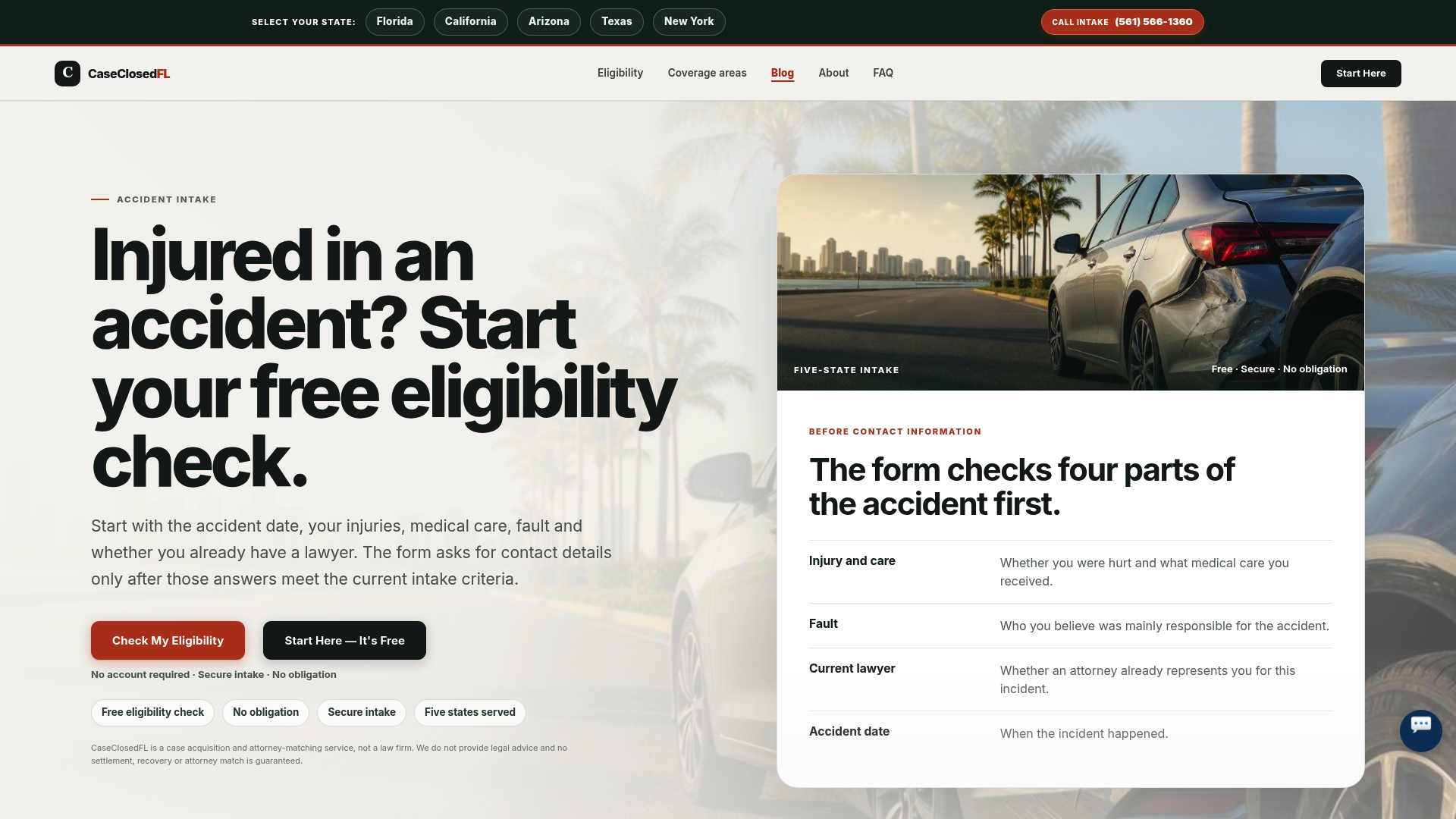
We offer a free eligibility check that helps connect people dealing with an accident to attorneys who can assist with footage preservation, subpoenas, or appeals when an agency or private owner is not cooperating. We gather accident details initially and only request contact information after the case meets intake criteria.
- Use it when a custodian has not responded to a preservation request within a few days.
- Use it when a private owner refuses to cooperate and a preservation letter or subpoena may be necessary.
- Use it when you want a human review of your situation before deciding whether to pursue legal action.
Every submission goes through human review before being referred to an attorney, and results are not guaranteed. If you need help securing footage before it disappears, start with our free eligibility check.
This article is general information, not a substitute for advice from a qualified lawyer. Consult a qualified legal professional about your own circumstances before acting on anything here.
FAQ
Can you request security camera footage from a private business?
Yes, you can ask a private business for its security footage, but owners are not required to release it the way public agencies sometimes are. A written preservation request sent the same day as the incident gives you the best chance before the footage is overwritten.
Are traffic cameras legal to use for enforcement and monitoring?
Traffic camera legality and permitted uses vary by state and by the specific purpose, such as traffic monitoring versus red-light enforcement. Check your state DOT’s public records or legal pages for the rules that apply to your situation, since a blanket answer does not hold across every jurisdiction.
Where can I find live traffic camera feeds for a specific city?
Most state DOTs and some city transportation departments publish interactive camera maps showing live feeds and camera identifiers for major roads and intersections. These maps are also useful for identifying the camera ID you need when submitting a footage request.
Can you request dash cam footage from another driver?
Dash cam footage held by another driver is private property, so there is no public-records mechanism to compel its release outside of litigation. A direct request, followed by a preservation letter if needed, is the typical first step, with a subpoena available once a legal claim is filed.
Sources
Frequently asked questions
Table of Contents Who controls traffic camera recordings and why custody determines your route What to include in an accident-related footage request Timing and retention: what agencies typically keep and for how long Public records, private footage, and when a subpoena becomes necessary Fees, formats, and what happens after you submit a request When legal help shortens the path to preserved footage A free eligibility check if preservation becomes urgent FAQ Sources Who controls traffic camera recordings and why custody determines your route Traffic cameras fall into three custody buckets, and each one dictates a different request process. State highway cameras typically belong to a Department of Transportation or its traffic management center. Intersection cameras in cities and counties usually sit with local transportation departments or police. Cameras outside businesses, apartment complexes, or private homes belong to the property owner, not a government agency. A law-enforcement custodian behaves differently than a DOT or city TMC. Police departments often treat footage as part of an investigatory file, which can trigger different exemptions and longer processing delays than a transportation agency’s routine public-records process. To identify the right custodian: Check the crash or police report for a camera reference or officer notes about nearby cameras. Search the DOT or city’s traffic camera list or interactive map for the exact intersection or mile marker. Call the agency’s public-records or FOIA office directly and ask who owns the footage. Ask nearby businesses whether their own security systems captured the scene. What to include in an accident-related footage request Agencies and private owners need specific details to locate a clip before it disappears. Vague requests like “all footage from that intersection” slow everything down or get denied outright. Build your request around these fields: Exact date of the incident. A narrow time window, ideally within 15 to 30 minutes of the crash. The intersection, highway mile marker, or street address. Direction of travel for the vehicles involved. Camera ID or name, if listed on the agency’s camera map. Police or crash-report number, if one has been filed. A short, factual description of the incident (for example, “rear-end collision, two vehicles, minor injuries”). Explicitly ask the agency to preserve and extract the clip rather than assuming a request alone stops deletion. Many TMC video-request processes only retain footage once staff pull it from the live feed, so naming preservation as a specific ask matters. Citing the applicable public-records law in your state can also speed review, since records officers recognize the formal request language. Submit through whichever channel the custodian uses: a DOT’s online video-request form, a city TMC’s web portal, a direct email to the records officer, or certified mail if the agency requires a signed paper request. Pro Tip: Always confirm receipt of your request in writing. A verbal phone confirmation is not proof if the agency later claims it never received anything. Timing and retention: what agencies typically keep and for how long Retention windows vary enormously, and this is the single biggest reason requests fail. Some systems overwrite footage within hours; others hold it for months once an incident clip has been extracted. Many camera systems record on a continuous loop that overwrites automatically within as little as several days unless staff manually extract the segment. Some state systems document roughly seven-day availability windows for standard footage. Extracted incident clips can be retained far longer, with one state’s traffic operations manual describing multiple months once a segment has been pulled. Archive and investigatory footage tied to a police case may be held for extended periods, though policies differ by agency. Retention policies vary significantly by agency, and a 72-hour overwrite cycle is common for systems that have not extracted an incident clip, according to the Wisconsin DOT traffic operations manual . That gap between a short loop and a long-held extracted clip is exactly why preservation language in your first message matters. A practical timeline: within the first 48 hours, identify the custodian and send a written preservation request. Within the first week, follow up by phone and confirm the clip was extracted. After one week, if you have not received confirmation, escalate to a supervisor or records officer and consider a formal public-records request. Public records, private footage, and when a subpoena becomes necessary Public agency footage generally falls under state public-records or FOIA-style laws, but several exemptions commonly apply. Investigatory-file exemptions let law enforcement withhold footage tied to an open or recently closed case. Privacy exemptions can justify redacting faces, license plates, or other personal details. Technical limits sometimes prevent an agency from isolating footage of just one vehicle or lane. A 2026 Delaware Attorney General FOIA opinion illustrates how broadly investigatory exemptions can be applied, even after the underlying investigation has ended. If an agency denies your request, ask for the denial in writing with the specific statutory exemption cited, and ask whether any segregable, non-exempt portion can still be released. Private owners follow no public-records rules at all. Start with a polite, specific request, ideally in person or by phone, followed by a written preservation letter the same day. That letter puts the owner on notice not to delete the footage and can establish the groundwork for a subpoena once litigation formally begins. Public agency denials can sometimes be appealed administratively before resorting to litigation. Private-owner footage is rarely covered by any retention law, so speed matters more than paperwork. Subpoenas generally require an open legal case, which means they come after a claim or lawsuit is filed, not before. Pro Tip: Send a preservation letter even if you plan to request footage formally later. It costs nothing and can be the difference between footage existing in a week and footage being gone. An attorney changes the math here because drafting a preservation letter, filing a subpoena, or appealing a denial are time-sensitive, legally specific tasks that most requesters have never done before; for assistance with these financial aspects, nonprofit resources like deductible assistance programs can provide valuable guidance. Fees, formats, and what happens after you submit a request Expect a mix of outcomes once your request is in the system. Some agencies deliver footage as a digital download; others use formats like MP4, ASF, or physical media such as a DVD or USB drive, and some require in-person pick-up. Fees are not standardized. One state DOT’s video-request FAQ lists specific charges tied to media type and processing time, while others charge nothing at all, so always check the agency’s own form rather than assuming a flat rate. If footage is partially released or redacted, ask for the specific statutory reason in writing. If a request is denied outright, ask whether any portion of the footage qualifies for release separately from the exempt parts. When legal help shortens the path to preserved footage Preservation letters and subpoenas work best when sent quickly and with legal weight behind them, which is exactly where an attorney’s involvement tends to matter most. A lawyer can draft a preservation letter the same day a custodian hesitates, and can file a subpoena once a claim is open. An intake or referral service can also help by connecting you with attorneys who evaluate whether a preservation letter or subpoena fits your situation, though that kind of service provides intake and referral only, not legal advice. If a custodian is slow to cooperate or refuses outright, getting a qualified attorney involved early often matters more than any single step in the request process. — Luis A free eligibility check if preservation becomes urgent We offer a free eligibility check that helps connect people dealing with an accident to attorneys who can assist with footage preservation, subpoenas, or appeals when an agency or private owner is not cooperating. We gather accident details initially and only request contact information after the case meets intake criteria. Use it when a custodian has not responded to a preservation request within a few days. Use it when a private owner refuses to cooperate and a preservation letter or subpoena may be necessary. Use it when you want a human review of your situation before deciding whether to pursue legal action. Every submission goes through human review before being referred to an attorney, and results are not guaranteed. If you need help securing footage before it disappears, start with our free eligibility check . This article is general information, not a substitute for advice from a qualified lawyer. Consult a qualified legal professional about your own circumstances before acting on anything here. FAQ Can you request security camera footage from a private business?
Yes, you can ask a private business for its security footage, but owners are not required to release it the way public agencies sometimes are. A written preservation request sent the same day as the incident gives you the best chance before the footage is overwritten.
Are traffic cameras legal to use for enforcement and monitoring?
Traffic camera legality and permitted uses vary by state and by the specific purpose, such as traffic monitoring versus red-light enforcement. Check your state DOT’s public records or legal pages for the rules that apply to your situation, since a blanket answer does not hold across every jurisdiction.
Where can I find live traffic camera feeds for a specific city?
Most state DOTs and some city transportation departments publish interactive camera maps showing live feeds and camera identifiers for major roads and intersections. These maps are also useful for identifying the camera ID you need when submitting a footage request.
Can you request dash cam footage from another driver?
Dash cam footage held by another driver is private property, so there is no public-records mechanism to compel its release outside of litigation. A direct request, followed by a preservation letter if needed, is the typical first step, with a subpoena available once a legal claim is filed.
Ready to enter the accident details?
The eligibility form asks about the accident, injury, treatment, fault and representation before contact information.
Start Eligibility Check