Medical Bills After a U.S. Crash: Who Pays First, Who Gets Repaid?
Learn who pays first after a crash, how Medicare and Medicaid repayment works, how to negotiate liens, and how to request a free eligibility check.


Health insurance, MedPay, PIP, or workers’ compensation typically pays your medical bills first, while the at-fault driver’s liability insurer usually pays later through a settlement or judgment. Timing, not fault, usually decides who pays first. If you have Medicare or Medicaid, special repayment rules apply once a settlement arrives. Keep every bill and explanation of benefits (EOB) from day one.
TL;DR:
- Your health plan or auto coverage can cover treatment while liability claims remain pending; Medicare may pay conditionally after about 120 days without liability payment.
- PIP is required in no fault states and can cover lost wages; MedPay is usually optional, while work related crashes trigger workers’ compensation first.
- Tell providers treatment is accident related, request itemized bills, and save every bill, explanation of benefits, and denial notice in date order.
- Check itemized charges and negotiate liens before settlement funds are distributed; get any reduction or payment agreement in writing, especially when several payers seek repayment.
- Consider a personal injury lawyer when liability is disputed, costs climb, or Medicare, Medicaid, and other lienholders must be repaid from one settlement.
Table of Contents
- Overview of the Payer Landscape and Typical Payment Order
- How Each Payer Works in Practice
- What Happens After Treatment: Timeline and Immediate Steps
- How to Handle Unpaid Bills, Liens, and Negotiating Reductions
- When It Makes Sense to Talk to a Personal Injury Lawyer
- Practical Priorities After an Accident
- Get a Free Eligibility Check for Your Accident Claim
- FAQ
- Sources
Overview of the Payer Landscape and Typical Payment Order
After a crash, several potential payers may share responsibility for your medical costs, but they rarely pay in the order you’d expect. The at-fault driver’s liability insurer is often the payer most people assume will step in first, yet liability coverage typically pays out only after a claim resolves, not as bills come due.
In the meantime, several other sources may cover treatment:
- Your own health insurance, which processes claims like any other medical visit, subject to deductibles and copays.
- MedPay or Personal Injury Protection (PIP), optional or required auto coverage that can pay medical costs regardless of fault.
- Workers’ compensation, when the crash happened during a work-related activity.
- Medicare or Medicaid, which may make conditional payments while liability is sorted out.
Understanding “primary” versus “secondary” payer status matters here. A primary payer is billed first; a secondary payer covers what remains, if anything. Medicare’s conditional payment system exists precisely because liability claims take time to resolve, and your state’s no-fault or at-fault insurance structure determines whether PIP or MedPay is even available to you.
How Each Payer Works in Practice
Health insurance processes accident-related treatment the same way it handles any other injury or illness. You’ll still owe deductibles, copayments, and coinsurance, and your insurer may later seek reimbursement from any settlement you receive through a subrogation claim. Save every explanation of benefits you receive, since these documents show exactly what your insurer paid and what you still owe.
MedPay and PIP are auto insurance features designed to cover accident-related medical costs quickly, often without regard to fault. MedPay is optional in most states and typically has modest policy limits. PIP is required in no-fault states and tends to cover a broader range of costs, including a portion of lost wages, though exact rules and limits vary significantly by state.
At-fault liability insurers generally don’t pay medical providers directly as bills arrive. Instead, they pay a lump sum once a claim or lawsuit resolves, which is why injured drivers often rely on other coverage in the interim.

Workers’ compensation takes precedence when the accident happened on the job, covering medical treatment and a portion of lost wages regardless of fault, and it often has priority over other payers in that scenario.
Medicare and Medicaid operate under distinctive rules. Medicare may make a conditional payment when a liability insurer hasn’t paid within about 120 days, then recover that amount from any settlement, judgment, or award you later receive. Medicaid functions as the payer of last resort, meaning private insurance, liability coverage, and other resources must generally be pursued first, with the state recovering costs it paid if a settlement follows.
What Happens After Treatment: Timeline and Immediate Steps
Billing after an accident rarely moves in a straight line. Treatment happens now, insurers investigate coverage during the following weeks, and reimbursement or settlement often arrives months later.
- Get medical care immediately and tell every provider that your injury is accident-related, since this affects how claims are coded and filed.
- Request itemized bills rather than summary statements, so you can verify every charge.
- Collect and save every EOB and denial notice from each insurer involved.
- Submit claims to the applicable payers (health insurance, MedPay, PIP, or workers’ comp) and track which ones are approved, denied, or pending.
- Follow up directly with provider billing offices if a claim stalls, rather than waiting for a letter.
- If a bill arrives unpaid, ask about financial assistance or a payment plan instead of letting it go to collections.
Pro Tip: Keep a single folder, physical or digital, with every bill, EOB, and insurer letter in date order; it saves hours if your case later needs review by a lawyer or billing office.
How to Handle Unpaid Bills, Liens, and Negotiating Reductions
A medical lien is a legal claim a hospital, provider, or health plan places against your eventual settlement to recover what it’s owed. A lien is different from a bill: a bill is simply what you owe a provider, while a lien attaches that debt to money you may receive later, giving the provider a right to be paid directly from the proceeds. State law controls how liens are created, how large they can be, and whether a court can reduce them before settlement.
Practical tactics that often help:
- Always request an itemized bill so you can check for duplicate or incorrect charges.
- Ask the billing office directly about charity care or hardship programs.
- Negotiate reductions before settlement rather than after funds are already distributed.
- Verify every date of service against your own treatment records.
- Get any lien reduction or payment agreement in writing before you sign off on anything.
| Concept | What it means | Who typically handles it |
|---|---|---|
| Medical bill | Amount owed directly to a provider | You or your insurer |
| Medical lien | Legal claim against settlement proceeds | Provider, hospital, or health plan |
| Subrogation | Insurer’s right to reimbursement from settlement | Your health insurer or Medicare/Medicaid |
| Lien negotiation | Reducing the lien amount before payout | Often handled by an attorney |
When It Makes Sense to Talk to a Personal Injury Lawyer
Legal help becomes worth considering when medical costs climb, liability is disputed, or multiple payers, including Medicare or Medicaid, have a stake in your eventual settlement. Liens can quietly erode what you actually keep, and coordinating repayment among several payers is rarely something a billing office will do on your behalf.
An attorney can typically:
- Negotiate directly with lienholders to reduce what’s owed before settlement.
- Communicate with insurers and providers so you’re not managing multiple claims alone.
- Help preserve settlement funds by addressing Medicare or Medicaid recovery obligations early.
- Track deadlines and reporting requirements tied to conditional payments.
For a no-cost first step, our free eligibility check gathers basic details about your accident, injuries, and current coverage, then routes qualifying cases for human review before any attorney referral. There’s no obligation, and your contact information is only requested once your case meets the intake criteria.
Practical Priorities After an Accident
Health comes first: follow your treatment plan, since gaps in care create disputes later. Documentation is your leverage, so save every bill and EOB as it arrives rather than reconstructing the record months later. Insurance timelines move slowly, and that’s normal, but billing offices respond faster when you follow up directly. When you’re unsure whether a lawyer would help, a free eligibility check is a low-friction way to find out.
— Luis
Get a Free Eligibility Check for Your Accident Claim
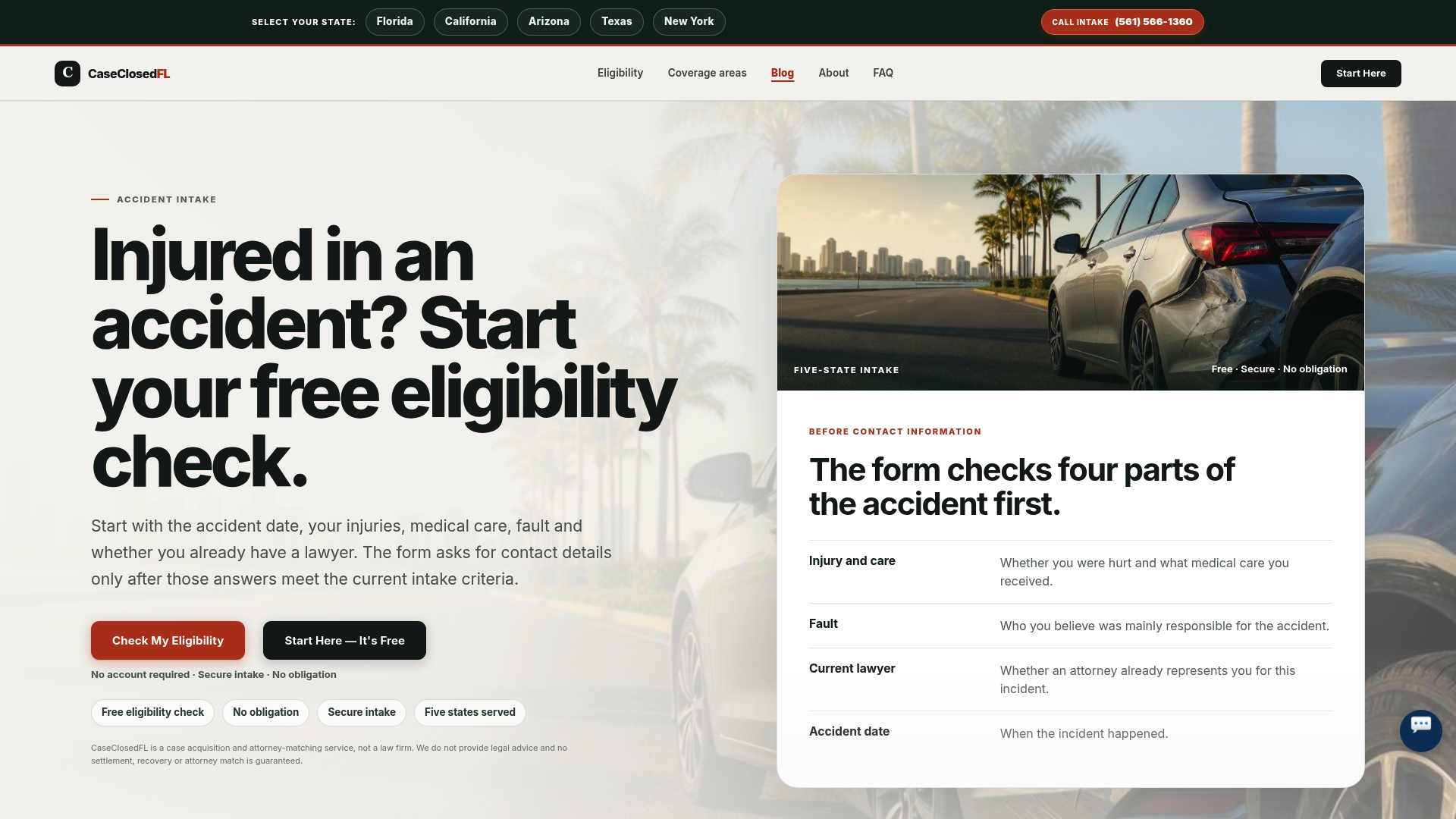
If your medical bills are piling up, liability is contested, or you’re not sure how Medicare, Medicaid, or a lien might affect your settlement, our free eligibility check is a direct way to find out where you stand. The intake process asks for basic facts: accident date, injuries, treatment so far, and any existing legal representation, and every submission gets human review before we request further contact. Have your bills and claim dates handy. Readers in Florida can also start from a Tampa, Orlando, Fort Myers, Melbourne, Lakeland, or Jacksonville case review page.
FAQ
What happens if you never pay medical bills in the US?
Unpaid medical bills can eventually go to collections, which may damage your credit score and lead to collection calls or, in some cases, legal action from the provider. Providers may also offer payment plans or financial assistance programs before a bill reaches that stage, so it’s worth contacting the billing office early.
Who pays for medical bills in an accident?
Your health insurance, MedPay, PIP, or workers’ compensation typically pays first, while the at-fault driver’s liability insurer usually pays later through a settlement or judgment rather than as bills arrive. Medicare or Medicaid may make conditional payments in the meantime and seek reimbursement once a settlement is reached.
How are medical bills paid after a car accident in Texas?
Texas is an at-fault state without mandatory PIP, so Texans often rely on health insurance, optional MedPay, or workers’ compensation while a liability claim is pending. The at-fault driver’s insurer generally pays medical costs as part of a settlement once fault and damages are established, not as individual bills come due.
How much are medical bills reduced after settlement?
Reduction amounts vary by provider, state lien laws, and the specifics of each claim, so there’s no fixed percentage that applies universally. Attorneys often negotiate lien reductions directly with providers or health plans before settlement funds are distributed, which can preserve more of the payout for the injured person.
Sources
Recommended
Frequently asked questions
Table of Contents Overview of the Payer Landscape and Typical Payment Order How Each Payer Works in Practice What Happens After Treatment: Timeline and Immediate Steps How to Handle Unpaid Bills, Liens, and Negotiating Reductions When It Makes Sense to Talk to a Personal Injury Lawyer Practical Priorities After an Accident Get a Free Eligibility Check for Your Accident Claim FAQ Sources Overview of the Payer Landscape and Typical Payment Order After a crash, several potential payers may share responsibility for your medical costs, but they rarely pay in the order you’d expect. The at-fault driver’s liability insurer is often the payer most people assume will step in first, yet liability coverage typically pays out only after a claim resolves, not as bills come due. In the meantime, several other sources may cover treatment: Your own health insurance, which processes claims like any other medical visit, subject to deductibles and copays. MedPay or Personal Injury Protection (PIP), optional or required auto coverage that can pay medical costs regardless of fault. Workers’ compensation, when the crash happened during a work-related activity. Medicare or Medicaid, which may make conditional payments while liability is sorted out. Understanding “primary” versus “secondary” payer status matters here. A primary payer is billed first; a secondary payer covers what remains, if anything. Medicare’s conditional payment system exists precisely because liability claims take time to resolve, and your state’s no-fault or at-fault insurance structure determines whether PIP or MedPay is even available to you. How Each Payer Works in Practice Health insurance processes accident-related treatment the same way it handles any other injury or illness. You’ll still owe deductibles, copayments, and coinsurance, and your insurer may later seek reimbursement from any settlement you receive through a subrogation claim. Save every explanation of benefits you receive, since these documents show exactly what your insurer paid and what you still owe. MedPay and PIP are auto insurance features designed to cover accident-related medical costs quickly, often without regard to fault. MedPay is optional in most states and typically has modest policy limits. PIP is required in no-fault states and tends to cover a broader range of costs, including a portion of lost wages, though exact rules and limits vary significantly by state. At-fault liability insurers generally don’t pay medical providers directly as bills arrive. Instead, they pay a lump sum once a claim or lawsuit resolves, which is why injured drivers often rely on other coverage in the interim. Workers’ compensation takes precedence when the accident happened on the job, covering medical treatment and a portion of lost wages regardless of fault, and it often has priority over other payers in that scenario. Medicare and Medicaid operate under distinctive rules. Medicare may make a conditional payment when a liability insurer hasn’t paid within about 120 days, then recover that amount from any settlement, judgment, or award you later receive. Medicaid functions as the payer of last resort , meaning private insurance, liability coverage, and other resources must generally be pursued first, with the state recovering costs it paid if a settlement follows. What Happens After Treatment: Timeline and Immediate Steps Billing after an accident rarely moves in a straight line. Treatment happens now, insurers investigate coverage during the following weeks, and reimbursement or settlement often arrives months later. Get medical care immediately and tell every provider that your injury is accident-related, since this affects how claims are coded and filed. Request itemized bills rather than summary statements, so you can verify every charge. Collect and save every EOB and denial notice from each insurer involved. Submit claims to the applicable payers (health insurance, MedPay, PIP, or workers’ comp) and track which ones are approved, denied, or pending. Follow up directly with provider billing offices if a claim stalls, rather than waiting for a letter. If a bill arrives unpaid, ask about financial assistance or a payment plan instead of letting it go to collections. Pro Tip: Keep a single folder, physical or digital, with every bill, EOB, and insurer letter in date order; it saves hours if your case later needs review by a lawyer or billing office. How to Handle Unpaid Bills, Liens, and Negotiating Reductions A medical lien is a legal claim a hospital, provider, or health plan places against your eventual settlement to recover what it’s owed. A lien is different from a bill: a bill is simply what you owe a provider, while a lien attaches that debt to money you may receive later, giving the provider a right to be paid directly from the proceeds. State law controls how liens are created, how large they can be, and whether a court can reduce them before settlement. Practical tactics that often help: Always request an itemized bill so you can check for duplicate or incorrect charges. Ask the billing office directly about charity care or hardship programs. Negotiate reductions before settlement rather than after funds are already distributed. Verify every date of service against your own treatment records. Get any lien reduction or payment agreement in writing before you sign off on anything. Concept What it means Who typically handles it Medical bill Amount owed directly to a provider You or your insurer Medical lien Legal claim against settlement proceeds Provider, hospital, or health plan Subrogation Insurer’s right to reimbursement from settlement Your health insurer or Medicare/Medicaid Lien negotiation Reducing the lien amount before payout Often handled by an attorney When It Makes Sense to Talk to a Personal Injury Lawyer Legal help becomes worth considering when medical costs climb, liability is disputed, or multiple payers, including Medicare or Medicaid, have a stake in your eventual settlement. Liens can quietly erode what you actually keep, and coordinating repayment among several payers is rarely something a billing office will do on your behalf. An attorney can typically: Negotiate directly with lienholders to reduce what’s owed before settlement. Communicate with insurers and providers so you’re not managing multiple claims alone. Help preserve settlement funds by addressing Medicare or Medicaid recovery obligations early. Track deadlines and reporting requirements tied to conditional payments. For a no-cost first step, our free eligibility check gathers basic details about your accident, injuries, and current coverage, then routes qualifying cases for human review before any attorney referral. There’s no obligation, and your contact information is only requested once your case meets the intake criteria. Practical Priorities After an Accident Health comes first: follow your treatment plan, since gaps in care create disputes later. Documentation is your leverage, so save every bill and EOB as it arrives rather than reconstructing the record months later. Insurance timelines move slowly, and that’s normal, but billing offices respond faster when you follow up directly. When you’re unsure whether a lawyer would help, a free eligibility check is a low-friction way to find out. — Luis Get a Free Eligibility Check for Your Accident Claim If your medical bills are piling up, liability is contested, or you’re not sure how Medicare, Medicaid, or a lien might affect your settlement, our free eligibility check is a direct way to find out where you stand. The intake process asks for basic facts: accident date, injuries, treatment so far, and any existing legal representation, and every submission gets human review before we request further contact. Have your bills and claim dates handy. Readers in Florida can also start from a Tampa , Orlando , Fort Myers , Melbourne , Lakeland , or Jacksonville case review page. FAQ What happens if you never pay medical bills in the US?
Unpaid medical bills can eventually go to collections, which may damage your credit score and lead to collection calls or, in some cases, legal action from the provider. Providers may also offer payment plans or financial assistance programs before a bill reaches that stage, so it’s worth contacting the billing office early.
Who pays for medical bills in an accident?
Your health insurance, MedPay, PIP, or workers’ compensation typically pays first, while the at-fault driver’s liability insurer usually pays later through a settlement or judgment rather than as bills arrive. Medicare or Medicaid may make conditional payments in the meantime and seek reimbursement once a settlement is reached.
How are medical bills paid after a car accident in Texas?
Texas is an at-fault state without mandatory PIP, so Texans often rely on health insurance, optional MedPay, or workers’ compensation while a liability claim is pending. The at-fault driver’s insurer generally pays medical costs as part of a settlement once fault and damages are established, not as individual bills come due.
How much are medical bills reduced after settlement?
Reduction amounts vary by provider, state lien laws, and the specifics of each claim, so there’s no fixed percentage that applies universally. Attorneys often negotiate lien reductions directly with providers or health plans before settlement funds are distributed, which can preserve more of the payout for the injured person.
Ready to enter the accident details?
The eligibility form asks about the accident, injury, treatment, fault and representation before contact information.
Start Eligibility Check