Car Accident Deposition Questions: Practice Answers, Not Guesswork
Rehearse categorized car accident deposition questions, prepare for Rule 30’s 7 hour baseline, and learn how to handle objections, exhibits, and answers.
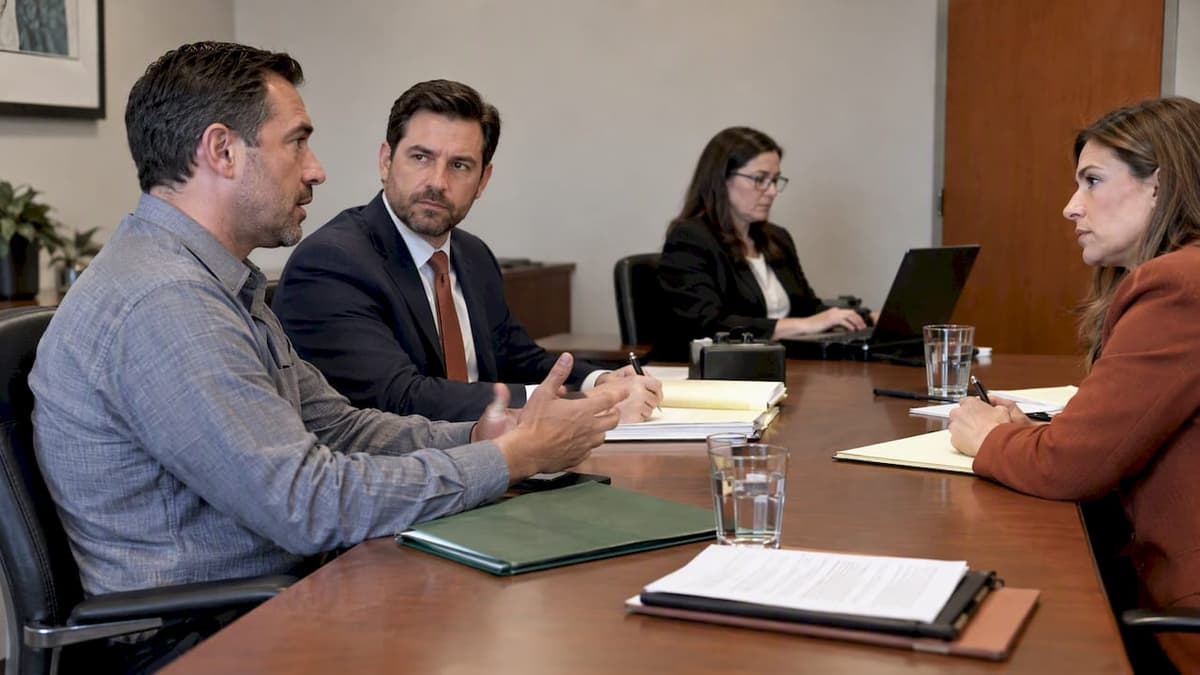

A car accident deposition is sworn, recorded questioning about the crash, your injuries, and your damages. Answer truthfully, keep each answer as short as the question allows, and prepare with your lawyer first. Federal Rule 30 sets the procedural baseline, and Nolo’s published question categories show what to rehearse. If you do not yet have counsel, our free eligibility check is one practical next step.
TL;DR:
- Federal Rule 30 generally limits a deposition to seven hours in one day, unless the parties agree otherwise or the court orders more time.
- Before questioning, gather police and medical records, bills, photos, and prior statements, then build a treatment timeline and rehearse additional questions with your lawyer.
- Most objections do not stop questioning, so pause and answer unless your lawyer tells you to protect privilege or obey a court order.
- For exhibits, use only the copy before you, distinguish its contents from your memory, and ask for a break if it may involve privileged communication.
- Afterward, you may review the transcript for clerical errors, but substantive changes are limited, and testimony can later challenge inconsistent statements or support motions.
Table of Contents
- What happens at a car accident deposition and how long it can last
- Car accident deposition questions to rehearse, by category
- How to prepare: a step-by-step checklist
- Objections, privilege, and when your lawyer may instruct you not to answer
- Handling documents and exhibits during questioning
- Common mistakes witnesses make, and how to avoid them
- What happens after the deposition ends
- Why a calm, practiced approach works
- Get attorney review before your deposition
- FAQ
- Sources
What happens at a car accident deposition and how long it can last
A deposition usually takes place in a conference room, not a courtroom. The people in the room typically include the attorney asking questions, your own attorney, a court reporter, the parties or their representatives, and sometimes a videographer. Everything you say is taken down word for word.
Civil deposition rules require reasonable written notice before the session. They also allow examination and cross-examination much like at trial, and they direct that objections be stated concisely on the record while testimony continues, as the federal deposition regulations describe.
The court reporter produces a stenographic transcript, and some sessions are also video recorded. Documents shown to you are marked as exhibits so everyone is looking at the same page. You will be asked to identify them, and your answers about them become part of the record.
Time matters too. Federal Rule 30 presumes a deposition lasts one day of 7 hours unless the parties agree otherwise or the court orders more time. Breaks do not usually count against that clock, but your lawyer can explain how the time is tracked in your case. Knowing the limit helps you pace yourself: there is no reason to rush an answer just because the room feels formal.

Car accident deposition questions to rehearse, by category
Car accident deposition questions typically fall into three main areas: personal background, details of the accident, and injuries, treatment, and damages. Practice each group out loud, because saying an answer is very different from thinking one.
Background questions. These are warm-ups, but they still lock in your testimony.
- What is your full name, and where do you currently live?
- What is your education and work history?
- Have you ever been in another accident or filed another injury claim?
- Did you review any documents to prepare today?
A good answer is one plain sentence. “I have worked as a dental hygienist” is enough. Do not add why you chose the career.
Crash-detail questions. Expect the other side to probe the facts closely.
- Where were you headed, and where did the collision occur?
- What was the weather and road condition?
- How fast were you traveling, and how do you know?
- Where were the vehicles positioned at impact?
- Did anyone witness the crash, and do you have dashcam footage?
If you are estimating, say so: “I believe I was traveling at a certain speed, but that is my estimate.” Estimates labeled as estimates are safe. Guesses presented as facts are not.
Injury and damages questions. These drive the value of a claim.
- When did you first receive medical care after the crash?
- Which doctors have you seen, and what tests were ordered?
- How have your injuries affected your work and daily activities?
- What bills have you received, and who paid them?
Answer with what happened, not what you fear will happen. Describe the treatment, the dates you remember, and the limits you actually experience.
How to prepare: a step-by-step checklist
Preparation is the single biggest factor you control. Practitioner guidance for defending depositions stresses listening carefully, pausing before answering, and not volunteering information, and your prep sessions should drill exactly those habits.
- Gather the police report, medical records, bills, photos, and any notes you personally wrote about the crash.
- Build a one-page timeline of the crash and your treatment so dates are fresh in your mind.
- Read your own earlier statements, including insurance statements and written discovery responses, so your testimony stays consistent.
- Run a mock deposition with your lawyer, using the sample questions above, and have them interrupt you with follow-ups.
- Practice pausing after each question so your lawyer can object if needed and you can confirm you understood.
- Practice identifying exhibits and answering only about what the page shows.
- Plan logistics: arrival time, comfortable business attire, and when you may confer with counsel during breaks.
If you are still collecting records, our guide on how to preserve evidence after an airbag injury covers what to keep. A practical evidence checklist for injury cases can also help you sort medical records, photos, and other exhibits.
Pro Tip: Record yourself answering ten sample questions on your phone, then listen back. Cut every answer that runs longer than two sentences.
Objections, privilege, and when your lawyer may instruct you not to answer
Objections sound dramatic, but they rarely stop the testimony. An objection is noted for the record, and you usually still answer. Under Rule 30 and related authority, a witness may decline to answer only when counsel instructs it to preserve a privilege or enforce a court-ordered limitation.
Here is what the common objections mean for you:
- Form: the question is confusing or compound, so ask for it to be rephrased if you are unsure.
- Foundation: the question assumes facts not yet established.
- Hearsay: the question asks about something someone else said outside the room.
- Argumentative: the question is framed as a challenge rather than a request for information.
- Beyond the scope: the question reaches past the topics properly open for discussion.
After an objection, pause, let your lawyer finish, and answer unless told otherwise. You do not need to argue the objection yourself.
Attorney-client conversations are the classic privileged area. If your lawyer instructs you not to answer, simply follow that direction. When the questioning attorney presses you to explain why you are not answering, say you are following your attorney’s advice, or ask for a break to confer.
Handling documents and exhibits during questioning
Exhibit handling is more mechanical than most people expect. Court practice notes, such as a magistrate judge’s deposition guidance, describe the three-copy approach: one set for the examining attorney, one for the defending attorney, and one for the witness. Work only from the copy placed in front of you, and leave your phone and personal notes out of reach.

Take the time you need. You can read the whole exhibit, or ask to read a page aloud if the question depends on a specific line. If a document truly refreshes your memory, say which document it was and what it reminded you of, then stop. Do not elaborate beyond what the page shows.
If you realize a document touches privileged communication or you feel uncertain about it, ask for a break to speak with your lawyer before answering.
Pro Tip: Before answering any exhibit question, ask yourself: “Am I describing what this page says, or what I remember?” Keep those two answers separate.
Common mistakes witnesses make, and how to avoid them
Most damaging testimony comes from habits, not from bad facts.
- Rambling: answer the question asked and stop; silence is not your problem to fix.
- Guessing: if you do not remember, say so, and offer an approximate timeframe only when you can label it as one.
- Volunteering: a witness’s job is to answer truthfully, accurately, and concisely, not to be helpful beyond the question, as attorney guidance on persuasive questioning explains.
- Rushing: take a deliberate pause before each answer, as litigators advise.
- Contradicting yourself: social media posts, insurance statements, and earlier answers can all be compared with your testimony, so tell your lawyer right away if you notice a conflict.
What happens after the deposition ends
The court reporter prepares the transcript, and you will usually be given a chance to review it. Clerical errors, such as a misspelled name, can be corrected. Substantive changes are limited and must follow the rules, so do not assume you can rewrite an answer later.
Deposition testimony can be used to challenge inconsistent statements, support motions, or serve as an exhibit at trial. Your attorney will review the transcript and discuss strategy with you. If it reveals something that does not match your records, call your lawyer promptly so the issue can be handled early.
Why a calm, practiced approach works
I have seen how much a deposition feels like an exam, and I think that framing is the problem. You are not being graded on eloquence. Short, truthful, rehearsed answers protect you, and your lawyer’s job is to guard privilege and step in when a question crosses a line. If you are still looking for that lawyer, we built our free eligibility check so a person reviews your case before any referral.
— Luis
Get attorney review before your deposition
Preparing with a lawyer beats preparing alone, and our free eligibility check is how you can find out if a participating attorney can help. We ask about the accident first and request contact details only when your case meets intake criteria.
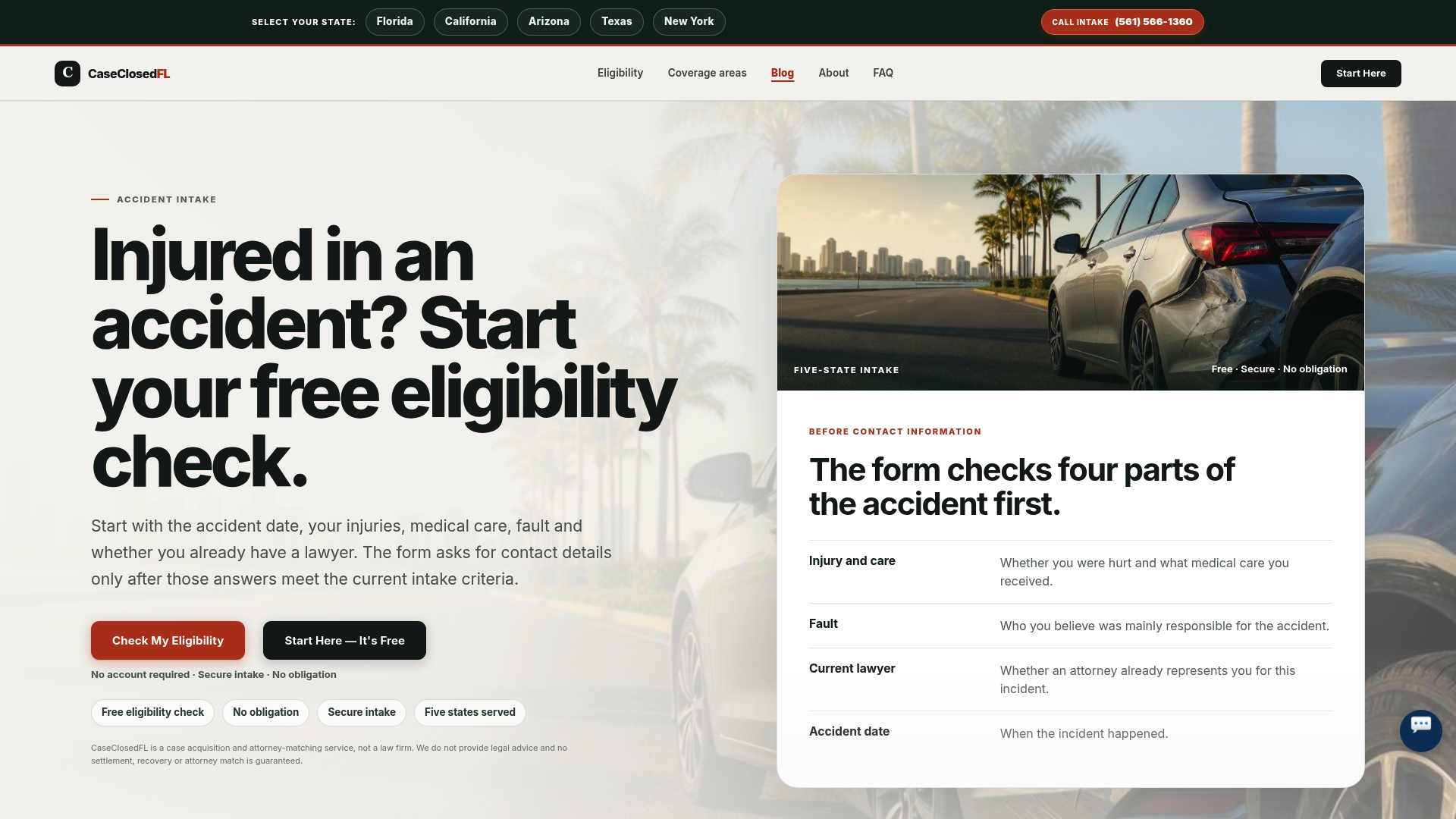
- We screen injury, fault, treatment, and whether you already have counsel.
- A person reviews every submission before any referral.
- You can start the free eligibility check today to see whether your inquiry meets intake criteria.
This article is general information, not a substitute for advice from a qualified lawyer. Consult a qualified legal professional about your own circumstances before acting on anything here.
FAQ
What happens next after a car accident deposition?
The court reporter produces a transcript, and you generally get a chance to review it for clerical errors. Your attorney then uses the testimony to evaluate settlement, motions, or trial strategy. Call your lawyer if the transcript shows anything inconsistent with your records.
What questions cannot be asked at a deposition?
Questions that call for privileged information, such as your private conversations with your attorney, can be blocked by counsel’s instruction not to answer. A court order can also limit certain topics. Other objections, like form or hearsay, are noted on the record but you usually still answer.
How long can a car accident deposition last?
Federal Rule 30 presumes a limit of one day of 7 hours unless the parties agree or the court orders otherwise. See the text of the rule for the full terms.
What should I say if I do not remember something?
Say you do not remember. Do not guess. If you can offer a reasonable estimate, label it as an estimate and then stop.
Sources
- What Will I Be Asked at a Car Accident Deposition?
- Defending Depositions—Practical Tips for Helping Your Witness Know What to Say and What Not to Say
- 29 CFR § 18.64 - Depositions by oral examination. | Electronic Code of Federal Regulations (e-CFR) | US Law | LII / Legal Information Institute
Recommended
Frequently asked questions
Table of Contents What happens at a car accident deposition and how long it can last Car accident deposition questions to rehearse, by category How to prepare: a step-by-step checklist Objections, privilege, and when your lawyer may instruct you not to answer Handling documents and exhibits during questioning Common mistakes witnesses make, and how to avoid them What happens after the deposition ends Why a calm, practiced approach works Get attorney review before your deposition FAQ Sources What happens at a car accident deposition and how long it can last A deposition usually takes place in a conference room, not a courtroom. The people in the room typically include the attorney asking questions, your own attorney, a court reporter, the parties or their representatives, and sometimes a videographer. Everything you say is taken down word for word. Civil deposition rules require reasonable written notice before the session. They also allow examination and cross-examination much like at trial, and they direct that objections be stated concisely on the record while testimony continues, as the federal deposition regulations describe. The court reporter produces a stenographic transcript, and some sessions are also video recorded. Documents shown to you are marked as exhibits so everyone is looking at the same page. You will be asked to identify them, and your answers about them become part of the record. Time matters too. Federal Rule 30 presumes a deposition lasts one day of 7 hours unless the parties agree otherwise or the court orders more time. Breaks do not usually count against that clock, but your lawyer can explain how the time is tracked in your case. Knowing the limit helps you pace yourself: there is no reason to rush an answer just because the room feels formal. Car accident deposition questions to rehearse, by category Car accident deposition questions typically fall into three main areas : personal background, details of the accident, and injuries, treatment, and damages. Practice each group out loud, because saying an answer is very different from thinking one. Background questions. These are warm-ups, but they still lock in your testimony. What is your full name, and where do you currently live? What is your education and work history? Have you ever been in another accident or filed another injury claim? Did you review any documents to prepare today? A good answer is one plain sentence. “I have worked as a dental hygienist” is enough. Do not add why you chose the career. Crash-detail questions. Expect the other side to probe the facts closely. Where were you headed, and where did the collision occur? What was the weather and road condition? How fast were you traveling, and how do you know? Where were the vehicles positioned at impact? Did anyone witness the crash, and do you have dashcam footage? If you are estimating, say so: “I believe I was traveling at a certain speed, but that is my estimate.” Estimates labeled as estimates are safe. Guesses presented as facts are not. Injury and damages questions. These drive the value of a claim. When did you first receive medical care after the crash? Which doctors have you seen, and what tests were ordered? How have your injuries affected your work and daily activities? What bills have you received, and who paid them? Answer with what happened, not what you fear will happen. Describe the treatment, the dates you remember, and the limits you actually experience. How to prepare: a step-by-step checklist Preparation is the single biggest factor you control. Practitioner guidance for defending depositions stresses listening carefully, pausing before answering, and not volunteering information, and your prep sessions should drill exactly those habits. Gather the police report, medical records, bills, photos, and any notes you personally wrote about the crash. Build a one-page timeline of the crash and your treatment so dates are fresh in your mind. Read your own earlier statements, including insurance statements and written discovery responses, so your testimony stays consistent. Run a mock deposition with your lawyer, using the sample questions above, and have them interrupt you with follow-ups. Practice pausing after each question so your lawyer can object if needed and you can confirm you understood. Practice identifying exhibits and answering only about what the page shows. Plan logistics: arrival time, comfortable business attire, and when you may confer with counsel during breaks. If you are still collecting records, our guide on how to preserve evidence after an airbag injury covers what to keep. A practical evidence checklist for injury cases can also help you sort medical records, photos, and other exhibits. Pro Tip: Record yourself answering ten sample questions on your phone, then listen back. Cut every answer that runs longer than two sentences. Objections, privilege, and when your lawyer may instruct you not to answer Objections sound dramatic, but they rarely stop the testimony. An objection is noted for the record, and you usually still answer. Under Rule 30 and related authority, a witness may decline to answer only when counsel instructs it to preserve a privilege or enforce a court-ordered limitation. Here is what the common objections mean for you: Form: the question is confusing or compound, so ask for it to be rephrased if you are unsure. Foundation: the question assumes facts not yet established. Hearsay: the question asks about something someone else said outside the room. Argumentative: the question is framed as a challenge rather than a request for information. Beyond the scope: the question reaches past the topics properly open for discussion. After an objection, pause, let your lawyer finish, and answer unless told otherwise. You do not need to argue the objection yourself. Attorney-client conversations are the classic privileged area. If your lawyer instructs you not to answer, simply follow that direction. When the questioning attorney presses you to explain why you are not answering, say you are following your attorney’s advice, or ask for a break to confer. Handling documents and exhibits during questioning Exhibit handling is more mechanical than most people expect. Court practice notes, such as a magistrate judge’s deposition guidance , describe the three-copy approach: one set for the examining attorney, one for the defending attorney, and one for the witness. Work only from the copy placed in front of you, and leave your phone and personal notes out of reach. Take the time you need. You can read the whole exhibit, or ask to read a page aloud if the question depends on a specific line. If a document truly refreshes your memory, say which document it was and what it reminded you of, then stop. Do not elaborate beyond what the page shows. If you realize a document touches privileged communication or you feel uncertain about it, ask for a break to speak with your lawyer before answering. Pro Tip: Before answering any exhibit question, ask yourself: “Am I describing what this page says, or what I remember?” Keep those two answers separate. Common mistakes witnesses make, and how to avoid them Most damaging testimony comes from habits, not from bad facts. Rambling: answer the question asked and stop; silence is not your problem to fix. Guessing: if you do not remember, say so, and offer an approximate timeframe only when you can label it as one. Volunteering: a witness’s job is to answer truthfully, accurately, and concisely, not to be helpful beyond the question, as attorney guidance on persuasive questioning explains. Rushing: take a deliberate pause before each answer, as litigators advise . Contradicting yourself: social media posts, insurance statements, and earlier answers can all be compared with your testimony, so tell your lawyer right away if you notice a conflict. What happens after the deposition ends The court reporter prepares the transcript, and you will usually be given a chance to review it. Clerical errors, such as a misspelled name, can be corrected. Substantive changes are limited and must follow the rules, so do not assume you can rewrite an answer later. Deposition testimony can be used to challenge inconsistent statements, support motions, or serve as an exhibit at trial. Your attorney will review the transcript and discuss strategy with you. If it reveals something that does not match your records, call your lawyer promptly so the issue can be handled early. Why a calm, practiced approach works I have seen how much a deposition feels like an exam, and I think that framing is the problem. You are not being graded on eloquence. Short, truthful, rehearsed answers protect you, and your lawyer’s job is to guard privilege and step in when a question crosses a line. If you are still looking for that lawyer, we built our free eligibility check so a person reviews your case before any referral. — Luis Get attorney review before your deposition Preparing with a lawyer beats preparing alone, and our free eligibility check is how you can find out if a participating attorney can help. We ask about the accident first and request contact details only when your case meets intake criteria. We screen injury, fault, treatment, and whether you already have counsel. A person reviews every submission before any referral. You can start the free eligibility check today to see whether your inquiry meets intake criteria. This article is general information, not a substitute for advice from a qualified lawyer. Consult a qualified legal professional about your own circumstances before acting on anything here. FAQ What happens next after a car accident deposition?
The court reporter produces a transcript, and you generally get a chance to review it for clerical errors. Your attorney then uses the testimony to evaluate settlement, motions, or trial strategy. Call your lawyer if the transcript shows anything inconsistent with your records.
What questions cannot be asked at a deposition?
Questions that call for privileged information, such as your private conversations with your attorney, can be blocked by counsel’s instruction not to answer. A court order can also limit certain topics. Other objections, like form or hearsay, are noted on the record but you usually still answer.
How long can a car accident deposition last?
Federal Rule 30 presumes a limit of one day of 7 hours unless the parties agree or the court orders otherwise. See the text of the rule for the full terms.
What should I say if I do not remember something?
Say you do not remember. Do not guess. If you can offer a reasonable estimate, label it as an estimate and then stop.
Ready to enter the accident details?
The eligibility form asks about the accident, injury, treatment, fault and representation before contact information.
Start Eligibility Check