Texas Car Accident Law: Two Years to Sue, Fault Can Erase Recovery
Texas gives crash victims two years to sue, but fault above 50% bars recovery. Know reporting duties, 30/60/25 insurance minimums, and claim steps.
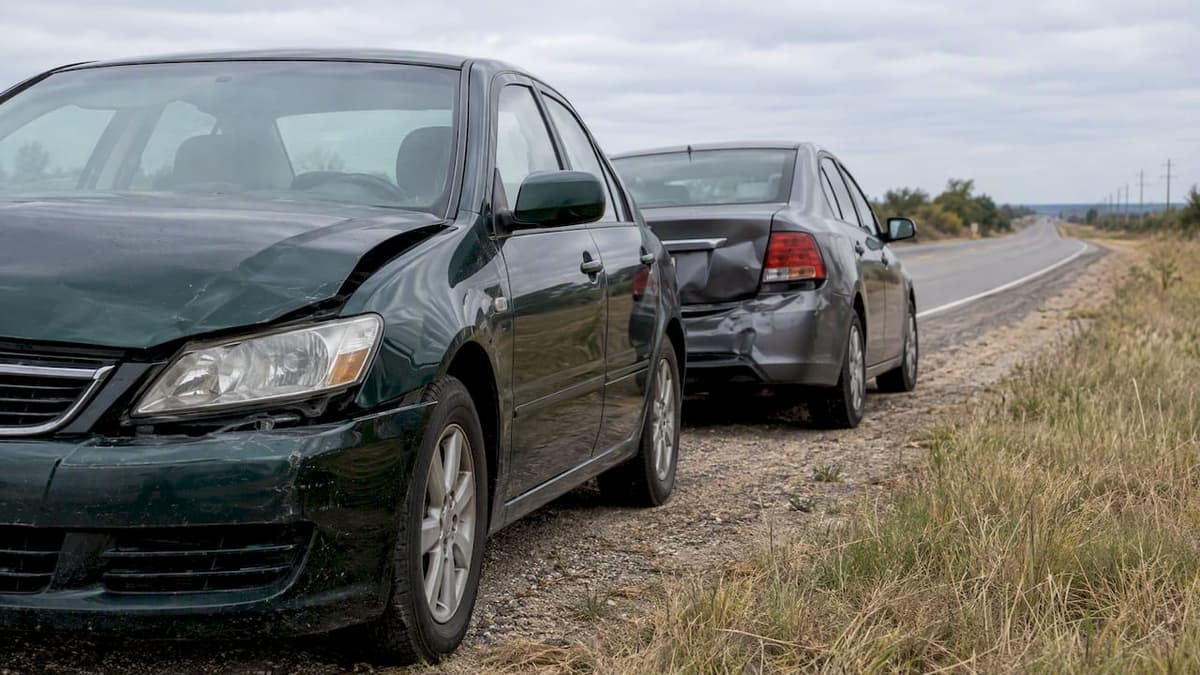

Texas gives you two years from the crash date to file a personal injury or property damage lawsuit under Civil Practice and Remedies Code §16.003. Texas is an at-fault state that applies modified comparative negligence, meaning your own percentage of fault can reduce or eliminate your recovery. Drivers must report crashes involving injury, death, or a vehicle that cannot be driven safely, and every policy must carry at least 30/60/25 in liability coverage.
TL;DR:
- Your recovery falls by your fault percentage, and fault above 50% bars compensation; seat belt nonuse can affect damages if it worsened your injuries.
- For minors, the limitations clock generally pauses until age 18; wrongful death and uninsured motorist claims may follow different deadlines.
- Texas minimum liability limits are $30,000 per person, $60,000 per crash, and $25,000 for property damage; UM/UIM coverage can fill gaps.
- Photograph the scene, collect witness details, seek medical care, and preserve records because insurers may dispute whether the crash caused your injuries.
- Report crashes involving injury, death, or a vehicle that cannot be driven safely to police immediately, and exchange contact, registration, and insurance details.
Table of Contents
- At-Fault Rules and Modified Comparative Negligence in Texas
- Statute of Limitations: Filing Deadlines and Common Exceptions
- Duties After a Collision and Transportation Code Reporting Rules
- Insurance Minimums, Uninsured/Underinsured Coverage, and Real-World Gaps
- Dealing With Insurers: TDI Timelines, Your Rights, and Evidence to Protect a Claim
- Damages Recoverable and Wrongful Death Basics
- Causation and Evidence After Werner: Practitioner Tips for Proving Liability
- Tolling Provisions: When the Statute of Limitations Can Pause
- Filing a Lawsuit: Documents and Court Process in Texas
- The Texas Motor Vehicle Safety Responsibility Act and Post-Accident Procedures
- Seat Belt Violations and Their Effect on Damages
- DUI and Criminal Charges: How They Affect Your Civil Claim
- Notifying Your Insurance Carrier After a Texas Crash
- Why Early Action Matters
- Free Eligibility Check: A No-Obligation Next Step
- FAQ
- Sources
At-Fault Rules and Modified Comparative Negligence in Texas
Texas does not use a no-fault insurance system. The driver who caused the crash, and that driver’s insurer, bears responsibility for the resulting damages. CPRC §33.001 sets a modified comparative negligence standard: if you are found more than 50% responsible for the collision, you recover nothing. At 50% or below, your award shrinks by your percentage of fault.
The math plays out differently depending on the crash type:
- A rear-end collision often assigns most or all fault to the trailing driver, so the lead driver typically recovers in full.
- A left-turn crash frequently splits fault between the turning driver and an oncoming driver who was speeding or ran a stale yellow light.
- A multi-vehicle pileup can spread responsibility across three or more drivers, with each percentage determined by the specific facts of the chain reaction.
Pro Tip: Insurance adjusters assign fault percentages early, often before you’ve seen a full police report, so request that report before accepting any number they offer.
Statute of Limitations: Filing Deadlines and Common Exceptions
The two-year clock in CPRC §16.003 generally starts on the date of the crash, not the date you noticed an injury or filed an insurance claim. Miss that date and the court will almost certainly dismiss your case, regardless of how strong the underlying facts are.
A handful of situations change the calculation:
- Wrongful death claims follow their own statutory framework tied to the date of death rather than the crash date.
- Claims involving a minor can pause the clock until the minor turns 18, under general tolling principles found elsewhere in CPRC Chapter 16.
- Uninsured and underinsured motorist claims are often treated as contract claims against your own insurer, which can carry shorter notice periods than the two-year tort deadline.
Because evidence degrades fast, skid marks fade, witnesses move, vehicles get repaired, it makes sense to start building your claim well before the deadline approaches. If your injuries are serious or fault is contested, talk to a qualified attorney early rather than waiting until the limitations period is close to running out.
Duties After a Collision and Transportation Code Reporting Rules
Transportation Code Chapter 550 spells out what every driver involved in a crash must do. These duties apply regardless of who caused the collision.
- Stop at the scene or as close to it as safely possible.
- Provide your name, address, registration, and insurance information to the other driver.
- Render reasonable aid to anyone injured, including arranging transport to receive medical care.
- Report the crash to police immediately if it involves injury, death, or a vehicle that cannot be driven safely, as required under sections 550.021 through 550.026.
- Request a copy of the official crash report once filed, since insurers and courts rely on it heavily.
Officers generally respond and generate reports for crashes involving apparent damage around $1,000 or more, though local departments vary in how strictly they apply that threshold.
Insurance Minimums, Uninsured/Underinsured Coverage, and Real-World Gaps
Every Texas driver must carry liability coverage of at least 30/60/25, meaning $30,000 in bodily injury coverage per person, $60,000 per accident, and $25,000 for property damage, according to the Texas Department of Insurance. Insurers must also offer uninsured and underinsured motorist coverage, though you can decline it in writing.
Those minimums often fall short in serious crashes. TDI has noted that 30/60/25 limits frequently prove inadequate once medical bills, lost income, and long-term care enter the picture, which is part of why UM/UIM coverage matters.
- UM/UIM coverage pays out when the at-fault driver has no insurance or not enough to cover your losses.
- If the at-fault driver’s limits are exhausted, you can still pursue a lawsuit against them personally for the remaining balance.
- UM/UIM claims against your own carrier sometimes carry contractual notice deadlines separate from the two-year tort statute, so check your policy language closely.
Dealing With Insurers: TDI Timelines, Your Rights, and Evidence to Protect a Claim
Texas insurers operate under deadlines set by TDI. An insurer must acknowledge your claim within 15 days of receiving it and must accept or deny it within 15 business days after getting all requested information, though extensions are permitted under certain conditions. Once a claim is accepted, payment timelines follow similarly structured rules.
You have specific rights during this process:
- You can choose your own repair shop rather than one the insurer recommends.
- You may be entitled to recover your deductible if the other driver was at fault.
- Prompt-payment violations can entitle you to interest and, in some cases, attorney’s fees.
- You can file a complaint with TDI if an insurer misses its deadlines or acts in bad faith.
Pro Tip: Avoid giving a recorded statement to the other driver’s insurer before speaking with an attorney, since adjusters often use those statements to minimize payouts later.
Document your injuries with photos, keep every medical record and bill, and put all communication with adjusters in writing when possible. If a claim gets denied outright, there are specific steps and deadlines worth following before accepting that outcome.
Damages Recoverable and Wrongful Death Basics
Texas law allows recovery for both economic and non-economic losses tied to a crash.
- Economic damages cover medical bills, lost wages, future earning capacity, and property repair or replacement costs.
- Non-economic damages compensate for pain and suffering, mental anguish, and loss of enjoyment of life.
- Exemplary damages, sometimes called punitive damages, are capped under CPRC Chapter 41 and only apply in cases involving gross negligence or malice.
- Wrongful death claims allow surviving family members to recover for loss of companionship, financial support, and funeral expenses, under a separate statutory timeline tied to the date of death.
Comparative fault and the at-fault driver’s insurance limits both shape the practical payout. A strong claim on paper can still shrink significantly if the responsible driver carries only the state minimum coverage.
Causation and Evidence After Werner: Practitioner Tips for Proving Liability
A 2025 Texas Supreme Court decision in the Werner case tightened how courts evaluate proximate cause, according to legal analysis of the ruling. Merely being present or creating a condition that preceded harm may no longer satisfy causation; the conduct generally needs to be a substantial factor in producing the injury.
That shift raises the value of specific evidence:
- Medical records that clearly connect the crash to your injuries, since a causation gap in the paperwork can undercut an otherwise strong claim.
- Scene photographs showing vehicle positions, skid marks, and road conditions before anything changes.
- Witness contact information gathered at the scene, since memories fade and people relocate.
- Accident reconstruction input in serious or disputed-fault cases.
Pro Tip: Seek medical treatment immediately after a crash, even for injuries that seem minor, since a treatment gap is one of the easiest things an insurer points to when disputing causation.
Tolling Provisions: When the Statute of Limitations Can Pause
Certain circumstances pause, or “toll,” the two-year clock under CPRC §16.003 rather than simply shortening or extending it. Minors generally have their limitations period paused until they turn 18, after which the standard two-year window begins running. A person who is deemed legally incompetent at the time of the crash, due to a mental condition that prevents them from managing their own legal affairs, may also see the clock paused until that incapacity ends.
Tolling can also apply when the at-fault party leaves the state for an extended period after the crash, since Texas courts generally will not let someone evade a lawsuit simply by being absent from the jurisdiction. Bankruptcy filings by a defendant can trigger an automatic stay that pauses active litigation, though it does not erase the underlying claim.
These exceptions are narrow and fact-specific. Courts apply them strictly, and assuming tolling applies to your situation without confirming it can be a costly mistake if the assumption turns out wrong. If anything about your case looks unusual, a minor involved, a defendant who left the state, a question about mental capacity at the time of the crash, it’s worth getting that specific circumstance reviewed rather than relying on the general two-year rule. Waiting to find out is one of the more common ways valid claims get dismissed on procedural grounds, independent of how strong the facts are.

Filing a Lawsuit: Documents and Court Process in Texas
Once settlement talks stall or the deadline approaches, filing suit in Texas follows a defined sequence. The process starts with a petition filed in the appropriate court, typically a county or district court depending on the dollar amount claimed, naming the defendant and describing the factual basis for the claim.
After filing, the defendant must be formally served with citation, giving them notice of the lawsuit and a deadline to respond. Texas generally requires a defendant to file an answer by 10 a.m. on the Monday following the expiration of 20 days after service.
Supporting documentation matters throughout this process:
- The official crash report, which you can request directly from the investigating agency.
- Complete medical records and billing statements tied to crash-related treatment.
- Photographs and any available dashcam or surveillance footage.
- Repair estimates or total-loss valuations for property damage.
- Written correspondence with insurers, including any denial letters.
From there, cases move into discovery, where both sides exchange evidence and take depositions, followed by potential settlement negotiations, mediation, or trial if no resolution is reached. Many car accident cases settle before trial, but having your documentation organized early strengthens your position regardless of which path the case takes.
The Texas Motor Vehicle Safety Responsibility Act and Post-Accident Procedures
The Motor Vehicle Safety Responsibility Act underlies much of Texas’s financial responsibility framework for drivers. It establishes the legal basis for requiring drivers to carry liability insurance or otherwise demonstrate financial responsibility, and it ties directly into what happens procedurally after a crash.
Under this framework, a driver involved in a crash may need to show proof of financial responsibility, typically an insurance card, to the responding officer and to the other driver. If a driver cannot show proof of coverage, the Texas Department of Public Safety can suspend that driver’s license and registration until responsibility is established, which can include posting a security deposit in some circumstances.
This act also reinforces why the reporting duties under Transportation Code Chapter 550 matter so much. The crash report generated after a reportable collision often becomes the record the state uses to verify that financial responsibility requirements were met at the time of the crash. If you’re ever unsure whether your own coverage meets state minimums, that’s confirmed through the same TDI resources that outline the 30/60/25 requirement.
Practically, this means the paperwork you handle immediately after a crash, insurance cards, the officer’s report, confirmation that all drivers had valid coverage, isn’t just administrative. It’s the backbone of how the state verifies that everyone on the road met their legal obligations, and it becomes relevant again if a dispute over coverage or liability surfaces later in a claim.
Seat Belt Violations and Their Effect on Damages
Texas law requires most drivers and passengers to wear seat belts, and failing to do so can come up in a civil claim even when the seat belt violation had nothing to do with causing the crash itself. Historically, Texas courts excluded seat belt non-use as evidence in determining fault or damages, but that rule has shifted over time.
Under current Texas law, evidence of a failure to wear a seat belt can be admitted and considered as part of the comparative fault analysis under CPRC §33.001. If a defendant can show that not wearing a seat belt made your injuries worse than they otherwise would have been, a jury may assign you a percentage of responsibility for that portion of the harm, separate from who caused the actual collision.
This does not bar you from recovering damages altogether unless your total assigned fault, including any seat belt-related percentage, exceeds 50%. It does mean that seat belt use can become a contested issue in cases involving more severe injuries, particularly where a defense team argues that proper restraint would have prevented or reduced specific harms. Medical documentation connecting the mechanism of injury to the crash itself, rather than to restraint use, becomes especially important in these disputes.

DUI and Criminal Charges: How They Affect Your Civil Claim
When a crash involves a driver facing DUI or other criminal charges, that criminal case and your civil claim run on separate tracks, but they can influence each other in practical ways. A criminal conviction for DUI does not automatically win your civil case, since the burden of proof and legal standards differ between criminal and civil courts. However, a conviction can serve as strong supporting evidence of negligence in your personal injury claim.
The two-year statute of limitations under CPRC §16.003 for your civil claim generally continues to run regardless of how long the criminal case takes, so don’t wait for a criminal verdict before pursuing your own claim or consulting counsel. Criminal proceedings can take considerably longer than the civil filing window allows.
A DUI-related crash can also support a claim for exemplary damages under CPRC Chapter 41 in cases where the driver’s intoxication rises to the level of gross negligence. Police reports, breathalyzer results, and arrest records from the criminal case often become valuable evidence in the civil claim, which is another reason requesting the official crash report matters even when criminal charges are already pending.
Notifying Your Insurance Carrier After a Texas Crash
Most Texas auto policies require you to notify your own insurer after a crash, regardless of who was at fault, and regardless of whether you plan to file a claim against the other driver. Policy language typically requires notice “promptly” or “as soon as reasonably possible,” and failing to notify your carrier within a reasonable window can jeopardize coverage, particularly for uninsured or underinsured motorist claims.
This notification duty exists separately from the statutory reporting requirements under Transportation Code Chapter 550. The Transportation Code governs what you owe to law enforcement and the other driver at the scene; your insurance policy governs what you owe your own carrier under your contract. Missing one does not excuse missing the other.
Because UM/UIM claims are often treated as contract matters with their own notice periods, as TDI materials note, it’s worth reporting the crash to your insurer promptly even if you expect the other driver’s policy to cover your losses. If a dispute later arises over whether the other driver had adequate coverage, early notice to your own carrier preserves your options rather than closing them off.
Why Early Action Matters
In our experience reviewing crash intakes, the most common missed step isn’t a legal technicality. It’s waiting too long to preserve medical records and the official police report. A free eligibility check can help you figure out whether legal help makes sense, without any obligation attached.
— Luis
Free Eligibility Check: A No-Obligation Next Step
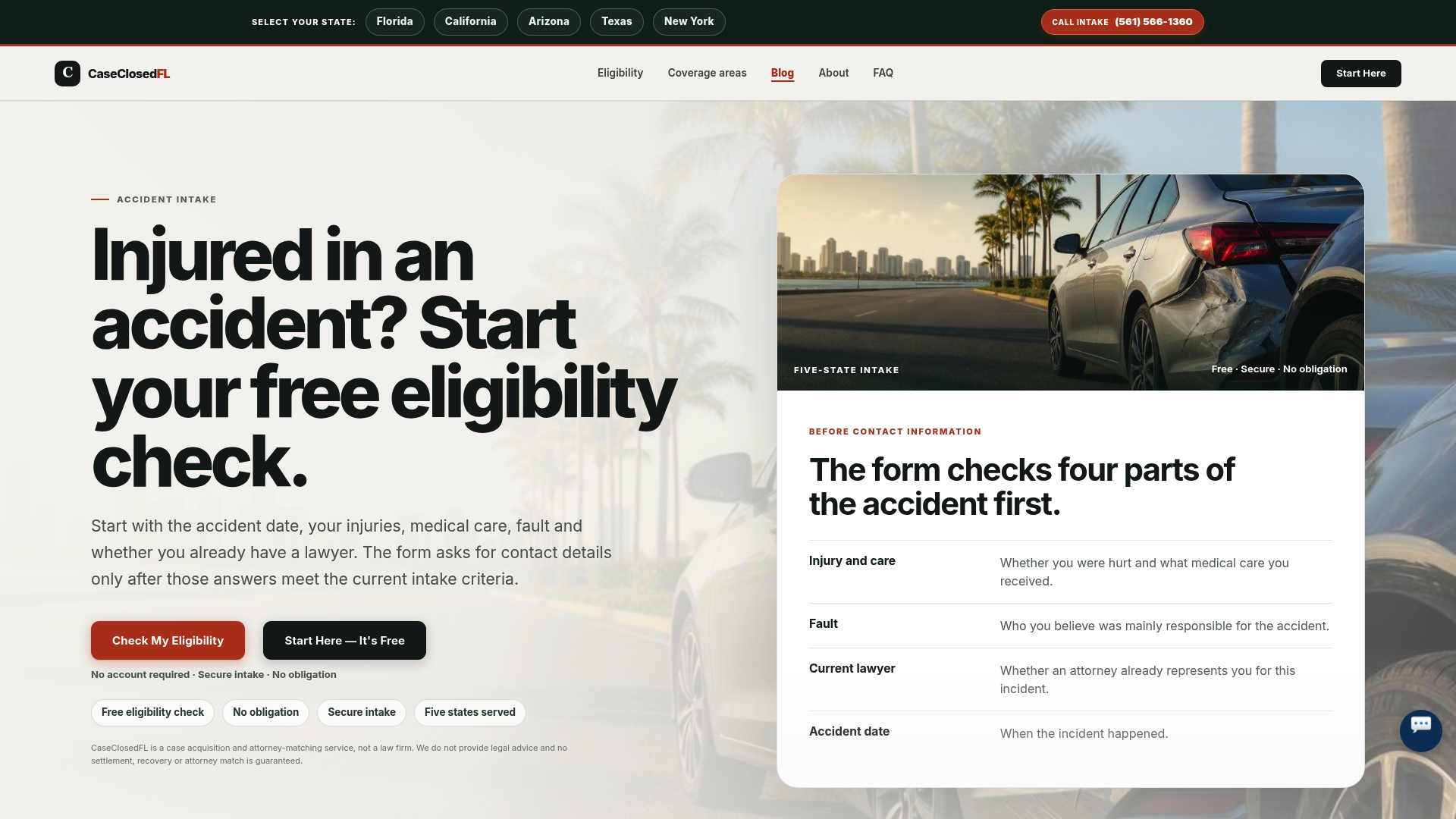
If you’re trying to figure out whether your Texas crash warrants legal help, a free eligibility check can answer that question without pressure or unnecessary solicitation. The intake process gathers the core facts first: how the injury happened, who appears to be at fault, whether you already have legal representation, and where the crash occurred.
- Accident details are collected before personal contact information is requested.
- Every submission receives human review before any referral to an attorney.
- There is no guarantee of a specific outcome or attorney contact.
- Your information stays private unless your case meets criteria for referral.
Before you start, have your crash date, a general sense of your injuries, and any insurance correspondence on hand. From there, you can check your eligibility in a few minutes and find out where you stand.
This article is general information, not a substitute for advice from a qualified lawyer. Consult a qualified legal professional about your own circumstances before acting on anything here.
FAQ
Is Texas a no-fault state for insurance?
No. Texas is an at-fault state, meaning the driver responsible for causing a crash, and typically their insurer, is financially responsible for resulting damages. This differs from no-fault states, where each driver’s own insurance covers their losses regardless of fault.
What is the new insurance law in Texas?
Texas requires minimum liability coverage of 30/60/25, meaning $30,000 in bodily injury coverage per person, $60,000 per accident, and $25,000 for property damage, as outlined by the Texas Department of Insurance. Insurers must also offer uninsured and underinsured motorist coverage, which drivers can decline only in writing.
How many years for an accident to fall off insurance in Texas?
This varies by insurer and depends on their specific underwriting rules rather than a single statewide rule, so it’s worth checking directly with your insurance company or agent. Separately, the legal deadline to file a lawsuit over the crash itself is two years from the accident date under CPRC §16.003.
When should I contact an attorney after a Texas car accident?
It makes sense to consult an attorney early when injuries are significant, fault is disputed, or an insurer is delaying or undervaluing your claim. A local resource like the Law Office of Anna Din can provide direct attorney contact, or you can start with a free eligibility check to see whether a referral makes sense for your situation.
Sources
Recommended
Frequently asked questions
Table of Contents At-Fault Rules and Modified Comparative Negligence in Texas Statute of Limitations: Filing Deadlines and Common Exceptions Duties After a Collision and Transportation Code Reporting Rules Insurance Minimums, Uninsured/Underinsured Coverage, and Real-World Gaps Dealing With Insurers: TDI Timelines, Your Rights, and Evidence to Protect a Claim Damages Recoverable and Wrongful Death Basics Causation and Evidence After Werner: Practitioner Tips for Proving Liability Tolling Provisions: When the Statute of Limitations Can Pause Filing a Lawsuit: Documents and Court Process in Texas The Texas Motor Vehicle Safety Responsibility Act and Post-Accident Procedures Seat Belt Violations and Their Effect on Damages DUI and Criminal Charges: How They Affect Your Civil Claim Notifying Your Insurance Carrier After a Texas Crash Why Early Action Matters Free Eligibility Check: A No-Obligation Next Step FAQ Sources At-Fault Rules and Modified Comparative Negligence in Texas Texas does not use a no-fault insurance system. The driver who caused the crash, and that driver’s insurer, bears responsibility for the resulting damages. CPRC §33.001 sets a modified comparative negligence standard: if you are found more than 50% responsible for the collision, you recover nothing. At 50% or below, your award shrinks by your percentage of fault. The math plays out differently depending on the crash type: A rear-end collision often assigns most or all fault to the trailing driver, so the lead driver typically recovers in full. A left-turn crash frequently splits fault between the turning driver and an oncoming driver who was speeding or ran a stale yellow light. A multi-vehicle pileup can spread responsibility across three or more drivers, with each percentage determined by the specific facts of the chain reaction. Pro Tip: Insurance adjusters assign fault percentages early, often before you’ve seen a full police report, so request that report before accepting any number they offer. Statute of Limitations: Filing Deadlines and Common Exceptions The two-year clock in CPRC §16.003 generally starts on the date of the crash, not the date you noticed an injury or filed an insurance claim. Miss that date and the court will almost certainly dismiss your case, regardless of how strong the underlying facts are. A handful of situations change the calculation: Wrongful death claims follow their own statutory framework tied to the date of death rather than the crash date. Claims involving a minor can pause the clock until the minor turns 18, under general tolling principles found elsewhere in CPRC Chapter 16. Uninsured and underinsured motorist claims are often treated as contract claims against your own insurer, which can carry shorter notice periods than the two-year tort deadline. Because evidence degrades fast, skid marks fade, witnesses move, vehicles get repaired, it makes sense to start building your claim well before the deadline approaches. If your injuries are serious or fault is contested, talk to a qualified attorney early rather than waiting until the limitations period is close to running out. Duties After a Collision and Transportation Code Reporting Rules Transportation Code Chapter 550 spells out what every driver involved in a crash must do. These duties apply regardless of who caused the collision. Stop at the scene or as close to it as safely possible. Provide your name, address, registration, and insurance information to the other driver. Render reasonable aid to anyone injured, including arranging transport to receive medical care. Report the crash to police immediately if it involves injury, death, or a vehicle that cannot be driven safely, as required under sections 550.021 through 550.026. Request a copy of the official crash report once filed, since insurers and courts rely on it heavily. Officers generally respond and generate reports for crashes involving apparent damage around $1,000 or more, though local departments vary in how strictly they apply that threshold. Insurance Minimums, Uninsured/Underinsured Coverage, and Real-World Gaps Every Texas driver must carry liability coverage of at least 30/60/25, meaning $30,000 in bodily injury coverage per person, $60,000 per accident, and $25,000 for property damage, according to the Texas Department of Insurance . Insurers must also offer uninsured and underinsured motorist coverage, though you can decline it in writing. Those minimums often fall short in serious crashes. TDI has noted that 30/60/25 limits frequently prove inadequate once medical bills, lost income, and long-term care enter the picture, which is part of why UM/UIM coverage matters. UM/UIM coverage pays out when the at-fault driver has no insurance or not enough to cover your losses. If the at-fault driver’s limits are exhausted, you can still pursue a lawsuit against them personally for the remaining balance. UM/UIM claims against your own carrier sometimes carry contractual notice deadlines separate from the two-year tort statute, so check your policy language closely. Dealing With Insurers: TDI Timelines, Your Rights, and Evidence to Protect a Claim Texas insurers operate under deadlines set by TDI. An insurer must acknowledge your claim within 15 days of receiving it and must accept or deny it within 15 business days after getting all requested information, though extensions are permitted under certain conditions. Once a claim is accepted, payment timelines follow similarly structured rules. You have specific rights during this process: You can choose your own repair shop rather than one the insurer recommends. You may be entitled to recover your deductible if the other driver was at fault. Prompt-payment violations can entitle you to interest and, in some cases, attorney’s fees. You can file a complaint with TDI if an insurer misses its deadlines or acts in bad faith. Pro Tip: Avoid giving a recorded statement to the other driver’s insurer before speaking with an attorney, since adjusters often use those statements to minimize payouts later. Document your injuries with photos, keep every medical record and bill, and put all communication with adjusters in writing when possible. If a claim gets denied outright, there are specific steps and deadlines worth following before accepting that outcome. Damages Recoverable and Wrongful Death Basics Texas law allows recovery for both economic and non-economic losses tied to a crash. Economic damages cover medical bills, lost wages, future earning capacity, and property repair or replacement costs. Non-economic damages compensate for pain and suffering, mental anguish, and loss of enjoyment of life. Exemplary damages, sometimes called punitive damages, are capped under CPRC Chapter 41 and only apply in cases involving gross negligence or malice. Wrongful death claims allow surviving family members to recover for loss of companionship, financial support, and funeral expenses, under a separate statutory timeline tied to the date of death. Comparative fault and the at-fault driver’s insurance limits both shape the practical payout. A strong claim on paper can still shrink significantly if the responsible driver carries only the state minimum coverage. Causation and Evidence After Werner: Practitioner Tips for Proving Liability A 2025 Texas Supreme Court decision in the Werner case tightened how courts evaluate proximate cause, according to legal analysis of the ruling . Merely being present or creating a condition that preceded harm may no longer satisfy causation; the conduct generally needs to be a substantial factor in producing the injury. That shift raises the value of specific evidence: Medical records that clearly connect the crash to your injuries, since a causation gap in the paperwork can undercut an otherwise strong claim. Scene photographs showing vehicle positions, skid marks, and road conditions before anything changes. Witness contact information gathered at the scene, since memories fade and people relocate. Accident reconstruction input in serious or disputed-fault cases. Pro Tip: Seek medical treatment immediately after a crash, even for injuries that seem minor, since a treatment gap is one of the easiest things an insurer points to when disputing causation. Tolling Provisions: When the Statute of Limitations Can Pause Certain circumstances pause, or “toll,” the two-year clock under CPRC §16.003 rather than simply shortening or extending it. Minors generally have their limitations period paused until they turn 18, after which the standard two-year window begins running. A person who is deemed legally incompetent at the time of the crash, due to a mental condition that prevents them from managing their own legal affairs, may also see the clock paused until that incapacity ends. Tolling can also apply when the at-fault party leaves the state for an extended period after the crash, since Texas courts generally will not let someone evade a lawsuit simply by being absent from the jurisdiction. Bankruptcy filings by a defendant can trigger an automatic stay that pauses active litigation, though it does not erase the underlying claim. These exceptions are narrow and fact-specific. Courts apply them strictly, and assuming tolling applies to your situation without confirming it can be a costly mistake if the assumption turns out wrong. If anything about your case looks unusual, a minor involved, a defendant who left the state, a question about mental capacity at the time of the crash, it’s worth getting that specific circumstance reviewed rather than relying on the general two-year rule. Waiting to find out is one of the more common ways valid claims get dismissed on procedural grounds, independent of how strong the facts are. Filing a Lawsuit: Documents and Court Process in Texas Once settlement talks stall or the deadline approaches, filing suit in Texas follows a defined sequence. The process starts with a petition filed in the appropriate court, typically a county or district court depending on the dollar amount claimed, naming the defendant and describing the factual basis for the claim. After filing, the defendant must be formally served with citation, giving them notice of the lawsuit and a deadline to respond. Texas generally requires a defendant to file an answer by 10 a.m. on the Monday following the expiration of 20 days after service. Supporting documentation matters throughout this process: The official crash report, which you can request directly from the investigating agency. Complete medical records and billing statements tied to crash-related treatment. Photographs and any available dashcam or surveillance footage. Repair estimates or total-loss valuations for property damage. Written correspondence with insurers, including any denial letters. From there, cases move into discovery, where both sides exchange evidence and take depositions, followed by potential settlement negotiations, mediation, or trial if no resolution is reached. Many car accident cases settle before trial, but having your documentation organized early strengthens your position regardless of which path the case takes. The Texas Motor Vehicle Safety Responsibility Act and Post-Accident Procedures The Motor Vehicle Safety Responsibility Act underlies much of Texas’s financial responsibility framework for drivers. It establishes the legal basis for requiring drivers to carry liability insurance or otherwise demonstrate financial responsibility, and it ties directly into what happens procedurally after a crash. Under this framework, a driver involved in a crash may need to show proof of financial responsibility, typically an insurance card, to the responding officer and to the other driver. If a driver cannot show proof of coverage, the Texas Department of Public Safety can suspend that driver’s license and registration until responsibility is established, which can include posting a security deposit in some circumstances. This act also reinforces why the reporting duties under Transportation Code Chapter 550 matter so much. The crash report generated after a reportable collision often becomes the record the state uses to verify that financial responsibility requirements were met at the time of the crash. If you’re ever unsure whether your own coverage meets state minimums, that’s confirmed through the same TDI resources that outline the 30/60/25 requirement. Practically, this means the paperwork you handle immediately after a crash, insurance cards, the officer’s report, confirmation that all drivers had valid coverage, isn’t just administrative. It’s the backbone of how the state verifies that everyone on the road met their legal obligations, and it becomes relevant again if a dispute over coverage or liability surfaces later in a claim. Seat Belt Violations and Their Effect on Damages Texas law requires most drivers and passengers to wear seat belts, and failing to do so can come up in a civil claim even when the seat belt violation had nothing to do with causing the crash itself. Historically, Texas courts excluded seat belt non-use as evidence in determining fault or damages, but that rule has shifted over time. Under current Texas law, evidence of a failure to wear a seat belt can be admitted and considered as part of the comparative fault analysis under CPRC §33.001. If a defendant can show that not wearing a seat belt made your injuries worse than they otherwise would have been, a jury may assign you a percentage of responsibility for that portion of the harm, separate from who caused the actual collision. This does not bar you from recovering damages altogether unless your total assigned fault, including any seat belt-related percentage, exceeds 50%. It does mean that seat belt use can become a contested issue in cases involving more severe injuries, particularly where a defense team argues that proper restraint would have prevented or reduced specific harms. Medical documentation connecting the mechanism of injury to the crash itself, rather than to restraint use, becomes especially important in these disputes. DUI and Criminal Charges: How They Affect Your Civil Claim When a crash involves a driver facing DUI or other criminal charges, that criminal case and your civil claim run on separate tracks, but they can influence each other in practical ways. A criminal conviction for DUI does not automatically win your civil case, since the burden of proof and legal standards differ between criminal and civil courts. However, a conviction can serve as strong supporting evidence of negligence in your personal injury claim. The two-year statute of limitations under CPRC §16.003 for your civil claim generally continues to run regardless of how long the criminal case takes, so don’t wait for a criminal verdict before pursuing your own claim or consulting counsel. Criminal proceedings can take considerably longer than the civil filing window allows. A DUI-related crash can also support a claim for exemplary damages under CPRC Chapter 41 in cases where the driver’s intoxication rises to the level of gross negligence. Police reports, breathalyzer results, and arrest records from the criminal case often become valuable evidence in the civil claim, which is another reason requesting the official crash report matters even when criminal charges are already pending. Notifying Your Insurance Carrier After a Texas Crash Most Texas auto policies require you to notify your own insurer after a crash, regardless of who was at fault, and regardless of whether you plan to file a claim against the other driver. Policy language typically requires notice “promptly” or “as soon as reasonably possible,” and failing to notify your carrier within a reasonable window can jeopardize coverage, particularly for uninsured or underinsured motorist claims. This notification duty exists separately from the statutory reporting requirements under Transportation Code Chapter 550. The Transportation Code governs what you owe to law enforcement and the other driver at the scene; your insurance policy governs what you owe your own carrier under your contract. Missing one does not excuse missing the other. Because UM/UIM claims are often treated as contract matters with their own notice periods, as TDI materials note, it’s worth reporting the crash to your insurer promptly even if you expect the other driver’s policy to cover your losses. If a dispute later arises over whether the other driver had adequate coverage, early notice to your own carrier preserves your options rather than closing them off. Why Early Action Matters In our experience reviewing crash intakes, the most common missed step isn’t a legal technicality. It’s waiting too long to preserve medical records and the official police report. A free eligibility check can help you figure out whether legal help makes sense, without any obligation attached. — Luis Free Eligibility Check: A No-Obligation Next Step If you’re trying to figure out whether your Texas crash warrants legal help, a free eligibility check can answer that question without pressure or unnecessary solicitation. The intake process gathers the core facts first: how the injury happened, who appears to be at fault, whether you already have legal representation, and where the crash occurred. Accident details are collected before personal contact information is requested. Every submission receives human review before any referral to an attorney. There is no guarantee of a specific outcome or attorney contact. Your information stays private unless your case meets criteria for referral. Before you start, have your crash date, a general sense of your injuries, and any insurance correspondence on hand. From there, you can check your eligibility in a few minutes and find out where you stand. This article is general information, not a substitute for advice from a qualified lawyer. Consult a qualified legal professional about your own circumstances before acting on anything here. FAQ Is Texas a no-fault state for insurance?
No. Texas is an at-fault state, meaning the driver responsible for causing a crash, and typically their insurer, is financially responsible for resulting damages. This differs from no-fault states, where each driver’s own insurance covers their losses regardless of fault.
What is the new insurance law in Texas?
Texas requires minimum liability coverage of 30/60/25, meaning $30,000 in bodily injury coverage per person, $60,000 per accident, and $25,000 for property damage, as outlined by the Texas Department of Insurance. Insurers must also offer uninsured and underinsured motorist coverage, which drivers can decline only in writing.
How many years for an accident to fall off insurance in Texas?
This varies by insurer and depends on their specific underwriting rules rather than a single statewide rule, so it’s worth checking directly with your insurance company or agent. Separately, the legal deadline to file a lawsuit over the crash itself is two years from the accident date under CPRC §16.003.
When should I contact an attorney after a Texas car accident?
It makes sense to consult an attorney early when injuries are significant, fault is disputed, or an insurer is delaying or undervaluing your claim. A local resource like the Law Office of Anna Din can provide direct attorney contact, or you can start with a free eligibility check to see whether a referral makes sense for your situation.
Ready to enter the accident details?
The eligibility form asks about the accident, injury, treatment, fault and representation before contact information.
Start Eligibility Check